Category Archives: Grace

Slow..to the point of immobility!

Therefore, since we are surrounded by such a great cloud of witnesses, let us throw off every thing that hinders and the sin that so easily entangles, and let us run with perseverance the race marked out for us.

Let us fix our eyes on Jesus, the author and perfecter of our faith, who for the joy set before him endured the cross, scorning its shame, and sat down at the right hand of the throne of God. 

Consider him who endured such opposition from sinful men, so that you will not grow weary and lose heart.

(Hebrews 12.1-3)

If my life were to be pictured as a race, what kind would it look like? A sprint? – fast, strong, utterly focussed? Or a steeple-chase, with obstacles over which I leap gracefully, recovering my stride and moving smoothly onwards? Or even a marathon – not very fast, but nonetheless dogged and relentless, without swerving from the allotted course?

Alas, my life as a race would resemble the progress of a blindfold athlete, who had forgotten to put on the proper clothes, and who was carrying most of their belongings on their back in a pack. My progress would be uncertain, without direction, with frequent periods when I simply sat down wherever I happened to be and cried for a while out of sheer frustration and self-pity.

At the beginning of a new year, we often make promises to ourselves about a new start, fresh commitments. I have been here often enough to know that is a recipe for despair and self-loathing by the end of January at the very latest! Instead it seems to me healthier to focus for a time on the ways which God has kept me through the previous year, to see more clearly his provision and all the ways he has brought good for me- and perhaps others – out of times of pain, and difficulty. But, in racing terms, that only counts as a breather! And I am called – as a follower of Jesus – to follow, which implies movement, forwards in a given direction..

So how can I realistically face this new twelve-month, knowing that I have no way of preparing for the unknown events ahead; that I may not even live to see the end of it? Paul’s exhortation to the readers of this letter are like the encouraging – and bracing – words of our coach and mentor..

“Look who is watching, who has completed this race before you! They are witnesses to God’s power to keep you and transform you and be glorified through even such frail creatures as we are. You can do this, because God is with you!”

On the one hand, I remember those heroes of the faith who were commended in chapter 11, all of whom were frail and sinning people like me – and God, through the writer of this letter, calls them his faithful servants. If they can be commended, after trying and messing it up, then I can too!

Seeing this, I can take courage to commit myself to the ongoing effort to become more like Christ – letting him dominate my sight and thought, recognising and letting go (or cutting out), those things which distract me from him, and distort his image in me. This is God’s work in my life – but I know I can choose to hinder it, so I pray for a submissive heart and willing attitude to co-ooperate with that work, knowing that God can and will complete what he plans.

I am a slow learner in this following life; I never know what to say when asked earnestly, “So,what is the Lord trying to teach you at the moment?”. I think God knows what he is doing, and I prefer not to look too closely for myself – but rather to do as Paul exhorts his readers…to fix my eyes on Jesus, to consider him and let nothing else get in my way.

This I know, that if my heart is fixed on obedience to Christ; and my desire is to become more like him, then whatever else happens in 2017, I will be given grace to persevere, and to glorify God in it. I may not see any progress, but He will, and that will be sufficient.

Let the beauty of Jesus be seen in me, all his wonderful passion and purity.

May his spirit divine all my being refine, Let the beauty of Jesus be seen in me.

(Tom M. Jones) 

Honestly…

Ask and it will be given to you; seek and you will find; knock and the door will be opened to you. For everyone who asks receives he who seeks finds; and to him who knocks, the door will be opened.

Which of you, if his son asks for bread, will give him a stone? Or if he asks for a fish, will give him a snake? If you, then, though you are evil, know how to give good gifts to your children, how much more will your Father in heaven give good gifts to those who ask him!

(Matthew 7.7-11)

I love to read and hear of answered prayer, of those wonderful stories of healing, deliverance, divine provision for financial and physical need which we find in the bible but also in the stories of many believers down through the ages.

We are rightly encouraged to pray for one another, to ask God to heal, provide, direct and work in and through us as we seek to obey him and work together for the increase of his kingdom. Jesus, in these words is telling his disciples – and through them, us – to ask, expectantly and with faith, and then to await the good gifts which God will give us.

In obedience therefore, I pray for friends, for missionaries, for the work of preaching and evangelism, discipling and serving which is going on all the time. I pray for the growth in faith of my children, for God’s leading and directing of their lives according to his will. I pray for my own life, that I might bear faithful and lively witness to the love of God for me and the power of his spirit to transform and make beautiful that which was marred by sin.

And yet, am I the only one who sometimes reads those words of Jesus, and wants to cry out in agonised response that God’s answer feels like a stone instead of bread, like a vicious, stinging snake instead of a nourishing fish?

What of those prayers of faithful Christian parents for children who are steadfastly walking away from Jesus, choosing to reject the Lord who loves them? What of the spouse praying earnestly for the healing of a diseased partner, and watching instead as the life of the beloved ebbs away? We surely all know of believers who have watched livelihoods vanish through no fault of their own, families crumble under economic strain and physical trials. How does Jesus’ command sound in the ears of parents watching their children suffer and die as a result of war, famine and displacement? Where are the good gifts of God then?

I believe that we do ourselves no good if we ignore such troubling questions, and I also believe that our God knows we must wrestle with them, because he made our minds to question and enquire. We must face the reality that the answers to our prayers are not always what we think are good for us, and we struggle to see how they can possibly be the will of a good and loving God. Honesty compels us to bring our doubting and bruised hearts to God, who has commanded us to pray and to ask in confidence.

When I do this, I am acknowledging that although I do not understand, I am submitting to the mystery of God’s infinite understanding. Jesus sought for an answer to prayer which was denied him, as he asked in Gethsemane for the cup of suffering to be taken away. He got the very thing he most dreaded, and chose to trust and embrace that answer because he knew the one from whom it came. How we struggle with mystery, and strive by any means to make God do as we desire!

Consider Paul, who asked three times for his particular ‘thorn’ to be removed, but God instead said, “My grace is sufficient for you, for my power is made perfect in weakness”. Consider Ezekiel, who was unable ever to fulfill his heart’s desire and serve God as a priest in the temple, because he was born and lived all his life in exile. Consider Hosea, who was called to be faithful to an unfaithful wife, living with the open wound of her adulteries. These men never got the answers which they longed for. Instead, they received grace for their need.

Am I willing to go on trusting God when he consistently answers my prayers for good things in ways which cause me continued grief?

I must, because the death of Jesus for me – like a solid foundation – proves conclusively the lengths to which God will go to show his love. If that death is true, and I believe it is, then no matter my struggles, I must accept that I am loved, in and through all that happens to me, and that His grace will be sufficient also for my weakness.

The scandal of grace

I thank Christ Jesus our Lord, who has given me strength to do his work. He considered me trustworthy and appointed me to serve him, even though I used to blaspheme the name of Christ. In my insolence, I persecuted his people. But God had mercy on me because I did it in ignorance and unbelief. Oh, how generous and gracious our Lord was! He filled me with the faith and love that come from Christ Jesus….God had mercy on me so that Christ Jesus could use me as a prime example of his great patience with even the worst sinners. Then others will realize that they, too, can believe in him and receive eternal life. All honour and glory to God forever and ever! He is the eternal King, the unseen one who never dies; he alone is God. Amen.

(1Timothy 1.12-14,16&17)

I had never really noticed this passage from Paul’s letter to the young man, Timothy who had been appointed as a church leader and who needed encouragement to persevere in that work against opposition from those who condemned him as too young and inexperienced. The whole letter is full of strong and yet tender exhortations from Paul, seeking to build up Timothy’s confidence – not in himself, but in the God who called, and who therefore will equip and provide all he needs for the work.

As he often does elsewhere, Paul uses his own life as an example of what he is teaching, and in this case it is that no one is beyond God’s grace when it comes to transforming lives! He is encouraging Timothy to believe that youth and inexperience are no obstacle to God’s appointment, and that God’s work in a leader’s life can be a powerful witness to others.

This is tremendously encouraging for us all, and should help us to avoid the mistake of trying to behave as if we were already perfect and that everything in our lives is wonderful. Paul certainly refuses to wallow in self-pity, or to allow his past failures to hold him back from undertaking God’s work, but he also clearly recognises that his personal holiness is far from complete, and that it is an ongoing work which God alone can do.

How do I behave when I am aware of sin in my life, of past griefs or failures that continue to shadow my thoughts, or painful struggles with present burdens of poor health, bereavement or other trauma? If I learn from Paul, then I am willing to acknowledge the ways in which I am affected, thanking God for all his grace in sustaining and saving me from the power of sin, while also asking for and expecting that he will continue to change me through this struggle. I also expect that God will use my own experience as an example to others – of his sustaining power; of his grace to sinners; of his leading and healing of his children. If I am not willing to be honest and open about my own life, then how can God use me in this way?

As I contemplate moving to a new congregation, a new church family, I need to be praying that God will indeed give me strength to do his work in that place. I also need to be asking that my life might be a witness to God’s scandalous grace – all the riches of life in Christ poured out on undeserving rebellious humanity. God chooses and blesses us regardless of our past. Paul, the vicious persecuter of the early church; Jacob, the deceiver who manipulated his brother and plotted against his father; Peter, the self-confident, impetuous blunderer…  and me, with all my weakness and doubt.

Am I willing to be open and honest with my sisters and brothers in Christ, so that my life story might be used by God for their blessing too? It is after all only another variation of the great theme of the bible, that without Christ, there is no hope for us. He is supreme; the one and only means by which we may be saved. All our hope is in him, and we can and should take great pride in telling all the world of his beauty, his power, his generous grace and his tenderness, so that others will join in praising his name.

Give me eyes to see..

Imitate God, therefore, in everything you do, because you are his dear children. Live a life filled with love, following the example of Christ. He loved us and offered himself as a sacrifice for us, a pleasing aroma to God…

..once you were full of darkness, but now you have light from the Lord. So live as people of light!

(Ephesians 5.1,2 &8)

You are royal priests, a holy nation, God’s very own possession. As a result, you can show others the goodness of God, for he called you out of the darkness into his wonderful light.

(1Peter 2.9)

The image of light is a very powerful one, and used in many ways in the bible. Here, Paul and Peter are using it to contrast the before and after state of the believers to whom they write. We know from our own experience how much we depend upon light in order to function.. Only the other night, awaking in the pitch dark of a strange bedroom and trying to  creep out quietly to visit the bathroom, I ended up nearly in tears in a corner frantically trying to find the door handle…My long-suffering husband was wakened by my increasingly agitated fumblings, and putting on the bed-side lamp was able to show me the way out!! It was an educational experience; the next night, I used my phone as a light.. The glow from the screen was minimal, but enough for navigational purposes.

But what does that say about our need for spiritual light? How much is enough? With a tiny glow in the darkness, we suddenly see that things could be so different, and embrace the illumination which God’s offer of salvation brings. And as we grow in faith and walk with Jesus through the maturing experiences of life, it is as if the light within us grows steadily stronger.

I firmly believe that one of the most encouraging things about becoming more mature as a Christian is a growing awareness of how much about us is still needing to be changed! The stronger our source of illumination, the greater degree of detail we can observe, and that applies just as much to our spiritual lives as to the rest of life. I can’t sew properly unless I have sufficient light to let me see the needle and thread clearly, but a dim light is enough to show me the letters or cards for a board game.

I wrote last week about the struggle to take my thoughts captive, to exercise the victory which Jesus has won for me and to turn away from acting on wrong thoughts. But I realise now that I can be most deeply encouraged by my own distress over my thoughts! Think about it: if I was not – by God’s grace – being made more like Jesus, a little less sin-sick, and a little more holy, then I would simply not care about these rogue thoughts. As I am being re-shaped by God’s word at work in me, my spiritual eyes are growing healthier and the light within is showing more of the reality of remaining sin in my life. So although I may regret the necessity for the struggle, I rejoice that I desire to engage in the battle. I am on the Lord’s side in this, and more importantly, he is on my side. We are fighting together, and I have his power at my disposal, his spirit to help me to see as he does, and his love to inspire me.

The love and mercy poured out upon me are continually drawing out a response of gratitude, which manifests itself in a desire to bring delight to the one who has loved, God himself. That is why Paul exhorts his readers ‘as dearly loved children’ to respond to that love by imitating their heavenly Father. When we come to him in our struggles, sharing his hatred of the sin which clings to us like smoke in our clothes, and claiming the victory he has won for us; surely then our God is full of gladness and delights in his little ones. We are not perfect, we are not as nearly perfect as we could be.. but by his grace and to his glory, we are not what we were, and the light in us is growing stronger and stronger.

Walking into the dark

I offered my back to those who beat me, my cheeks to those who pulled out my beard; I did not hide my face from mocking and spitting.

Because the Sovereign Lord helps me, I will not be disgraced. Therefore I have set my face like flint, and I know I will not be put to shame.

(Isa 50. 6&7)

As the narrative of Jesus life draws to its climax and close, all four gospel writers slow down the pace, and give us great detail of these last days and hours, leaving no room for doubts about the significance of what is happening. I get the impression of a spotlight growing increasingly focussed on the one figure on stage, and the surrounding scene growing dim. The background music becomes more and more urgent, full of tension, apprehension and even horror as events unfold.

On Palm Sunday, the scene is full of light and hope, colour and rejoicing. Many in Jerusalem think that they are greeting a potential leader who will deliver them from Roman rule – although his choice of a donkey as a steed must have made them wonder!! But as the week goes by, and Jesus continues to confront the religious authorities, orchestrating their opposition and determination to bring him down, the light begins to fade. The crowds in the background are beginning to wonder about this Messiah and just what kind of redemption he is offering.

Jesus is walking steadily towards a long-desired goal, his face set like flint and his will holding him on course. He is the long-awaited and only true Lamb of God, come as the Baptist had said to take away the sins of the world. And there was only one way in which that could be done.

From the very beginning of God’s dealings with humankind, it had been clear that only by the shedding of blood could the abhorrence of sin be truly dealt with. A price must be paid, the highest possible – as represented in temple sacrifices by spotless or perfect animals. The anger of a holy God against sin could not be turned aside with soft words, there was no justice in that, and it would make a mockery of his purity. If God is God, utterly holy and utterly just, then in order to receive sinful humanity back into his family, their offence against him has to be paid for. And we cannot ever pay that price – our chronic sinfulness makes it impossible that we should be the perfect sacrifice.

So Jesus came. The spotless one who would live the life we could not live, and die the death we should have died, so that we might live again as new creatures, no longer stained and abhorrent to God, but welcome and beloved. It is beyond the power of words to tell or music to express the greatness of such love for the unlovely. We can and must simply fall in worship, aghast that such agony was necessary, but also amazed with gratitude that it was offered and sufficed!

As I watch Jesus walk into the darkness of Good Friday, with the stormclouds of evil gathering around him and his friends fleeing in terror – as I surely would have done too – I am overwhelmed with pity, and grounded by grief and shame for my own part in his suffering. His trust in his father was absolute, it was the ground beneath each step towards the cross, and the breath behind every word he spoke in preparing his disciples and answering his accusers. Was there ever such courage? Where shall I find another hero like this one? One who would dare all for my sake, even to the extreme agony of separation from his father as the weight of sin finally descended upon him.

There was no other good enough to pay the price of sin;

He only could unlock the gate of heaven and let us in.

(C.F. Alexander 1818-95)

May I be filled once again with a sense of the debt I owe, that I might surrender over again to this relentless, redeeming love, holding nothing back from my Lord who held nothing back for me.

The best I can do?

O God, we meditate on your unfailing love as we worship in your Temple.

Let the people on Mount Zion rejoice. Let all the towns of Judah be glad because of your justice.

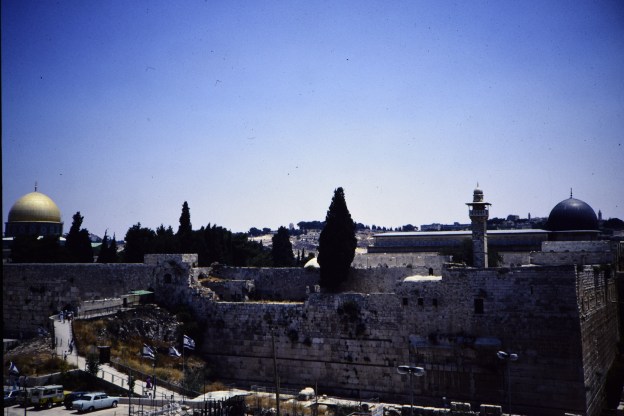
Go, inspect the city of Jerusalem. Walk around and count the many towers.

Take note of the fortified walls and tour all the citadels, that you may describe them to future generations. 

For this is what God is like. he is our God forever and ever, and he will guide us until we die.

(Ps 48. 9,11-14)

I used to wonder why the psalmist exhorted his hearers to go and count the towers of Jerusalem, it seemed a pretty weird thing to do as a way of worshipping God! But I now realise that this physical act of walking and counting was a very practical way of directing attention to how God had kept his promises to his servant David, that a temple would be built, and a city established where a king would reign. The city itself was a memorial, a testimony to God’s faithfulness. Yes, it was strong, but it was God’s strength which established and maintained it, and it was His presence which made Mount Zion a place of rejoicing

The Old Testament stories are full of memorials, ways that God appointed to help the people to remember the truth about Himself, so that their faith could be strengthened and passed on to future generations. The twelve stones carried from the bed of the Jordan river to create a pillar at Gilgal when Joshua led the people out of forty years wandering into the Promised land; the Ebeneezer stone raised by Samuel marking the defeat of the Philistines; and the great Passover Feast itself, which recalled the dramatic events leading up to the deliverance from Egypt. These each in their own way prompted the people to recognise that it was God who was at work – rescuing, leading, preparing the land for them – and to celebrate the God who was so powerful on their behalf and crucially to trust that God would continue to be with and for them in the future.

As followers of Jesus, we have one particular memorial, established by him, the night before he died. The Lord’s supper, communion, call it what you like, is a memorial, a physical act which he commands us to carry out for just the same reasons. When we take bread and wine, remembering his death for us, we recognise that God was at work, celebrate His power to achieve what was beyond us, and strengthen our faith in His ongoing presence and work in our lives now.

There is another reason for memorials, hinted at in the psalm – that we might tell future generations about the God whose acts are celebrated.

We may not be confident in debating the philosophical grounds for belief in God, but we can legitimately share our personal experiences of His power at work in our lives. We can tell the stories of our own private memorials – celebrating times when we saw Him at work; showing people the God who has saved us and come to live with us. We can do what the early disciple Andrew did, when he went to find his brother Peter, in order to bring him to meet Jesus. We can pray for others for God to bless them in the way that the four friends of the paralysed man fought so hard to bring him into Jesus’ presence. We can do as the Samarian woman did after she encountered Jesus at the well in the noonday heat – bringing her neighbours to meet the man who knew all about her.

We cannot in our own power force anyone to accept Christ as their Saviour, but we can and must make every effort to ensure that our lives reflect Him. We may be the only stories about Jesus that a person ever hears, what are we telling them?

It is always good to care for physical needs, to show practical love and care, but the best thing we can do for anyone, is to bring them to Jesus, because ultimately their eternal salvation matters more than anything else. It is God alone who convicts people of their need, who brings faith to life, and we can have confidence in His power to do this. Our job is to say, “Come, we have found the Messiah, we have found God dwelling with us!”

May we have confidence to obey, and wisdom to know how to do it, so that many souls will yet be gathered into the kingdom!

Time only goes one way!

I press on to possess that perfection for which Christ Jesus first possessed me. No, dear brothers and sisters, I have not achieved it, but I focus on this one thing: forgetting the past and looking to what lies ahead, I press on to reach the end of the race and receive the heavenly prize for which God, through Christ Jesus, is calling us.

(Philippians 3.12-14)

One of the greatest benefits of the new life which we have as followers of Jesus Christ, is the awareness that our sins and failures, our falling-short of God’s goodness, is completely dealt with. Each new day, is a new start, and we do not carry any baggage with us from the past. There may be consequences, but there is no guilt, no more isolation from God, no threat of judgement to come, to shadow our lives.

We are in a wonderful sense, set free from our past, and rightly we rejoice in that freedom. Paul encourages us to embrace that freedom, to refuse to allow inappropriate guilt to hold us back from fresh commitments to obedience and service of our God. He did not dwell on his early opposition to and persecution of the church, did not allow that to prevent him from becoming not only a great theologian, but also a pioneering evangelist and church-planter. He trusted that God could deal with those who doubted him because of his history, since it did not prevent God from calling him to serve.

How easy do I find it to allow my past failures to prevent my present obedience? I set limits on what I am willing to attempt for God, because I am afraid of failing again. What does that say about how I believe God is transforming me, is giving me his power to achieve the tasks which are appointed to me? Yes, I will go on sinning, until death ushers me out of this mortal frame, but God has not made my usefulness to him dependent on my perfection! I can and should embrace each new task with a joyful confidence in his enabling, and a humble thankfulness that  my failures will not prevent that work from being carried out.

In other areas though, it can be hard to let go of the past, to accept that precious days, sweet relationships will not come again. When a parent sees a beloved child step into independence – or begin to do so – there is a bereavement, because something beautiful has come to an end. It is a natural and right ending, but nonetheless, those days, that intimacy will never come again. The season for those things is past.

I was blessed to grow up in a particularly strong and loving church, and there are aspects of that life which I miss very much, and would dearly love to recreate. But time only moves one way, I am not in that place anymore, and much has changed. Those days will not come again. So what do I do? Is it right to allow past blessings to prevent me from appreciating what God is providing for me now? Surely not, nor to argue that I can only receive blessing in that particular way!

The apostle James wrote that, “Whatever is good and perfect comes down to us from God our Father, who created all the lights in the heavens. He never changes or casts a shifting shadow.” (James 1.17)

God is the source of all good things, and His purpose and character never change. So if He chose to bless me in one way in the past, He may choose another way today but his purpose remains my transformation into the likeness of Christ, and ultimate enjoyment with him of glory. All the good gifts are for a purpose, for my growth in faith and understanding, in trust and obedience. Let me recognise and give thanks for past blessings, but also discern the new things God may be planning to use for my good.

My God is too great and wonderful to be limited in His actions by my understanding, to be restricted to doing things in the same way over and over again! May I learn to trust that He is always good, and always loving, and look for the ways He is choosing to bless me now, so that I may – like Paul – forget what is past, let it go, and face the future with confidence in my great loving provider.

Glory and grace…

Ascribe to the Lord, O mighty ones, ascribe to the Lord glory and strength. 

Ascribe to the Lord the glory due to his name; worship the Lord in the splendour of his holiness.

The voice of the Lord is over the water; the God of glory thunders, the Lord thunders over the mighty waters….

The voice of the Lord twists the oaks and strips the forests bare. And in his temple all cry, “Glory!”

The Lord sits enthroned over the flood; the Lord is enthroned as King for ever. The Lord gives strength to his people; the Lord blesses his people with peace.

(Ps 29. 1-3, 9-11)

I love feeling small, being dwarfed by beauty, might and power. This may be because I have never been at the mercy of nature as many of our race have – whether hurricane and typhoon, or flood or earthquake. I am awed and inspired by the beauty and power which God has released into creation – through all the laws which govern the air, earth and water. Do we sometimes forget to be in awe of these elements? It is good to remind ourselves that we are not as powerful as we might like, that ultimately we cannot control what happens, and that if we trust in our own strength, we will surely be disappointed.

Either through natural disasters, or man-made destruction, all the things which our race depend upon for life can be taken away. If our security and contentment are founded in those things, then we are looking in the wrong place for our peace of mind and hope for the future. But these great forces in themselves are not ultimately in control either!

This psalm positively reverberates with the sound of God’s voice: its power is proclaimed and celebrated in the most forceful ways to drive home the point that the greatest of natural forces is as nothing beside the Lord, and that He alone is worthy of our worship.

The word “Ascribe” in the psalm can also be translated as “Honour”, in other words we should give full praise to God as his right for his power and holiness. We do not in any way add to God’s greatness by our worship, but do we perhaps rob him in a way when we fail to recognise and exalt it?

Everything in creation apart from humanity brings glory to God simply by being, by fulfilling the purpose for which He created it – manifesting His imaginative power, His creativity and strength, His unfathomable command of physical laws which enabled the creation of universes beyond our comprehension. The flight of the tiniest birds; the obedience of the oceans to the forces which govern their movement; the infinitesimal growth of great trees over hundreds of years; and the haunting beauty of the Aurora Borealis, all bear witness to their creator’s greatness and glory.

And I? I struggle and pout and fret about getting things my way; I complain when life does not give me the opportunities I desire – for myself or my loved ones. I worry about the future instead of celebrating the present, and accepting that my maker in His wisdom and goodness knows what is best for me. This is our shame as a race, that we refuse to give God the glory which is due to his name, and instead set ourselves up as worthy of honour and all the effort and focus of our lives.

This is the miracle which time and again fills me with wonder and thankfulness, that this God, this Creator, whose glory fills the heavens and stuns me into silence, is the same God who knows and loves me personally. Through faith in Jesus Christ, my rebellion is forgiven and I am transformed into one who seeks to exalt and honour God as she ought – feeble though the effort may be at times… And through Christ, I know the tender and intimate love of God, the promise of a new start in this life, and eternal life to come. This is all grace, all the goodness of God poured out on the undeserving rebel to give her a second chance and set  her free from worshipping herself. I am never so full of life and joy as when I am abandoned in praise of my adorable Saviour; my tender Father; and my strong and powerful Counsellor. I am nothing, God is all!

These words from the great hymn by Oliver Wendell Holmes (1809-1894) put it so much more briefly and beautifully – may we all receive grace this week to glorify our God as He deserves.

Lord of all being, throned afar, Thy glory flames from sun and star;

Centre and soul of every sphere, Yet to each loving heart how near.

Lord of all life, below, above, Whose light is truth, whose warmth is love;

Before thy ever-blazing throne, We ask no lustre of our own.

In Christ…..

I suspect you would never intend this, but this is what happens. When you attempt to live by your own religious plans and projects, you are cut off from Christ, you fall out of grace….For in Christ, neither our most conscientious religion nor disregard of religion amounts to anything. What matters is something far more interior: faith expressed in love.

(Galatians 5 4&6, the Message)

Sometimes as followers of Jesus, we find ourselves grappling with phrases which are very familiar and yet almost impossible to translate for those who do not yet believe. This concept of being “in Christ” can be one such challenge, and yet to fully grasp it is so gloriously liberating!

I believe that the death and resurrection of Jesus is the only and the utterly adequate way by which humanity can be restored to a relationship with a holy, just and mighty God. I can add nothing to that work, I am incapable of making it more effective by any efforts I might expend. I cannot unleash the potency of that work in my life by labouring to reach some perceived standard of ‘good behaviour’ and thus achieve merit in God’s sight. I cannot cajole or persuade God to be kind to me on any terms other than those which He has revealed, and those are very clear…

But now a righteousness from God, apart from law, has been made know…this righteousness from God comes through faith in Jesus Christ to all who believe. There is no difference, for all have sinned and fall short of the glory of God, and are justified freely by his grace…

(Romans 3. 22,23,24)

There is the key… justified (meaning declared innocent, free of any condemnation) freely (at no cost whatever to ourselves) by God’s grace. And what brings about this astonishing transformation in our circumstances before God? What great labours are required? None, on our part, since all has been done by Christ, and therefore it is as we identify Jesus as the source of our salvation and trust in the completeness of his work that faith is born in us, and we receive the righteousness (meaning a new and right relationship with God) which is promised.

A great Christian writer once said “Faith is the gaze of the soul on a saving God” (AW Tozer), and as I gaze upon the Christ who died for me, confessing my need of him as saviour, so God looks upon me as it were through the prism of Christ’s saving work. I am seen by a holy God as a beloved and welcome child, because God looks on me and sees the holiness of Christ, the beauty and perfection without which I could not endure God’s presence. It is as though when I finally admit my helplessness before God and claim Jesus as my Lord, then “I” die – the proud, rebellious, wilful me perishes. When by faith I rejoice in the forgiveness and fresh start I receive from God, then a new “I” is born, one who is no longer bound by the old rules, and who now lives in direct loving relationship with the Giver of Life! The apostle Paul puts it like this to the church in Colossae..

For you died, and your life is now hidden with Christ in God….. you have taken off your old self with its practices and have put on the new self, which is being renewed in knowledge in the image of its Creator.( Col 3. 2,9&10)

So when I think about being “in Christ”, I consider how my assurance of eternal life depends on him; how my daily walk with God depends on him; how my need for forgiveness and cleansing is met in him; how all my feeble efforts to truly love others are only possible because of his love for me. And yet I know that I have not begun to express the full riches of what it means to be “in Christ”. I think I am not alone in this, and it will be good to revisit the subject again! But today I will close with one of Paul’s wonderful outbursts of praise:-

Praise be to the God and Father of our Lord Jesus Christ, who has blessed us in the heavenly realms with every spiritual blessing in Christ!

(Ephesians 1.3)

He must become greater…

For my part, I am going to boast about nothing but the cross of our Master, Jesus Christ. Because of that cross, I have been crucified in relation to the world, set free from the stifling atmosphere of pleasing others and fitting into the little patterns that they dictate.

Can’t you see the central issue in all this? It is not what you and I do… It is what God is doing, and he is creating something totally new, a free life!

(Galations 6.14&15, The Message)

“..not what you and I do.. It is what God is doing”, and what He is doing is glorious! Over the past few days, people all around the world who believe in Jesus as the son of God and their saviour from the power of sin, have been taking time to celebrate his death and resurrection. It has been a special time for meditating and rejoicing, praising God for his indescribable mercy and love towards us.

We believe that because of Jesus, the brokenness in our world, which goes like a fault line through every human heart, is being healed and will one day be gloriously wiped away for ever. We, who are powerless to save ourselves, crippled by sin and yet so blinded by pride in our own achievements that we think ourselves worthy of God’s approval; even we, are offered a fresh start. As Paul said in his letter to the Galatian church, we are liberated to live as new creatures, under the mercy and love of God.

What joy to know that it is not my own moral life, good deeds, carefully-controlled thoughts and desires which have to earn my place in eternal life – because I know full well that I am weak and wavering, so that even on my best days, I fall far short of perfection. What a relief, that I do not have to pretend to anyone that I am confident in my own worthiness and abilities – because I have no illusions about my strengths and weaknesses, and know how unreliable I am.

Instead, I have the privilege of boasting in and relying on Jesus, whose mercy and love are precious beyond telling, and beautiful beyond describing. His death, for me, is my sole claim to peace with God now and eternal life hereafter. I take a fierce delight in this, because he deserves so much more praise and boasting than I can ever give, I cannot ever overdo it! I can affirm his greatness and worthiness against all opposition, and know that I am on firm ground. Many may not like what I believe, many will dismiss it as foolishness or be offended by it, but I will boast in Jesus Christ and his all-surpassing power to save.

In him, my weaknesses are a vehicle for his strength to be displayed.

In him, my struggles and trials are a window for the world to see his power to comfort and sustain me.

In him, my life of small duties and responsibilities becomes a thing of great beauty, where every act of mercy and service is worthwhile, and no effort is wasted.

In him, my heart finds joy because of his great love, and each day brings so many love-gifts to make me glad.

In him, I know that true justice rests, and I have no need to pursue revenge.

In him, I know the power of forgiveness in my life, and am strengthened to forgive others.

In him, my heart delights, and I know that he is changing me from one degree of glory to another as he transforms me into his own likeness, so that love, joy, peace, patience, kindness, goodness, faithfulness, gentleness and self-control become who I am.

In him, my soul finds rest, because it is all his doing, and his goodness and mercy will be my companions all the days of my life.

Let us rejoice in Jesus, let us boast of our wonderful Lord and Saviour, let us praise him and exalt him, and rest completely in his all-encompassing and complete salvation.

Worthy is the Lamb, who was slain, to receive power and wealth and wisdom and strength and honour and glory and praise!

(Revelation 5.12)