Category Archives: confidence in God

We are the Resurrection people!

I know that my Redeemer lives, and that in the end he will stand upon the earth. And after my skin has been destroyed, yet in my flesh I will see God; I myself will see him with my own eyes – I , and not another.

(Job 19.25-27)

Brothers, we do not want you to be ignorant about those who fall asleep, or to grieve like the rest of men, who have no hope. We believe that Jesus died and rose again and so we believe that God will bring with Jesus those who have fallen asleep in him…and so we will be with the Lord for ever. Therefore encourage each other with these words.

(1 Thessalonians 4.13,14&18)

How wonderful it is, to have such incredible good news to celebrate and to share on this Resurrection day! We have a saviour who died, yes, and who was raised from death. God demonstrated with great power that the divine plan for dealing forever with the forces of evil and their hold on humanity had succeeded.

Jesus had cried aloud upon the cross in his obedient agony, “It is finished!” There was absolutely nothing else needed, no human endeavour to be added to this divine passion for justice and mercy. And so God, in his loving kindness to us, knowing that we are weak and frightened easily, raised Jesus to life, showing the way that is now open to us as his followers, into eternal life in a resurrected body, like and yet unlike any we have known.

This is the point which Paul makes as he writes to reassure the Thessalonian believers, who are grieving for fellow christians who had recently died.. Look, he says, see what Jesus has done, and be comforted because this will be our experience too! We may not understand the mysteries which unite our temporal reality with an eternal future; but of this we can be absolutely sure – we will enter into that future with bodies; with hands to serve and voices to praise and eyes and hearts to adore our Lord.

The experience of death in this world, dreadful though it undoubtedly can be, is not the end, the power of the grave is broken. It can no longer hold those who call upon the name of Jesus, and we are sure of being gathered into his arms and of seeing him, with our own eyes. I was privileged to see for myself the power which this hope gives to those facing death, power to yield themselves up in peace and confidence to the Lord who has gone before and has promised to carry them through this last trial. For both of my parents, their steadfast faith was the anchor and joy of their last months, making it so easy for us as their children to release them to a future which they longed to see.

As I rejoice at the empty tomb, sharing in the soul-shaking joy of Mary at her master’s feet, I repent of my frequent bouts of despair, and ask God’s help to live more and more in the light of this sure and certain hope which that empty tomb gives me. I believe in the resurrection of the body – so why do I fear anything at all?! I believe that I shall see my adored Saviour with my own eyes – so why am I not overflowing with this good news to all those who are in my life?

My God has given me so much in this world already, out of his goodness pouring blessings one after another into my life – and I can relish each one to the full, knowing that there is an eternity of even better to come..This life is NOT all there is, I need NOT resent the passing of youth, health or wealth, because EVERYTHING good and glorious is already stored up for me in my Father’s house, and as I fix my eyes upon my Jesus, following him down into the shadow of the valley of death, so I will surely be led after him out at the other side.


Living with failure..

If we claim to be without sin, we deceive ourselves and the truth is not in us. If we confess our sins, he is faithful and just and will forgive our sins and purify us from all unrighteousness… My dear children, I write this to you so that you will  not sin. But if anybody does sin, we have one who speaks to the Father in our defence – Jesus Christ, the righteous one. He is the atoning sacrifice for our sins, and not only for ours but also for the sins of the whole world.

(1 John 1.8-2.2)

Who may ascend the hill of the Lord? Who may stand in his holy place? He who has clean hands and a pure heart, who does does not lift up his soul to an idol or swear by what is false. He will receive blessing from the Lord and vindication from God his Saviour.

(Psalm 24. 3-5)

I am perhaps not alone in being of a rather self-critical frame of mind – I am invariably the first to apologise in a painful situation (often when I haven’t actually done anything that I can see was wrong!); and given the opportunity for introspection will tend to dwell more readily on my failures than my strengths and successes.

As a parent, I have a great deal of material on which to dwell, looking back over 21 or so years where I have missed opportunities to model a lively faith; a healthy marriage; a missionary spirit…There are friends whom I have neglected, or unwittingly hurt deeply; siblings whom I have failed to support in their times of need as I feel I ought to have done. And that most poisonous of regrets – things I failed to do for my parents while they were still alive and within reach of my words and hands.

I have failed to pray for the tormented and suffering in the world – near and far – as faithfully as I could have done; I have failed to give thanks for answered prayers – for myself and others. I have not studied my bible regularly, not committed the words to memory, not learnt to share it with others in a way that can reach and bless them.

I look up to the hill of God with the psalmist and recognise that I am not the man of clean hands and pure heart who may ascend and stand there by right. It is a high and glorious mountain, the beauty of God dwells upon it, and it is where I long to be – but my persistent sin keeps me so far from the summit.

 As a follower of Jesus, one who claims his atoning blood to cover all my sins, I know that God has forgiven me and that I start afresh each day with a clean sheet. I know that the power of sin to enslave me has been utterly destroyed through the death of my Saviour – the holy and pure sacrifical lamb – and yet I still succumb to the temptations of idleness, selfishness and that dreadful immobilising self-pity. I do not claim to be without sin, but so frequently confess my shortcomings that I fear God must be weary of me.

Yet I cannot find any word in the bible of God wearying of his people’s repentance, nor a reluctance to forgive them when they come again in their need. Why then do I find it so hard to live with my continuing failures and shortcomings, when God’s forgiveness is assured and abundantly available? He has forgiven me; why can I not forgive myself for these things? I fear it is pride, a stubborn desire somewhere in my heart to prove to God that I am capable of better, of purer, holier living if I just try harder. And my disappointment is sore because my pride is hurt, my idealised ( and foolish) picture of myself as a mature follower of Christ, is shown to be a delusion. I am so tired of failing, that I want to give up, my courage is gone and my confidence in God’s power to sustain me as a faithful and cheerful witness for the remainder of my life is completely undermined.

May I be forgiven, for such foolish weakness and pathetic pride. May my heart and mind be increasingly filled with the beauty and power of my Saviour, who has ascended the great mountain on my behalf, and who every day is making it possible for me to keep climbing. May I rejoice and triumph ever more in what he has done – and keeps on doing – as his love drenches me, soaking out the sin stains and breaking the chains of regret for past failure. May I trust ever more in his power to work all things together for the good of those who love him – including their own failures – so that all the glory goes to him!

Whispers of hope

Rejoice greatly; O Daughter of Zion! Shout, Daughter of Jerusalem! See, your king comes to you, righteous and having salvation, gentle and riding on a donkey…… He will proclaim peace to the nations. His rule will extend from sea to sea and from the River to the ends of the earth.

As for you, because of the blood of my covenant with you, I will free your prisoners.. Return to your fortress, O prisoners of hope; even now I announce that I will restore twice as much to you!

(Zechariah 9.9,10b-12)

The bible narrative from Genesis onward is not an easy read, as the consequences of sin make themselves felt at a personal and national level for God’s chosen people. Time and again they rebel and pay the price for their disobedience. But alongside this sadly realistic picture of human nature, we find words of hope – hope for temporary relief from distress, but also of a future perfect peace, a dwelling together of God and his creatures in mutual delight and harmony. This prophecy from Zechariah, addressed to a people in long-term exile, is one such word. The promise of a coming deliverer, bringing freedom, rejoicing and justice without borders.

The exiles circumstances were bad; there was no earthly reason to hope that the future might see an improvement – and their hopelessness was compounded by the knowledge that their exile was a direct result of persistent disobedience to God, and of breaking the terms of the covenant God had made with them!

Once again, God sends through his prophet a word of encouragement to the people, a word of grace, of unmerited favour and his faithfulness to an unfaithful people. Once again, God is revealed as the  hero of the story, preparing to bless those who have so deeply grieved him and got themselves into a dreadful mess as a result. He alone can and will deliver the imprisoned and despairing. Any hope for salvation depends utterly on this grace of God, who chooses to act because he must be true to his own promises.

 What makes us prisoners? Too often it is our fears; sometimes it is our success in the world’s eyes; and for some it will be circumstances which are beyond their control and which bring great distress. Think of the prophet Daniel, who spent his entire life in captivity in Babylon, or the exiled Ezekiel, born to be a priest in the temple but doomed never to fulfill his ambition.This passage in Zechariah promises that in God, we have a deliverer, and a sure hope for future freedom from whatever binds us now. We are called by faith to turn again to the stronghold which in this case is not a physical fortress, but the Lord God himself! The psalmist writes enthusiastically of this truth:

In you O Lord, I have taken refuge; let me never be put to shame…Be my rock of refuge, to which I can always go; give the command to save me for you are my rock and my fortress… For you have been my hope, O Sovereign Lord, my confidence since my youth. (Ps 71.1,3&5)

When by faith we are drawn to hide ourselves in God, our fortress, then we are no longer prisoners of our fears or circumstances.Our obedience in clinging to him means that we are now capable of receiving his blessings – and our whole view of our lives is transformed.

We will be hope-prisoners in the tower of the Lord, walled about by his promises, with the light of his love shining in our lives and holding us as close to him as the tightest chains. This kind of imprisonment is not something to shun, but rather to seek! There is no safer place than in God: our great,powerful and good God.

This hope can open the door of the deepest, darkest places, bringing assurance that our God is always with us, and where he is, there is life now and will be abundance to come. Our hope is certain because it is based on the character of God, not on our own strengths, or ability to work out our own salvation. And it is the fulfillment of this hope which we celebrate in the birth of Christ, who would one day ride into Jerusalem on a donkey, deliberately recalling this prophecy, and through whose death, the basis for peace between God and man would finally be established.

Let us rejoice in this promise fulfilled. Let us live as prisoners of this great hope, turning ever and again to the stronghold which is our God, and seeking to share the good news with our neighbours.

And by the way…

May God himself, the God of peace, sanctify you through and through. May your whole spirit, soul and body be kept blameless at the coming of our Lord Jesus Christ.

The one who calls you is faithful and he will do it.

(1Thessalonians 5.23&24)

I thank my God every time I remember you. In all my prayers for all of you, I always pray with joy because of your partnership in the gospel from the first day until now, being confident of this, that he who began a good work in you will carry it on to completion until the day of Christ Jesus.

(Philippians 1.3-6)

I think I have written before about how I have been blest throughout my christian life by teachers who believe that all of scripture is God-breathed and necessary to my growth in faith and godliness. I am thankful to them for their faithfulness in helping me to study unattractive texts, and learning how to hear God’s voice as I read lists in Numbers, and gloomy, violent curses in the minor prophets!

But there are bits of the bible which I find much easier to learn from than others – namely the Psalms, and the apostolic letters in the new testament (basically everything after the book of Acts, but possibly not Revelation!). The writers of the letters to the young churches were urgent and focussed in their messages, and every phrase counts. The letter to the church in Rome is perhaps the ‘meatiest’ in that it requires careful reading and thought to follow all Paul’s reasoning. Some of the others are more direct and even pithy, as the authors fire out clear instructions to the young believers about how to live godly lives, to recognise and deal with heresy, and to bear witness under severe persecution.

I love instructions, for every area of life! I am the person who is most unhappy when faced with a responsibility or task for which she can find no ‘this is how to do it right’ kind of manual, so it is perhaps understandable that these relatively short letters appeal to me so much. Of course, the fact that the instructions are so clear does not mean that they are easy to fulfill – how many of us can truthfully say that we are always ‘alert and self-controlled’, or that we always ‘live in peace with each other’? But these types of writings do help us enormously to see what christian love should look like, when lived out with God’s help, in our daily lives. They help us to put high-sounding sentiment into hard demanding action, dealing with the sometimes brutal realities of life for ourselves and other people.

In his letter to the very young church in Thessalonica, Paul has been principally concerned to encourage and strengthen them in the face of persecution, and self-doubt, and the whole tone of the writing is full of wonderful affection for the new believers whom he had to abandon so early in their growth in faith. The latter half of the final chapter however is an almost breathless list of things which Paul asks them to do. One can almost picture the apostle realising that he has only limited space or time left in which to complete his writing, and so his thought becomes concentrated on the really important things he wants to say – and how briefly he can say them!

After firing out ‘respect those who work hard among you;‘ and ‘help the weak, be patient with everyone‘, he goes on to even briefer and harder hitting phrases, ‘ be joyful always‘, ‘test everything‘ and ‘avoid every kind of evil‘. We are left almost breathless, and certainly rather daunted by the weight behind his bullet points! Who could ever hope to keep up this level of perfection in the daily battle of following Jesus in a world which rejects him, where the remnant of sin in our own selves so easily drags us off course?

And so the great apostle suddenly changes tack, the whole tone of the writing changes again, as his compassion for his audience swells up and he remembers that they – like himself – are still frail human creatures, easily discouraged and vulnerable to despair. He launches into a great prayer to God on their behalf, a prayer which puts all the burden back where it belongs, into the hands of their Creator, Redeemer, Father and Lord. It is God who is called to make them perfect – to ‘sanctify them’ and to make sure that when Jesus returns, they are still safe within his grasp.

We are called to the utmost effort in loving obedience, but it is God who is responsible for creating perfection in us – what a relief! And what joy and peace there is for us in those wonderful words, ‘The one who calls you is faithful and he will do it!’ 

Amen Lord, so let it be!

Take a deep breath…

Trust in the Lord and do good…Take delight in the Lord, and he will give you your heart’s desires..

Commit everything you do to the Lord. Trust him and he will help you….be still in the presence of the Lord, and wait patiently for him to act.

The Lord directs the steps of the godly. He delights in every detail of their lives. Though they stumble, they will never fall, for the Lord holds them by the hand.

(Psalm 37. 3,4,5,7, 23&24)

Have you ever found yourself in the privileged position of holding the hand of a small child while out on a walk, or trip to the park? Without thinking, in pure trust, the hand is given and you as the adult are able to guide, steady, reassure and if necessary rescue the little one from the hazards which may be encountered.

Look again at that line of the psalm – “they will never fall, for the Lord holds them by the hand.” And say it to yourself over and over… yes, I will stumble or trip; yes, I may be faced by some apalling obstacle or fearsome foe.. BUT my Lord holds my hand, he is beside me, and he is supremely capable of dealing with everything which I may encounter! And everytime I do stumble, I prove once again his readiness to assist and strengthen me, pulling me out from the hazard and reassuring me so that I can go on. What a tender picture of our Father’s love and of the wonderful grounds we have for trusting him in all circumstances.

But perhaps you sometimes suffer from the same problem as I do – you forget that you are held….

I am ashamed to think how often I allow myself to get into a dreadful state of dread, panic or even despair, surrendering hope of deliverance, and wallowing in a morbid self-pity for my sad condition. I fix my eyes on whatever the problem may be – and therein lies the problem, where my eyes are!!

Recently I found myself wide awake in the middle of the night, heart-pounding, sweating, and generally not good… I tried to pray for others who I knew might be in need – sick friends, missionaries who would already be up and doing – anyone, as a distraction from the dreadful roller-coaster of thoughts which were rushing through my head. I didn’t exactly win the battle, but in his mercy, God gave me sleep again, so that my body had a chance to rest and gather strength. And as the following day proceeded, my feelings relaxed, a small hope began to gather – like the cloud the size of a man’s hand which preceeded the coming rains in the day of Elijah. I was given the gift of being still and trusting that God would act; of waiting to see what he would do. I was able to set my feelings to one side, and live the day on the basis of truth about my God, taking it moment by moment and not anticipating the unknown and so easily fearful future.

I am held, constantly, by one who loves me and knows me better than anyone else. I need not be ashamed of telling him all my fears, confessing the doubts that assail me, the terror of facing what feels like too much responsibility. It is his hand, his strength which should be my confidence, not my own. And – which is the most comforting thing – even when I am in a mess entirely of my own making, he is still holding me, and still able to keep me from going down under it!

So this is my prayer for myself this week, perhaps it may help you too:-

Dearest Father, behold your daughter, in her need, her foolishness, the muddle of her own making.

Have mercy upon her, even as you promise faithfully to do.

Grant her that childlike confidence which faces every hurdle so long as her hand is in yours – for your grip on her is unshakeable.

She is trusting you for the little details of her little life, because to her they are not small, and in the night they become overwhelming, terrifying foes, devouring sleep and peace.

Let her be still, let her breathe deeply of the wholesome airs of your truth, so that her soul might be restored, her trust renewed, and she might wait patiently to see your hand at work in her life.

Let her be again as a little child, in your mercy Lord, grant her peace.

Such good news!

“Is anyone thirsty?
    Come and drink—
    even if you have no money!
Come, take your choice of wine or milk—
    it’s all free!
 Why spend your money on food that does not give you strength?
    Why pay for food that does you no good?
Listen to me, and you will eat what is good.
    You will enjoy the finest food.

 “Come to me with your ears wide open.
    Listen, and you will find life.
I will make an everlasting covenant with you.
    I will give you all the unfailing love I promised to David.
 See how I used him to display my power among the peoples.
    I made him a leader among the nations.
 You also will command nations you do not know,
    and peoples unknown to you will come running to obey,
because I, the Lord your God,
    the Holy One of Israel, have made you glorious.”

 Seek the Lord while you can find him.
    Call on him now while he is near.
 Let the wicked change their ways
    and banish the very thought of doing wrong.
Let them turn to the Lord that he may have mercy on them.
    Yes, turn to our God, for he will forgive generously.

 “My thoughts are nothing like your thoughts,” says the Lord.
    “And my ways are far beyond anything you could imagine.
 For just as the heavens are higher than the earth,
    so my ways are higher than your ways
    and my thoughts higher than your thoughts.

 “The rain and snow come down from the heavens
    and stay on the ground to water the earth.
They cause the grain to grow,
    producing seed for the farmer
    and bread for the hungry.
 It is the same with my word.
    I send it out, and it always produces fruit.
It will accomplish all I want it to,
    and it will prosper everywhere I send it.
 You will live in joy and peace.
    The mountains and hills will burst into song,
    and the trees of the field will clap their hands!
 Where once there were thorns, cypress trees will grow.
    Where nettles grew, myrtles will sprout up.
These events will bring great honor to the Lord’s name;
    they will be an everlasting sign of his power and love.”

It has been a long week..last Sunday we had our last meal together as a family in Glasgow, and by Tuesday evening, we were in the new house, surrounded by boxes, shell-shocked but thankful for all the mercies which had attended our removal. Beautifully dry weather, exemplary removal men, and a house which was clean and ready for us to move into – thanks to the efforts of our new congregation in finishing off the alterations and getting a superlative team of cleaners on the job!

I have been unable to think straight, to contemplate much beyond the next box and where to bestow its contents, my body manifesting the stress through pain and a weariness I have never experienced before. It is at times like this that faith is a matter of just keeping going, trusting that our feelings are transient, and not the grounds of our salvation or God’s love for us! I have been hard to live with, and yet my faithful Lord has been ever present, tenderly bearing with my weakness and helping me recognise my blessings! I am so grateful for his patience and covenanted love for me in such circumstances.

Last night, my husband and our new congregation made promises to love and serve our great God together in this place, in mutual love and faithfulness – a solemn and joyous occasion, like a marriage ceremony in its formal vows made before God. We admit that this is not about feelings, it is a commitment of the will, made in obedience to God; made in trust that by his power, we will keep faith with him and one another in the days ahead. It was good to sing, pray and hear God’s word together, including these from Isaiah, a triumphant declaration by God about the power and priceless treasure which is his word to us.

Since I have been unable to think coherently enough to write for myself this week, I leave you with the words of God through the prophet, because it is his word, and the power of God through that word which is good news for our own lives and also the work to which we are all called. We obey, but it is God who is at work, and we look forward in this place to seeing how his word will bear fruit in lives transformed by his love and forgiveness.

There’s no hurry..

WordPress has deleted the text for today’s blog, my apologies to all who came looking for it. I cannot locate the lost text, and this is just a paraphrase of it! This text from Isaiah was my starting point.

The Spirit of the Sovereign Lord is upon me, for the Lord has anointed me to bring good news to the poor.

He has sent me to comfort the brokenhearted and to proclaim that captives will be released and prisoners will be freed.

He has sent me to tell those who mourn that the time of the Lord’s favour has come, and with it, the day of God’s anger against their enemies.

To all who mourn in Israel, he will give a crown of beauty for ashes, a joyous blessing instead of mourning, festive praise instead of despair.

In their righteousness, they will be like great oaks that the Lord has planted for his own glory.

(Isaiah 61.1-3)

Think about it, all of us who are so often aware only of our failure to obey and live lives which glorify God as we desire to do…

Here we are described as ‘like great oaks that the Lord has planted for his own glory!’

I don’t know about you, but I don’t often feel much like a great oak, much more like a weedy sapling, with inadequate roots and little strength to hold up against the storms of life. My leaves are few, and there is little sign of fruit.

But it is in the righteousness we have that we are to be like these great trees – and what is the source of our righteousness? Jesus! It is because we have been healed, forgiven, given a purpose and identity in life by him, that we have any righteousness at all.

We are crowned with the beauty of adoption as God’s children, and clothed with the royal robes of Jesus’ perfection, and because of his obedience and sacrifice for us, we have received all we could possibly need.

It is his life in me which grows strong and tall, producing fruit and withstanding the storms. It is his perfection which is the beauty of the mature believer, and the only reason that our lives glorify God.

And it is for this purpose that we have been ‘planted’ by the Lord – wherever we are – so that Christ in us might shine out in all his loveliness and God be given all the glory for what we have become.

Perhaps I might be allowed to read something else into the picture which is not explicitly there – namely that oak trees take a very long time to mature! Our good and loving God knows that our growth to the beauty of full maturity cannot be rushed, and is patient with us – at times a very unpromising bunch of saplings..

One day, someday dear sisters and brothers, we shall indeed be like great oaks, breathtaking in the grandeur and majesty of their form, strong against every blast, and bearing abundant fruit. And like them, we shall glorify our God in everything we are and do. Until that day, we continue to hold fast to Christ as our righteousness, our hope, our very life, so that He might shape nurture us. To him be the glory, and praise, from even the spindliest of his plantings!

A blank sheet..

For we are God’s masterpiece. 

He has created us anew in Christ Jesus, so we can do the good things he planned for us long ago.

(Eph 2.10)

But you are a chosen people, a royal priesthood, a holy nation, a people belonging to God, that you may declare the praises of him who called you out of darkness into his wonderful light.

(1 Peter 2.9&10)

God has now revealed to us his mysterious plan regarding Christ, a plan to fulfill his own good pleasure. And this is the plan: At the right time he will bring everything together under the authority of Christ – everything in heaven and on earth.

(Eph 1.9&10) 

As I contemplate the next few months, with a change of home; church and lifestyle – moving after 16 years in one house, 22 in the same church, and a lifetime in the city – I am deeply conscious that God is asking every day, “do you trust me?”

Do I? I am tempted to barter with God, to ask to see in advance how he will provide for me – for friends, rewarding activities, replacements for all the things that make my life here so rich. That is not trust. Indeed it speaks of a deep suspicion, an unwillingness to believe that God is going to be faithful to his promises, and I am ashamed to recognise it in my heart.

The whole of scripture reveals an active God, one who has a plan – both a great overall strategy and an intimate personal plan for the lives of the individuals caught up in it. Think of the wonderful story of Ruth, called out of her native land to become a mother and grandmother within the people of Israel, and part of the blood-line not only of King David, but also our great King Jesus himself. She needed to be cherished and provided for as a woman in her society, and God brought Boaz to be her husband, meeting both the intimate personal needs and the larger plan he was steadily working out. Or consider Hannah, a faithful but barren wife – mocked and demeaned by her neighbours and suffering deeply for her lack of children. God heard her prayer for a son, and filled her arms and her heart with joy; but he also brought into the nation the boy who would become one of the greatest prophet leaders, Samuel, who would anoint first Saul and then David as king.

I need to remind myself of these promises, these stories, of God active to meet personal needs within his great plan, as our family faces upheaval and I wonder what I am to do in our new place of ministry. God’s great plan remains – to call a people to himself, to make disciples of all nations and to see all things gathered together under the lordship of Jesus Christ. It is astonishing to think that I have a part to play in that adventure, but it is for this that I was created new in Christ, and God has planned good works which he will enable me to do for him!

But on a personal level too, I will have things to do, new relationships to establish, people to encourage and serve, new ways to serve and glorify the God who has called me out of darkness into his glorious light! Will I not trust him to reveal those to me in his own good time? I want to close with words which I first heard through Elisabeth Elliott – a woman who learnt to trust God through great suffering – and which although archaic to our ears yet convey that sense of waiting in trust that God will direct my steps in his own, good, time.

From an old English parsonage, down by the sea

there came in the twilight a message to me;

Its quaint Saxon legend, deeply engraven,

Hath, as it seems to me, teaching from Heaven.

And on through the hours the quiet words ring like a low inspiration –

“Do the next thing.”

Many a questioning, many a fear,

Many a doubt hath its quieting here.

Moment by moment, let down from Heaven,

Time, opportunity, guidance, are given.

Fear not tomorrows, child of the King, trust them with Jesus,

“Do the next thing.”

Do it immediately; do it with prayer;

do it reliantly, casting all care;

do it with reverence, tracing His Hand

who placed it before thee with earnest command.

Stayed on Omnipotence, safe’neath his wing, leave all resultings,

“Do the next thing.”

Looking to Jesus, ever serener

(Working or suffering) be thy demeanour,

In His dear presence, the rest of His calm,

The light of His countenance be thy psalm,

Strong in His faithfulness, praise and sing, then as He beckons thee

“Do the next thing.”

(author unknown) 

The best I can do?

O God, we meditate on your unfailing love as we worship in your Temple.

Let the people on Mount Zion rejoice. Let all the towns of Judah be glad because of your justice.

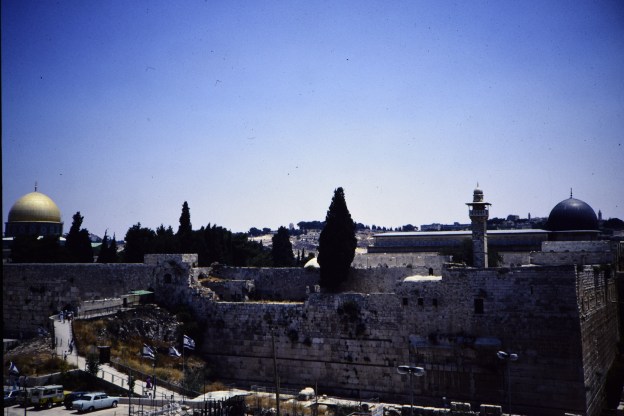
Go, inspect the city of Jerusalem. Walk around and count the many towers.

Take note of the fortified walls and tour all the citadels, that you may describe them to future generations. 

For this is what God is like. he is our God forever and ever, and he will guide us until we die.

(Ps 48. 9,11-14)

I used to wonder why the psalmist exhorted his hearers to go and count the towers of Jerusalem, it seemed a pretty weird thing to do as a way of worshipping God! But I now realise that this physical act of walking and counting was a very practical way of directing attention to how God had kept his promises to his servant David, that a temple would be built, and a city established where a king would reign. The city itself was a memorial, a testimony to God’s faithfulness. Yes, it was strong, but it was God’s strength which established and maintained it, and it was His presence which made Mount Zion a place of rejoicing

The Old Testament stories are full of memorials, ways that God appointed to help the people to remember the truth about Himself, so that their faith could be strengthened and passed on to future generations. The twelve stones carried from the bed of the Jordan river to create a pillar at Gilgal when Joshua led the people out of forty years wandering into the Promised land; the Ebeneezer stone raised by Samuel marking the defeat of the Philistines; and the great Passover Feast itself, which recalled the dramatic events leading up to the deliverance from Egypt. These each in their own way prompted the people to recognise that it was God who was at work – rescuing, leading, preparing the land for them – and to celebrate the God who was so powerful on their behalf and crucially to trust that God would continue to be with and for them in the future.

As followers of Jesus, we have one particular memorial, established by him, the night before he died. The Lord’s supper, communion, call it what you like, is a memorial, a physical act which he commands us to carry out for just the same reasons. When we take bread and wine, remembering his death for us, we recognise that God was at work, celebrate His power to achieve what was beyond us, and strengthen our faith in His ongoing presence and work in our lives now.

There is another reason for memorials, hinted at in the psalm – that we might tell future generations about the God whose acts are celebrated.

We may not be confident in debating the philosophical grounds for belief in God, but we can legitimately share our personal experiences of His power at work in our lives. We can tell the stories of our own private memorials – celebrating times when we saw Him at work; showing people the God who has saved us and come to live with us. We can do what the early disciple Andrew did, when he went to find his brother Peter, in order to bring him to meet Jesus. We can pray for others for God to bless them in the way that the four friends of the paralysed man fought so hard to bring him into Jesus’ presence. We can do as the Samarian woman did after she encountered Jesus at the well in the noonday heat – bringing her neighbours to meet the man who knew all about her.

We cannot in our own power force anyone to accept Christ as their Saviour, but we can and must make every effort to ensure that our lives reflect Him. We may be the only stories about Jesus that a person ever hears, what are we telling them?

It is always good to care for physical needs, to show practical love and care, but the best thing we can do for anyone, is to bring them to Jesus, because ultimately their eternal salvation matters more than anything else. It is God alone who convicts people of their need, who brings faith to life, and we can have confidence in His power to do this. Our job is to say, “Come, we have found the Messiah, we have found God dwelling with us!”

May we have confidence to obey, and wisdom to know how to do it, so that many souls will yet be gathered into the kingdom!

Dying to live..

Then he said to them all:

“If anyone would come after me, he must deny himself and take up his cross daily and follow me. 

For whoever wants to save his life will lose it, but whoever loses his life for me will save it.

What good is it for a man to gain the whole world and yet lose or forfeit his very self?

(Luke 9. 24&25)

Some people would have us believe that the christian life should be a happy, smooth and fulfilling one, and that if we do not have that experience, then we are somehow failing to grasp our inheritance as God’s beloved children.

Where does Jesus call us to such a life? Not here, not in these words, which are recorded in all four gospels, indicating their centrality to our understanding of his teaching. Jesus calls us to die for him, no more, no less. For many, it is a call to physical death – whether by martyrdom, or by being exposed to unusual risks by virtue of the work we do in his name. For all of us, it is a call to die to ourselves, to the ways of thinking and acting which put our needs, welfare and personal fulfillment first.

Am I the only christian who needs regularly to be reminded that my Lord calls me to this radical discipleship? To have it drummed into my heart and thinking again and again that my own happiness is not the goal of my life, in spite of the bewitching messages with which contemporary culture tries to persuade me. When I get my eyes fixed back onto this vision of the life to which I am called, for which I was saved by my Lord, then it is like finally seeing past a smokescreen, to a clear sky and a straight road. But oh, how hard it can be to look up, to shake myself clear of the smoke and see properly!

Jesus does not give me options on obedience, I am not in a position to qualify the extent to which I will do as God commands according to my circumstances and feelings! If I once allow my feelings to become the driving force behind my willingness to obey, then I will become utterly bogged down in self-obsessed inaction. God has given me a will to act, a mind to understand, and has shown me what to do. How I feel must follow, not dictate, my obedience to those commands.

Did it not cost Jesus more than we can begin to imagine to obey God’s will in his life on earth? He wept and toiled, and embraced suffering and death because He knew that this was God’s will for him. What am I saying when I protest against the cost of obedience in my life, that I am not willing to suffer in turn? That my immediate comfort and temporary self-fulfilment are more precious than eternal life and union with Christ? That his love for me is not worth very much if it must be paid out of my own ease?

I have been reminded again of the words penned by martyred missionary Jim Elliott, who wrote :-“he is no fool, who gives what he cannot keep, to gain that which he cannot lose!”

God forgive me that I protest so bitterly against the small crosses which he asks me to bear, against the small sacrifices which he asks me to make in his name. Should I not rather rejoice that I may suffer through obedience? My Lord sees the pain I experience, and commends me as I seek to obey in spite of it. That same pain causes me to lean ever harder on His arm, to listen closer for his loving voice, to sit ever more lightly to this world and hope more gladly for the next. Is this not reason for giving thanks in my struggles? God give me courage to obey, understanding to see what I must do, and fuller knowledge of his love that my desire for him might continue to grow.

All to Jesus I surrender; all to Him I freely give;

I will ever love and trust Him, in His presence daily live.

I surrender all, I surrender all; all to Thee my blessed Saviour, 

I surrender all

(Judson W. Van De Venter 1896)