
Category Archives: loss

The joy of simple things

Lord, you have been our dwelling-place throughout all generations. Before the mountains were born or you brought forth the earth and the world, from everlasting to everlasting you are God…. For a thousand years in your sight are like a day that has just gone by, or like a watch in the night. You sweep men away in the sleep of death; they are like the new grass of the morning- though in the morning it springs up new, by evening it is dry and withered….

Teach us to number our days aright, that we may gain a heart of wisdom… Satisfy us in the morning with your unfailing love, that we may sing for joy and be glad all our days..

May your deeds be shown to your servants, your splendour to their children. May the favour of the Lord our God rest upon us; establish the work of our hands for us – yes, establish the work of our hands.

(Ps 90.1&2,4-6,12,14,16&17)

What sweet relief comes to a struggling believer when they are gently reminded of the absolute and unshakeable goodness of God; of his power and eternal being. While we may founder amid doubt, weariness and even despair both over our own condition and the grievous state of our world, yet when we turn to the Almighty, we find a mighty, unruffled serenity and a resolute peace. Here is no agonised doubting, no indecisiveness, no fickleness. Here is pure light, justice, fathomless grace and committed and faithful love. Here is a safe place – THE safe place- where we may cast ourselves down in utter trust and surrender, and know that all shall be well, because our God is on the throne and nothing can prevent the fulfilment of his purposes and the full realisation of his glorious plans.

In this place of total security, I sit with my grief and loss; I share with my Father the burdens of my heart and am  comforted to know that I am heard and tenderly enveloped in his love. In this place of safety, I share my small joys, and know that they are a gift of his love to me, and I give thanks  – I know that when I take pleasure in what He gives, then I am honouring His love for me. In this place, where his eternal nature is revealed and my own smallness made so clear, I rest in his adoption of me as his child, and surrender to that keeping.

As I recognise that I am grieving, with all the weariness and confusion which that brings, I am glad to find peace and pleasure in small tasks – the baking of bread; the sharing of hospitality; and today, the preparation of some pots of colour to grace our garden as the autumn approaches. To handle soil, to gently embed the tiny plants, to let my eye feast on the variety of textures and colours, to anticipate in my imagination how they will flourish – these are gifts which soothe my spirit and I give thanks tonight for the opportunity and means to enjoy them. To be in the open air, with the sunshine on my back and the sound of the birds having a lively discussion in the neighbour’s thickets – these are gifts which refresh me and I give thanks tonight for my senses by which to appreciate them.

The Lord IS my dwelling place, and there I find both nurture and peace, and therefore I praise and let another day pass..

O Lord, I am as nothing in the face of your eternal glory and light, a passing shadow and a fleeting thought. Yet you have declared yourself to be my God, my Maker, my Sovereign. It is your naming which gives me value, and your promise which gives me hope. So few days are given to me, Lord let me be wise to use them well in your service; let your love be the foundation of my hope, my source of joy and pride and my satisfaction.

Have compassion on your servant, that she may see your hand at work and rejoice; let your glory be her motivation in living. By your grace and power, let her labours be fruitful in your kingdom, the only place where lasting value can be found. And Lord, let her children receive and walk in your covenant love; let them grow in faith and joy to glorify and serve you; may they see your works and worship you, together with all your saints. In Jesus’ precious name and for your glory, Amen.

Travelling light?

Though the fig tree does not bud and there are no grapes on the vines, though the olive crop fails and the fields produce no food, though there are no sheep in the pen and no cattle in the stalls, yet I will rejoice in the Lord, I will be joyful in God my saviour. The sovereign Lord is my strength..

(Hab 3.17-19)

Then Jesus came to them and said;”… And surely I am with you always, to the very end of the age.”

(Matt 28.18&20)

I want to know Christ and the power of his resurrection and the fellowship of sharing in his sufferings…. Not that I have already obtained all this, or have been made perfect, but I press on to take hold of that for which Christ Jesus took hold of me… But one thing I do: Forgetting what is behind and straining towards what is ahead, I press on towards the goal to win the prize for which God has called me heavenwards in Christ Jesus… 

Rejoice in the Lord always.. Do not be anxious about anything, but in everything, by prayer and petition, with thanksgiving, present your requests to God. And the peace of God, which transcends all understanding, will guard your hearts and your minds in Christ Jesus…. I have learned the secret of being content in any and every situation, … I can do everything through him who gives me strength.

(Phil 3.10,12-14; 4.4-7, 12&13)

How good it is, as a child of God, to know that when He says, “Go, let this place and these people become your past”, that I can trust him for the unknown future. I am so thankful for the people and experiences which have made up my life, but also aware that they are fleeting things, and cannot be carried with me into the next chapter.

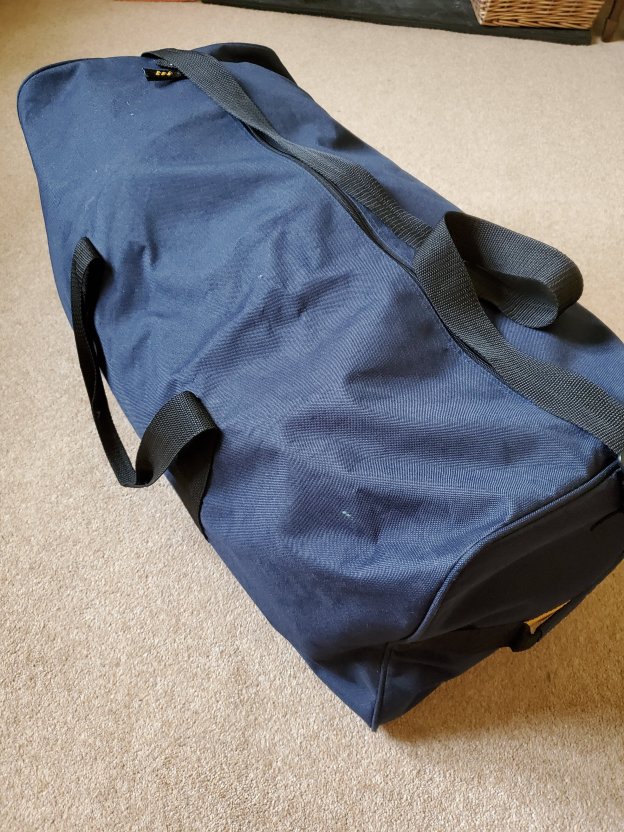
I have memories, and a few physical reminders, but am aware of the gift of God in allowing me to let the past go, and not to cart its baggage into tomorrow. I can rest in the relinquishment because it is my loving Father who asks it of me, and he holds so many good things for me to enjoy and thank him for in the future. Ultimately, I have nothing to take with me in the face of advancing years and death, but the assurance that I belong to Jesus and he will keep me safe through all that is permitted. No treasured memories, no relationships, no material belongings, nothing at all can carry me through what lies ahead except Jesus.

When the past threatens to ambush my present, bringing bitterness, regret, an overwhelming sense of loss, I have a choice to make. Will I allow myself to be disabled by the tide, swept into a storm of grief and complaint against God? Or will I choose to pray… to rejoice that I have known so many good gifts from God; that I can trust his wisdom in giving and withdrawing those gifts; that through the experience of his gifts, I have learnt more about God and his faithfulness and love for me?

Paul had learnt to make that choice well, to go for thanksgiving and the prayer which trusts the loving heart of the listener. The Father who made us knows what wrings our hearts and what would weigh us down; he gives us the opportunity to cast that burden back on him, by giving thanks for what is now lost to us, and trusting that in his providence, we are no less loved and cared for than when we enjoyed those most painfully lost gifts – of people, of health, of material prosperity, whatever they are…

Dear friends, your grief and my grief are known to our father, and he waits to see what we will do with it. His spirit moves us towards his loving heart in faith, and invites us to choose trust, to choose not to try to carry all that is past with us into the future but to believe that in our God, in Father, Son and Spirit, we will know all that really matters and be gifted with contentment. May we learn to let the past with all its joys and sorrows be something that is in God’s keeping, and not fret over carrying it ourselves.. may we travel lightly and hopefully towards the glory which is our future with him.

Living is a messy business

Out of the depths I cry to you, O Lord; O Lord, hear my voice. Let your ears be attentive to my cry for mercy. If you, O Lord, kept a record of sins, O Lord, who could stand? But with you there is forgiveness; therefore you are feared. I wait for the Lord, my soul waits, and in his word I put my hope.

(Ps 130.1-5)

But [God] knows the way that I take; when he has tested me, I shall come forth as gold. My feet have closely followed his steps; I have kept to his way without turning aside. I have not departed from the commands of his lips; I have treasured the words of his mouth more than my daily bread.

(Job 23.10-12)

Be merciful to me, O God, for men hotly pursue me; all day long they press their attack. My slanderers pursue me all day long; many are attacking me in their pride. When I am afraid, I will trust in you. In God, whose word I praise, in God I trust; I will not be afraid. What can mortal man do to me?

(Ps 57.1-4)

For God, who said, “Let light shine out of darkness,” made his light shine in our hearts to give us the light of the knowledge of the glory of God in the face of Christ. But we have this treasure in jars of clay to show that this all-surpassing power is from God and not from us. We are hard pressed on every side, but not crushed; perplexed, but not in despair; persecuted, but not abandoned; struck down, but not destroyed….Therefore we do not lose heart. Though outwardly we are wasting away, yet inwardly we are being renewed day by day. For our light and momentary troubles are achieving for us an eternal glory that far outweighs them all.

(2Cor 4.6-9,16&17)

The saints of the Hebrew scriptures – the psalmists, prophets and faithful servants like Job – lived before the full revelation of God’s great plan for dealing once and for all with the consequences of sin. Their confidence in God’s love for them, and their conviction that somehow, their personal sin was dealt with and could not cut them off from the God whom they trusted and worshipped is astonishing to us, living as we do on the other side of the Cross. But their words show that in spite of the consequences of personal sin (Ps 130), or of the sins of others against them (Ps 57), or even the inexplicable tragedies of life (Job), yet they trusted God and rejoiced in Him as Lord.

Life in this world is a very messy business. History teaches us that every era brings its own experiences of war, natural disaster, human exploitation and oppression. Each human who has ever lived, bears the seeds for sins against others, against themselves and ultimately against their maker. We live with the consequences of all those things. In the same way that each generation can build on the prosperity and success of previous ones, so also it reaps the harvest of their bad choices, destructive behaviours, and inherent sinfulness.

The miracle of our salvation is that not only are we to be ultimately delivered from this messy, often painful, and seemingly inevitable progression, but even in the midst of it, we have hope and confidence that our lives matter, and that God is not wasting the small things we bring in response to his overwhelming gift to us.

The saints of old trusted in God, often in spite of the evidence of their lives, and clung to him as their rock and the one who would declare them righteous in his sight. We, who have the Cross and the resurrection of Jesus as the ultimate declaration of God’s love for and commitment to us, surely have so much more reason to trust him with all that we are. Our own sin and its consequences; the sins of others against us; and the tragedies of life: all of these are opportunities to choose God’s glory, to cling to him by faith and to stand firm on his goodness.

With Paul, we can say that the treasure of Christ in our hearts is displayed most fully as we increasingly recognise just what dull and unworthy material we are made of – His light illuminates our shabbiness. With Job, we can say that we will come forth from our trials refined like pure gold, as we persevere through them in an attitude of dependence on God and a refusal to ascribe evil to him. I think that Job would have recognised himself in Paul’s description of the refining and purifying work of the Spirit in a believer’s life.

All praise and glory to the one who redeems and forgives us, who weaves our small, messy  lives into his glorious plan of redemption, and in the process, makes us into his treasures – pure and beautiful, reflecting God’s own character back to him.

It’s not always spectacular

A man’s spirit sustains him in sickness, but a crushed spirit who can bear?……..To do what is right and just is more acceptable to the Lord than sacrifice.

(Prov 18.14;21.3)

Our Father in heaven, hallowed be your name, your kingdom come, your will be done on earth as it is in heaven. Give us today our daily bread. Forgive us our debts, as we also have forgiven our debtors. and lead us not into temptation, but deliver us from the evil one.

(Matt 6.9-13)

Blessed is the man who perseveres under trial, because when he has stood the test, he will receive the crown of life that God has promised to those who love him… Brothers, as an example of patience in the face of suffering, take the prophets who spoke in the name of the Lord. As you know, we consider blessed those who have persevered. You have heard of Job’s perseverance and have seen what the Lord finally brought about. The Lord is full of compassion and mercy.

(Jas 1.12; 5.10&11)

I wonder if you, like me, sometimes fall into the error of thinking that greatness of faith must be demonstrated by miraculous events, or church-shaping and mission-launching endeavours – the work of people like Hudson Taylor in founding the China Inland Mission for example. We consider such people and look with regret on our small lives and – as we may think – small faith.

I would like to challenge this thinking today. I have the privilege of knowing many faithful Christians whose lives involve incredible challenges – but not in this strategic or miraculous manifestation. Instead, these are people who choose to live each day as God’s gift to them, in spite of the fact that they carry unimagineable burdens and face devastating challenges. They are living with partners suffering from degenerative diseases, and caring for them even as they mourn for what might have been. They are grieving the untimely deaths of family members – spouses, children and even grandchildren – and mourning for the might-have-been shape of life. They are living with the wounds of broken and even abusive relationships, and grieving for damaged offspring as well as for their own agonies.

For each one of these, the words of the proverb ring bitter and true – ‘ a crushed spirit, who can bear?’ 

James reminds his readers of Job, who suffered and yet refused to curse God and die in his misery. Job persevered. Job chose to keep on, to wrestle with God, to bombard heaven with his anger and pain. It was faith in a just, holy and loving God which kept Job engaged with life, in spite of the pain which weighed so heavily upon him. Job just sat there and talked, he didn’t stand up and rouse his ‘comforters’ with stirring or inspiring words about God’s goodness and kindness, he didn’t try to rise above what was happening to him. But he persevered. 

I believe that the faith which Job demonstrates for us, and which those friends whom I have mentioned above demonstrate so clearly, is ‘great’ faith. I would invite you to consider how we may best pray for others in such situations, and for ourselves when our turn comes – as it may well do – to endure great suffering. What does great faith look like when our lives are falling apart and our spirit is crushed?

Our Father in heaven, who knows our feeble frame, may your kingdom come and your will be done in the lives of your suffering saints. May their faith bring glory to your name.

Our Father in heaven, who knows the depths of suffering to which each one is plunged, and the individual agonies unique to each character and situation, may you provide each moment and each day just what is needed to endure and to remain faithful.

Our Father in heaven, we pray against the burden of a bleak future crushing the faith needed for today’s obedience. Let your saints look no further than this day’s duties, and may they be given the strength of will to choose your ways, to choose trust.

We thank you Father, that to do the next thing, to tackle those tasks which you have – in your providence – allocated to us, is in itself an act of faith. Thank you that we have jobs to do, people to serve, and when we choose to obey, we are living in faith that you will fulfill your promises and supply all our needs. 

Merciful God, when we walk through the valley of suffering, darkness and death, may we be granted this great faith which refuses to give up, and although unspectacular, may our lives testify to your power to sustain and bless your servants.

When it all goes dark…and silent

..yet another messenger came and said, “Your sons and daughters were feasting and drinking wine at the oldest brothers house, when suddenly a mighty wind swept in from the desert and struck the four corners of the house. It collapsed on them and they are dead.. At this, Job got up and tore his robe and shaved his head. Then he fell to the ground in worship and said: “Naked I came from my mother’s womb, and naked I will depart. The Lord gave and the Lord has taken away; may the name of the Lord be praised.” In all this, Job did not sin by charging God with wrongdoing.

Though he slay me, yet will I hope in him;

Surely God, you have worn me out; you have devastated my entire household…Only a few years will pass before I take the path of no return. My spirit is broken, my days are cut short, the grave awaits me.

(Job 1.18-22: 13.15: 16.7&22-17.1)

Lord, you are the God who saves me; day and night I cry out to you. May my prayer come before you; turn your ear to my cry. I am overwhelmed with troubles and my life draws near to death..You have put me in the lowest pit, in the darkest depths.. I am confined and cannot escape; my eyes are dim with grief…You have taken from me friend and neighbour – darkness is my closest friend.

(Ps 88.1-3,6,8&18)

Surely he took up our infirmities and carried our sorrows, yet we considered him stricken by God, smitten by him and afflicted.

(Isa 53.5)

No temptation has overtaken you except what is common to mankind, and God is faithful; he will not let you be tempted beyond what you can bear. But when you are tempted, he will also provide a way out so that you can endure it.

(1 Cor.10.13)


Sooner or later, it comes to each one of us. The pain of the world suddenly becomes our pain, the tragic headlines become our headlines, our lives, and our future. There are some trials from which there can be no return – the premature death of a beloved child, a fatal diagnosis, a destroyed relationship. These things in themselves are painful enough, but when those involved had not professed faith in Jesus, when we fear that they had no hope for eternity, the loss becomes unbearable.

These things are common trials to mankind down the centuries, not unique to us here and now – this is not some new thing which God is doing. It is a mystery which his children have wrestled with since Cain murdered Abel and broke his parent’s hearts, since Job’s children were destroyed, since Jeremiah was broken and despised by those to whom he was called, since Hosea’s tragic marriage to Gomer.

We are made to call God our Father, to trust in him and to receive all the good things which are our inheritance, most of all to be in intimate loving fellowship with him. When we are wounded in these ways, we feel betrayed, and abandoned; we become angry because we are scared and alone in the darkness of our suffering. We cry out for answers;  we long for the suffering to be undone, for the bad things not to have happened – and in Job and Jeremiah’s case, we wish that we had never lived to experience such depth of trouble.

God doesn’t give us answers, nor – with a handful of exceptional miraculous interventions – does he restore the dead to us. He promises that he will never leave us, and that he is sovereign to rule over all that happens, working it out for his glory – and our blessing. And he gives us his son, to suffer betrayal, injustice, physical pain and ultimate agonising separation from the Father – a darkness which we will never know, because Christ endured it for us.

Let us be merciful to one another, we are all living with unanswerable questions –  like open wounds, amputations or paralyses which impede our every function for the rest of our lives, and at times make us feel permanently cut off from joy, light and hope. Let us be filled with compassion for those whose burden of grief is inexplicably heavy, and refrain from offering easy comfort.

We pray for others, as we would be prayed for: that they might be kept from the temptation to despair of God, He is powerful to protect his children; that they might be spared the aggravation of comforters such as Job’s so-called friends, but instead receive compassion; that they might be upheld by God, and able to cast all our cares on him, over and over again; and that they might know – even in such agony – the peace which only he gives.

Going home..

And now, dear brothers and sisters, we want you to know what will happen to the believers who have died so you will not grieve like people who have no hope. For since we believe that Jesus died and was raised to life again, we also believe that when Jesus returns, God will bring back with him the believers who have died.

(1 Thessalonians 4.13&14)

Faith shows the reality of what we hope for; it is the evidence of things we cannot see….since we are surrounded by such a huge crowd of witnesses to the life of faith, let us strip off every weight that slows us down, especially the sin  that so easily trips us up. and let us run with endurance the race God has set before us.

(Hebrews 11.1, 12.1)

‘Don’t let your hearts be troubled. Trust in God, and trust also in me. There is more than enough room in  my Father’s home. If this were not so, would I have told you that I am going to prepare a place for you? When everything is ready, I will come and get you, so that you will always be with me where I am. 

(John 14.1-3)

This year will be the tenth anniversary of my father’s death, ten years since we said farewell to a gentleman, a humble servant of Christ, a faithful and prayerful member of his christian family. In the last fortnight, three more believers of his generation in my life have been called across the final divide, called out of bodies which had failed them into the arms of the God who never did.

How do we deal with our losses? Even when those who die are full of years and leave a great legacy, we mourn and feel the parting, feel ourselves diminished by the loss of what they gave us. I believe it is right that we should grieve, recognising and giving thanks for the miracle which was that particular person, like no other. God never designed us to be separated from one another in this way, and that is why it hurts so much and causes us so much pain. But his great rescue plan for us includes a final reunion, in resurrection bodies, after which there will be no more death!

In the meantime, what do we do? We give thanks for all that was, and look forward in hope to what will be, trusting in the word of Christ, who went before and showed us that resurrection, a new life in a transformed body, was the inevitable outcome of his victory for us over sin and death. Our lost loved ones, if they were believers, are safe with Christ, secure for all eternity, and the best memorial to them in our lives is to follow their example of faithful living.

I remember being overwhelmed at my father’s funeral by the number of people who came to pay their respects, and honour his memory. I remember thinking that I could never live up to his example, but wanting most desperately to try. I think that is what the passage in Hebrews is about – not the thought of eyes upon me to see if I can perform, but the power of their testimony. I think of these three people who died recently, all facing different trials and tests, all seeking to live godly and useful lives, all striving to give of their best for God and to those whom they could reach.

When I am tempted to complain about my lot; when I am feeling resentful and envious; when I am tired of the struggle or of a load which seems too much for me; when I am conscious of so many blessings and the danger of taking them for granted or hugging them selfishly…then, I pray that I will remember these lives which have ended as 2018 began. Pray that I will learn to live each day obediently, generously, humbly, and thankfully – always looking to love; looking to serve; looking to witness to my saviour.

May we, like those who have gone before, look to Jesus, and find in him our joy and hope, our guide and friend, our saviour, redeemer and Lord.

Worth losing?

Whatever was to my profit I now consider loss for the sake of Christ. What is  more, I consider everything a loss compared to the surpassing greatness of knowing Christ Jesus my Lord, for whose sake I have lost all things. I consider them rubbish, that I may gain Christ and be found in him…

(Philippians 3.7&8)

A picture of a cake.. which may seem odd given the text I have quoted above, but there is a connection! The cake was inspired by one made by a very good and generous friend when I last visited her, and so represents hospitality, love, years of friendship and support – as well as a celebration of our time together. Most of us have many such reasons for celebration – in our spouses and families, our health, our friends and the many good things which God lavishly bestows on us daily. It is always good to give thanks for such gifts, lest we begin to take them for granted and fail to appreciate them.

But if we are to follow the apostle Paul in the particular part of this letter to the young church in Philippi, he is arguing that all the good things he has received in his life are worth giving up without a second thought, if by that means he might grow in his union with his beloved Lord Jesus. This is a challenge which I think we spend our lives working out in practice, as we experience gains and losses, and watch others struggling to cope with their own griefs. It is one thing to say boldly, that ‘Christ is enough for me’, but quite another to put that into daily action, when facing the loss to death of a beloved husband or wife, or the brutal impact of disease or injury upon our own bodies and our capacity for independent living.

The great Scottish preacher and letter writer, Samuel Rutherford spent prolonged spells in exile from his parish, closely confined, unable to receive visitors and forbidden to preach. His writings from that time speak of his grief at these losses, but also breathe his sweet delight in the presence of his Saviour, and his satisfaction in considering the loveliness of Christ. Rutherford learnt to say with Paul that so long as he had Christ, he would be content.

Do I live in such a way that I am not looking to any human being for fulfillment of my deepest needs? Am I so aware that every day, every breath, is a gift from God, that I would be able to give up physical health and freedom if He required them of me? These are very hard questions, and I am glad that we are not allowed to see our future days, not to know what sacrifices we will be called to make until the time comes. It is not for me to worry about how I might cope if these things happened to me, but rather to focus here and now on living ever closer to my Lord, and trusting that he will be sufficient for me when the day comes. We are not called to deal in advance with such burdens, but to carry those of today with as much grace and cheerfulness as we can.

If I can learn to hold all my daily blessings on an open hand, as one offering them back to the giver, then I will not depend on them for my fulfillment and contentment. This certainly does not mean that I fail to appreciate these good things, that would be to waste the gifts of my loving Father! Rather it means that I must learn to look more and more through the gifts to the giver, to see that in them, I receive his love, perceive his greatness and the unfathomable beauty of his character.

God must become more and more the centre of my life. Jesus is the lover of my soul, my heavenly bridegroom, my redeemer and friend. All the human relationships which enrich my life are simply pale imitations of the richest relationship of all – between the church and her head, Christ, who loved her so much that he gave up his life for her.

I believe that when God calls me to let something precious go – as when my parents died some years ago – he is calling me into a closer relationship and satisfaction with himself. In God, I find the truest father and mother-love, meeting those deep needs which my human parents could never touch. I can give thanks for all they were and did, and rejoice that now they are with the Lord whom they loved. But I need not fret for myself, because my God knows and meets my longings to be loved as a child again.

He is so gracious, so gentle, so compassionate.. Let us cling ever closer to him, and be content with whatever is left to us so long as we have Christ as our own!

On saying farewells

My life is worth nothing to me unless I use it for finishing the work assigned me by the Lord Jesus – the work of telling others the good news about the wonderful grace of God.

So guard yourselves and God’s people. Feed and shepherd God’s flock – his church, purchased with his own blood.

And now I entrust you to God and the message of his grace that is able to build you up and give you an inheritance with all those he has set apart for himself.

(Acts 20. 24,28,32)

Last weekend, we said farewell to our congregation here in the city, and there was so much to be thankful for and to rejoice in. Our church family are generous, open-hearted, willing to try new things, and over the years we have seen so many grow in their faith as the word preached bears fruit in their hearts. Financially, spiritually, and in the quality of the facilities available in the church building, they are in good heart, and will present an attractive package to any prospective new minister.

But before that new appointment can be made, they have to let us go, to make the break in their minds from a leader and pastor who has been there for 22 years, and to search and wait together for the person whom God has already planned and identified. They are indeed a little like sheep without a shepherd, afraid and uncertain, and there were many tearful hugs. I was reminded of the passage in Acts which records the final exhortation by Paul to his friends in the church in Ephesus, from which these verses come.

His words express our own situation so clearly, and I have found myself saying similar things time and again as our departure draws closer and I have more people to say goodbye to. It is very encouraging to see that my own thoughts have at least in some degree been the same as those of the great apostle himself – God is slowly but surely shaping my thoughts and words to do honour to him!

It is often only when saying goodbye that the depth of our affection for one another becomes evident, and all at once it becomes important that we say something significant and of long-lasting value. Often it is a person’s last words to us which remain in our minds with greatest force, colouring our thoughts and memories. So it is that I have found myself following Paul’s example, trying to make the most of that opportunity to encourage and build up.

As Paul affirms his allegiance to Christ and submission to God’s will, so I have time and again found myself explaining our call to our new church in terms of an order which it is both my duty and my delight to obey. To remain with those who love us would be easy, but disobedient, and would not result in blessing for any of us. To go, to bear the very real costs of upheaval and loss, is the only real option for a true disciple. To trust, that God who has called will provide both for our needs and those of the flock we leave behind, is our calling and God’s grace will be sufficient for us all.

As Paul exhorts his friends and fellow believers to fulfill their own calling, to obey in the place where God has put them for the present, so I have encouraged our church family to pursue God’s will for them in this place, not to drift away because we are no longer here. While they are still part of this church family, they can be good for one another, can love and work together to reach out with the good news of the gospel, even as we will be doing in our new place.

And finally, even as Paul did, I have commended my dear church family, the ones who helped me raise my children, who have loved me through the loss of both my parents, who have accepted and never judged me, to the keeping of the lover of their souls. They have helped me to prove God’s faithfulness in keeping his promises, because so often they have been the means by which he has done so. It is surely the most important thing that we can pray for one another; that we might rely utterly on God, in all things, to build us up and keep our faith in  him secure against all trials.

I pray that God, the source of hope, will fill you completely with joy and peace because you trust in him. Then you will overflow with confident hope through the power of the Holy Spirit.

(Romans 15.13)

An open hand..

Job stood up and tore his robe in grief. Then he shaved his head and fell to the ground to worship. He said

I came naked from my mother’s womb, and I will be naked when I leave. The Lord gave me what I had, and the Lord has taken it away. Praise the name of the Lord!

In all of this, Job did not sin by blaming God.

(Job 1.20-22)

Grief, and worship.. How often do we actually manage to put these two together in our own experience? Perhaps if our idea of worship involves singing songs that make us happy, then we can’t begin to combine them. But this is not what Job was doing, and it helps me to see past the current fashion for worship leaders, bands, fancy lighting, and music-induced emotion. In Job’s actions here, his response to a devastating loss of life, I see true worship – which is to give God his rightful place, to acknowledge his power, majesty, mystery, and to put myself in the right place before him – flat on the ground.

How hard we find it to get rid of the persistent notion that we are entitled to anything in this world! Our culture continually encourages us to acquire, to aspire, to achieve, and even to demand – because we are ‘worth it’. We are exhorted to stand up for our rights – even when that means trampling the rights of others. And what does the bible say about this? That we came with nothing; that every day we live, every breath we take, is the free and undeserved gift of God! We can expect nothing as of right; not health, wealth, freedom from oppression, family life, or fulfilling work…Nothing.

And yet we have so much! Perhaps it is the very bounty of God, the mercies we have enjoyed daily since birth, which makes it so easy for us to take it for granted, take it all as our right. Job knew better, and when he lost everything dearest to him, he continued to give God the right to be God, to be good and just and holy, and altogether greater than Job could comprehend. He didn’t pretend that he was happy about the loss of his children, and subsequently his health. He lamented, and poured out his grief in some of the most powerful language recorded in the bible. But he always addressed himself to God, as God, never questioning that this was the right and proper thing to do.

 I am thankful not to be facing such appalling loss, but the forthcoming change in our family circumstances does mean that I will be giving up some very precious – to me – activities and things.

For ten years, I have sung as an amateur singer with a Symphony Chorus, performing alongside a professional orchestra, world-class soloists and conductors, and making music at the highest level. It is very hard for me to express how much pleasure and satisfaction I have been given through this gift, but I know that as I face leaving the city, and the chorus, I will lose one of the most fulfilling experiences of my life. Does God know, does he care? Of course he does! It was his gift of music in me which I celebrated in joining the choir in the first place. And every concert has been a time of rejoicing in what music is, one of the greatest gifts mankind has been given.

So as I close the music, say farewell to my fellow singers for the last time, and as the echoes of the final bars of sound die away, I will grieve, bitterly. And that will be fitting, because I have been deeply blessed, and and profoundly thankful for all I have been able to do and experience.

And my Father will see the tears, the pain, and in his tenderness will come closer than ever to hold and reassure me. He gave, and he is taking away. Blessed be his holy name.

I must and will trust him for these losses, for the wounds caused by parting. His love for me, and my dependence on his grace is what will keep the wounds clean and wholesome, will make the scars themselves a thing of beauty. I will – with his help – rejoice for what has been, give thanks whenever I remember, and turn any pang of regret into prayer for greater trust, so that I might say , with Paul that I have learned to be content, whatever the circumstances, and that through Christ who gives me strength.