Author Archives: eps992014

Unknown's avatar

About eps992014

a believer in the Lord Jesus Christ, a mother, wife, sometime runner, singer, gardener, and proud Scot

Who(se) am I?

“Who am I?  They often tell me
I stepped from my cell’s confinement
Calmly, cheerfully, firmly,
Like a Squire from his country house.

Who am I? They often tell me
I used to speak to my warders
freely and friendly and clearly,
as though it were mine to command.

Who am I? They also tell me
I bore the days of misfortune
equably, smilingly, proudly,
like one accustomed to win.

Am I then really that which other men tell of?
Or am I only what I myself know of myself?
Restless and longing and sick, like a bird in a cage,
Struggling for breath, as though hands were compressing
My throat, yearning for colours, for flowers, for the voices of birds,
thirsting for words of kindness, for neighbourliness,
tossing in expectation of great events,
powerlessly trembling for friends at an infinite distance,
weary and empty at praying, at thinking, at making,
faint, and ready to say farewell to it all.

Who am I? This or the Other?
Am I one person today and tomorrow another?
Am I both at once? A hypocrite before others,
And before myself a contemptible, woebegone weakling?
Or is something within me like a beaten army
Fleeing in disorder from victory already achieved?

Who am I? They mock me, these lonely questions of mine,
Whoever I am, Thou Knowest, O God, I am thine.”

Dietriech Bonhoeffer (4/02/1906 – 9/04/1945)

I recently came upon a recording of this poem, read by the actor Tom Hanks, in recognition of the 80th anniversary of the death of its author, Dietrich Bonhoeffer, under the German Nazi regime, just months before the end of the war. The poem was written while Bonhoeffer was in prison from April 1943 until the end of his life, some two years later. (This link might help you find that recording for yourself https://www.youtube.com/watch?v=kBATNRYIBdc)

Now I have known nothing like the crushing grief, oppression and disempowerment which Bonhoeffer experienced in those last months and years – it is impossible to fully imagine such suffering. But perhaps, like me, you can identify with the profound sense of disconnect which he describes – between his public and private persona – and also the deep and agonised questioning of his true identity.. who am I, if I can behave so very differently at one moment from the next? 

I believe that God is the source of our identity – it is in His naming, shaping, saving and transforming that we find significance and value, and meaning. Before anything else, I am the beloved daughter of the Almighty, redeemed by my Saviour’s blood and therefore eternally precious and secure. With these truths, I am armoured against the assault of the enemy of my soul who would drive me down endless arid roads in quest of ‘my identity’, and I believe that without these truths, humanity is astray without a guide, vulnerable to every fad, philosophy, and addiction. Only my security as one who is known and kept by God, can keep me from losing everything in the attempt to find myself! I don’t need to prove anything, but rather receive the abundant grace of my loving Father and rest in his gift.

And that is why these words of a man of deep faith, profound intelligence and eloquence are so moving to me. In the end, after all is stripped from me – health, freedom, family, achievements – who am I? What is true about me; where can I find rest, when tossed between apparently contradictory behaviours and opinions? 

I find rest in God alone. I rest not in who I am, but in who He is – the Almighty who loved me enough to send his Son to die for me. No matter how deeply conflicted I am, this remains true – Christ died for me, and his death and resurrection are sufficient to bring me home to glory.

Can you sense the relief? Does the weight not lift from your heart? We don’t need to answer all the questions, don’t need to have it all understood and neatly organised – we are beloved, and our path lies in sovereign hands which cannot fail to deliver us to glory.

He who dwells in the shelter of the Most High will rest in the shadow of the Almighty. I will say of the Lord, “He is my refuge and my fortress, my God, in whom I trust. (Ps 91.1&2)

I wait for the Lord, my soul waits, and in his word I put my hope. My soul waits for the Lord more than watchmen wait for the morning… O Israel, put your hope in the Lord, for with the Lord is unfailing love and with him is full redemption. (Ps 130.5-7)

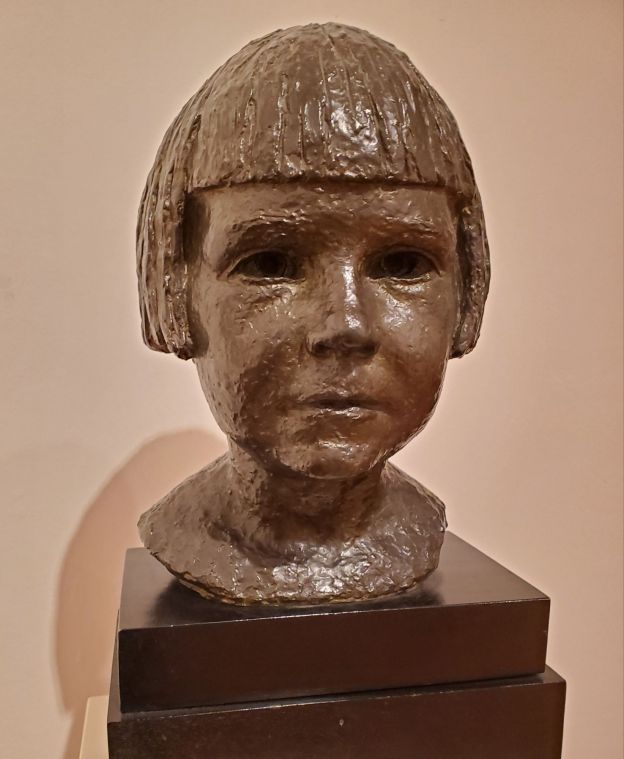
(*photo of “Joan”, sculpted by Benno Schotz, 1891-1984, in the Perth Art Gallery)

Leave her alone!!

Six days before the Passover, Jesus arrived at Bethany.. Here a dinner was given in Jesus’ honour. Martha served, while Lazarus was among those reclining at the table with him. Then Mary took about a pint of pure nard, an expensive perfume; she poured it on Jesus’ feet and wiped his feet with her hair. And the house was filled with the fragrance of the perfume….. Judas Iscariot objected, “Why wasn’t this perfume sold and the money given to the poor?”… “Leave her alone”, Jesus replied. “It was intended that she should save this perfume for the day of my burial.”

(Jn 12.1-7)

Therefore, there is now no condemnation for those who are in Christ Jesus, because through Christ Jesus the law of the Spirit of life set me free from the law of sin and death… What, then, shall we say in response to this? If God is for us, who can be against us? He who did not spare his own Son, but gave him up for us all – will he not also, along with him, graciously give us all things? Who will bring any charge against those whom God has chosen? It is God who justifies. Who is he that condemns?

(Rom 8.1&2, 31-33)

Dear Lord, your child so often trembles under the assault of accusing words, of silent judgement and implied criticism, of scorn and derision. Her wounds are known to you and precious; her grief and fear is known to you and pitied; her weariness at failure is known to you and met with your compassion and strength.

Have mercy on your child in her distress, for Lord, you know that often the voice which speaks so bitterly is her own. Lord, have mercy, strengthen your child in your love and hold her tight.

I write this week with some trepidation, because this is very personal to me. And I write almost hoping that most of my readers will not recognise the experiences of which I write because I would not wish anyone to share them! Words, the power of words to heal or to harm; the depth to which they can cut and leave scars which never fade.. and the sad fact that those words may be my own, as I lash out against myself in vicious condemnation. Friends, for some people this is real, and while I pray you may not know it in your own life, perhaps you have family or friends who do, and I pray your compassion for them.

The story of Mary anointing Jesus’ feet with perfume and drying them with her hair is familiar, and yet it was only recently that my attention was drawn to those beautiful words of Jesus as he rebuked Judas – “Leave her alone!” Can you hear the power in his voice? Can you feel the protection which he thus puts around Mary, clothing her shockingly intimate act of worship with glory and denying all others the right to criticise or judge her? And those are the words which Jesus speaks over me too…

The Lord speaks to silence the bullying, vicious voices of condemnation – from outside and from within. And as Paul writes to the believers in Rome, if God refuses to condemn us, then who else may do so?!

Like Mary, I am fully known and utterly loved – Jesus, my defender, my champion, my lord and master rejoices to call me his own, and to reserve to himself alone the right to rebuke me, to discipline and correct my path. No other has authority to speak over my life but the voice of love; no other has the right to do so, because no other has died for my sake, in order to make me pure and clean at last.

Jesus stands between me and my accusers – even when it is my own voice which would condemn. In Jesus, I can be glad and free and proud, knowing that it is only his opinion of me which counts, and he has shown me his love. I have been singing this old hymn all my life, always thrilling to the imagery of the opening words which well express what I have tried to articulate today. May they bless you as they do me!

Jesus, thy blood and righteousness, my beauty are, my glorious dress; Midst flaming worlds in these arrayed, with joy shall I lift up my head.

Bold shall I stand in that great day, for who aught to my charge shall lay? Fully absolved through Thee I am, from sin and fear, from guilt and shame.

When from the dust of death I rise to claim my mansion in the skies, e’en then this shall be all my plea, Jesus hath lived, hath died for me!

(NL von Zinzendorf 1700-60; translated by Jn Wesley 1703-91)

Love so amazing…

Jesus sat down opposite the place where the offerings were put and watched the crowd putting their money into the temple treasury. Many rich people threw in large amounts. But a poor widow came and put in two very small copper coins, worth only a few cents. Calling his disciples to him, Jesus said, “Truly I tell you, this poor widow has put more into the treasury than all the others. They all gave out of their wealth; but she, out of her poverty, put in everything – all she had to live on.”

(Mk 12.41-44)

Oh, the depth of the riches of the wisdom and knowledge of God! How unsearchable his judgements, and his paths beyond tracing out! “Who has known the mind of the Lord? Or who has been his counsellor? Who has ever given to God, that God should repay them?” For from him and through him and for him are all things. To him be the glory for ever! Amen.

Therefore, I urge you, brothers and sisters, in view of God’s mercy, to offer your bodies as a living sacrifice, holy and leasing to God – this is your true and proper worship.

(Romans 11.33-12.1)

My sacrifice, O God, is a broken spirit; a broken and contrite heart you, God, will not despise.

(Ps 51.17)

The revolutionary work of Jesus in his life, death and resurrection has depths of meaning and significance which humanity has never plumbed, and which will be revealed only in the days of the age to come when all is made new and God dwells with his people for ever in glory. But, it also achieved much that we can, at least partially, grasp, and there is so much to rejoice in and give thanks for as we meditate on all that happened that first Easter.

We know that because of the cross, the power of darkness and evil over humanity has been broken – the door has been opened that the slaves might be free and also that the opposition to God’s purposes in creation might be fulfilled. There is nothing which can stop God’s kingdom from being fully and gloriously established.

We also know that because of the cross, the brokenness and rebellion in our own hearts has been dealt with; God’s holy wrath against sin has been rightly expressed and the penalty paid. We know that as those who accept Jesus’ sacrifice on our behalf, we have nothing now to fear; not only this, but the one who frees us is also seeking to know and love us – he is inviting us into the relationship for which we were always destined and from which sin divided us.

What is our response? We cannot in any way enrich God, all we are and have is his gift to us! But the divine love which has passionately pursued and redeemed us compels a response.. Christ died that I might belong completely to him. Let me then hold nothing back – and let me also never be ashamed of how little there is! A loving and committed heart will always delight the Lord, and whether we come in robust health and worldly riches, or in poverty and illness, we are welcome. It is our intimate trust and acceptance of his love which he desires.

The missionary Amy Carmichael learnt much about bringing her troubles, weaknesses and apparent poverty to the Lord as her worship and offering. This poem beautifully articulates her shame at having not even patience to endure pain – no virtue with which to extol the Lord. But how tenderly her offering of emptiness is received, how gently she is reassured that her Master longs for nothing so much as to be present with her, how strong the promise that there will be songs of praise again.

The Song Bird’s Song

Thy servant, Lord, hath nothing in the house,
Not even one small pot of common oil;
For he who never cometh but to spoil
Hath raided my poor house again, again,
That ruthless strong man armed, who men call
 Pain.

I thought that I had courage in the house,
And patience to be quiet and endure,
And sometimes happy songs; now I am sure
Thy servant truly hath not anything,
And see, my song-bird hath a broken wing.

My servant, I have come into the house —
I who know Pain’s extremity so well
That there can never be the need to tell
His power to make the flesh and spirit quail:
Have I not felt the scourge, the thorn, the nail?
And I, His Conqueror, am in the house,
Let not your heart be troubled: do not fear:
Why shouldst thou, child of Mine, if I am here?
My touch will heal thy song-bird’s broken wing,
And he shall have a braver song to sing.

– Amy Carmichael (1867-1951)

It all comes down to this…

[Mary] turned around and saw Jesus standing there, but she did not realize that it was Jesus. He asked her, “Woman, why are you crying? Who is it you are looking for?” Thinking he was the gardener, she said, “Sir, if you have carried him away, tell me where you have put him, and I will get him.” Jesus said to her, “Mary.” She turned toward him and cried out in Aramaic, “Rabboni!” (which means “Teacher”) ….. On the evening of that first day of the week, when the disciples were together….. Jesus came and stood among them and said “Peace be with you!” After this he showed them his hands and his side. …. Jesus performed many other signs in the presence of his disciples…. These are written that you may believe that Jesus is the Messiah, the Son of God, and that by believing you may have life in his name.

(Jn 20.14-16,19&20,30&31)

Paul, a servant of Christ Jesus, called to be an apostle and set apart for the gospel of God – the gospel he promised beforehand through his prophets in the Holy Scriptures regarding his Son, who as to his earthly life was a descendant of David, and who through the Spirit of holiness was declared with power to be the Son of God by his resurrection from the dead: Jesus Christ our Lord.

(Rom 1.1-4)

But if it is preached that Christ has been raised from the dead, how can some of you say that there is no resurrection of the dead? If there is no resurrection of the dead, then not even Christ has been raised. And if Christ has not been raised, our preaching is useless and so is your faith… If only for this life we have hope in Christ, we are of all people the most to be pitied.

But Christ has indeed been raised from the dead, the first fruits of those who have fallen asleep.

(1 Cor 15.12-14,19&20)

How long had the hours been since that dark Friday afternoon, since the centre of all hope had been taken from the cross broken, bleeding and cold? How much deeper the cold in all their hearts as hope had died, and with it all sense of purpose, to be replaced by utter disorientation and despair. What fools they have been; how deeply deceived and now how agonisingly undeceived..

Now the women come to the tomb – released from ritual observance and still eager to honour one whom they had loved, trusted and followed by caring for his dead body as best they can. Now despair is rendered more bitter as the tomb is open, not just open but empty! What new indignity has been visited on the mortal remains of their beloved? There are strange visions of white figures who speak in seeming riddles about death being reversed, but what nonsense is that? Are they all going a little mad in their grief?

And then, as she comes to the end of what she can bear, Mary hears a voice and sees an unfamiliar form. Who is this that meets her as she turns in total despair from the empty tomb? Bewildered and swept away by a tidal wave of joy, she falls to the ground in worship and awe, recognising her Lord, the dead one who is now alive; the cold and disfigured flesh now vibrant and full of radiant life! She doesn’t puzzle over the science of it; she doesn’t worry about how it is possible; she lets the glorious indisputable reality of resurrection flood her heart and mind, restoring light and hope.

If the resurrection is true – and there are many witnesses to it, and many reasoned arguments which give authority to the claims of the apostles – then all that we thought we knew about life and death and life-after-death has to be re-thought. We are in a new realm, a place where the old rules don’t apply. The revolution has begun, and the raising of Jesus from the dead is the great trumpet call which announces the establishing of God’s eternal kingdom and the vanquishing of every rival power which would usurp his throne.

Since the resurrection is true, we also may share in Mary’s experience as our despair and  hopelessness is met with tenderness and the miracle of new beginning; met by a power greater than all that has intimidated and enthralled us, keeping us enslaved to sin, darkness and the fear of death. “Death is dead; Love has won; Christ has conquered!” – so goes the wonderful Easter hymn, ‘See what a morning’ (Townend & Getty, 2003). And that puts it in a nutshell. 

So, what will be your response, and mine? … it comes down to this: will I believe, in the outrageous and world-shattering reality of a resurrected Lord, and thus find life in all its rich eternity-infused fulness? 

Lo, Jesus meets us, risen from the tomb; lovingly he greets us, scatters fear and gloom; Let the church with gladness hymns of triumph sing, for her Lord now liveth, death hath lost is sting.

Thine be the glory, risen conquering Son; endless is the victory, Thou o’er death hast won!

( EL Budry 1854-1932, tr RB Hoyle)

Godly ambitions

Blessed are those who hunger and thirst for righteousness, for they will be filled.

(Matt 5.6)

Treasures gained by wickedness do not profit, but righteousness delivers from death..

Blessings are on the head of the righteous, but the mouth of the wicked conceals violence. The memory of the righteous is a blessing, but the name of the wicked will rot….

The mouth of the righteous is a fountain of life, but the mouth of the wicked conceals violence… The wage of the righteous leads to life, the gain of the wicked to sin…

What the wicked dreads will come upon him, but the desire of the righteous will be granted. When the tempest passes, the wicked is no more but the righteous is established forever…

The hope of the righteous brings joy, but the expectation of the wicked will perish…. The desire of the righteous ends only in good, the expectation of the wicked in wrath.. whoever trusts in his riches will fall, but the righteous will flourish like a green leaf…

The fruit of the righteous is a tree of life, and whoever captures souls is wise.. No one is established by wickedness, but the root of the righteous will never be moved……

In the path of righteousness is life, and in its pathway there is no death.

(Prov 10 -12, extracts)

And this is my prayer; that your love may abound more and more in knowledge and depth of insight, so that you may be able to discern what is best and  may be pure and blameless for the day of Christ, filled with the fruit of righteousness that comes through Jesus Christ – to the glory and praise of God.

(Phil 1.9-11)

Righteousness is a very technical word, not in common use outside christian circles, and even within them perhaps not always much understood.. This is not the place for a scholarly exposition of the subject, but reading recently in the book of Proverbs, I have been struck by the repetition of the word and all the ways it is associated with goodness, wisdom, integrity, generosity and generally beneficial outcomes.

To be ‘righteous’ is to be in a ‘right relationship’ with God, our Maker and Judge and in Proverbs we find many illustrations of what that looks like in practice – what it looks like for those who have been put right with God to live well. The righteous person is continually learning more about how to conduct themselves in tune with the way that God made us, and made our world – and as we do that we should not be surprised to find that we are more at peace, and also a blessing to others. In this way, the ‘righteousness of Christ’ – that is, the intimate, loving relationship we now have with God because of the saving work of Jesus – bears fruit in us, and we are encouraged. Our fundamental identity has been changed by Jesus’ redeeming work, and that change in turn results in ongoing transformation of all that we are.

In his teaching on the mountain, Jesus commends those who ‘hunger’ for righteousness, and in his letter to Philippi, Paul prays for his readers to be filled with ‘the fruit of righteousness’. I think therefore that we may make it one of our godly ambitions, a worthy thing to desire as the Spirit works in us by his power to transform and make us like Jesus.

We have been made right with God by the death and resurrection of our Saviour Jesus Christ; and yet we are still being made right with God as the Spirit works change within us. Those changes bear fruit which in turn encourage us to persevere and strive to walk ever more closely with our God as we see all that we have gained through being put right with him. I would encourage you to have another look at the extracts above from only 2 chapters of Proverbs, where the fruits of righteousness are described. Consider what it is to know that the memory of your life is a blessing to others; ponder on the security which is yours, in having a root that cannot be moved; rejoice in the assurance that you are set on a pathway to life, from which even your mortality cannot deflect you!

Almighty God and Father of my Lord Jesus Christ, through whom alone I am put right with you for eternity, and in whom I am secure as ‘righteous’ in spite of my ongoing frailties, I praise and thank you for the work of your Spirit. Thank you that even when I am fed up and frustrated with myself, yet your power is transforming me and applying the righteousness of Christ to my life. Thank you that I am on the pathway to life in your nearer presence and nothing can take me away from that. Go on working out your righteousness in my life, that I might glorify you and be a blessing to others, for the sake and in the name of the Lord who died for me, Jesus Christ, Amen.

Where is my security?

The name of the Lord is a fortified tower; the righteous run to it and are safe.

The wealth of the rich is their fortified city; they imagine it a wall too high to scale.

Before a downfall the heart is haughty, but humility comes before honour.

(Prov 18.10-12)

A good name is more desirable than great riches; to be esteemed is better than silver or gold.

(Prov 22.1)

Therefore I tell you, do not worry about your life, what you will eat; or about your body, what you will wear. For life is more than food, and the body more than clothes.. Who of you by worrying can add a single hour to your life? Since you cannot do this very little thing, why do you worry about the rest?… For the pagan world runs after all such things and your Father knows that you need them. But seek his kingdom and these things will be given to you as well.

(Lk 12.22&23,25&26, 30&31)

I remember singing a children’s song – with actions – based on this verse in Proverbs about the name of the Lord being a strong tower. It was very popular, and our faces would be filled with glee as we waved enthusiastically from our imagined tower, signifying total security and peace. As an adult in a peaceful, law-abiding and prosperous land, reading these words makes me think how readily we behave more like the proverbial rich man, who considers his wealth as a strong and effective barrier to all trouble and grief. Our culture, grounded in an innate confidence in human abilities and a rejection of the possibility of our being entirely in the hands of God, simply throws money at problems in order to make them go away. Wealthy people spend to ensure privacy, peace, security, health and longevity, beauty and … more wealth.

If I were transplanted from my comfortable home, prosperity, health and freedom from physical threat to a land undergoing war.. where then would my security lie? All of a sudden the physical health which I prize so highly, is shown to be as fragile as eggshells, death is an ever present threat – where then is my security? In the end, no human ingenuity can protect us from death – although many would like to think it could. And that is the ultimate threat against which we seek security.

These verses are a strong corrective lesson to me when I have been carried away by the latest diet and exercise advice on prolonging life and delaying ageing; or when I am being tempted to imagine that a top-quality pension plan will ensure a long, happy and healthy retirement. NOTHING that we do as human beings can stand in the way of God’s will for us – and if I am to live till 99, then the Lord in his goodness will provide for me. If I am to die like my father at 69, then again, will I not be humble enough to accept that He knows best and that in his will alone I am secure? Worrying about it will not make a bit of difference to whether I am to live for another 9 or 39 years!

No, my focus and trust need to be continually brought back to God my Father; to his promises and his kingdom. If I am in any way wealthy, let me use the resources of money, time, health and opportunity in serving the kingdom and leave the business of ordaining my life’s future path to the One who alone knows what is best.

Almighty and merciful Father, thank you that you know how frail your creatures are, and that you know how readily we presume upon the riches of your gifts to us – be they health, wealth, peace or any other good thing. Forgive us when we elevate the gifts above the giver, and in doing so place our trust and hope in them. We may lose all these gifts so quickly, and yet never lose your love, your promises, and our place in your family and your kingdom.

Let us hold our riches on open hands, yielding them to you to be used as you desire and not clutching them to our hearts for dear life. Have mercy on those who are poor in this world’s good things – health, wealth, peace and security – and may we in our wealth be part of your merciful provision for them. Make us generous and cheerful givers, and deliver us from the fruitlessness of worrying about ourselves! For Jesus’ sake we pray, Amen.

Breath-taking…

O vast Rondure, swimming in space,
Covered all over with visible power and beauty,
Alternate light and day and the teeming spiritual darkness,
Unspeakable high processions of sun and moon and countless stars above,
Below, the manifold grass and waters, animals, mountains, trees,
With inscrutable purpose, some hidden prophetic intention,
Now first it seems my thought begins to span thee.

Down from the gardens of Asia descending,
Adam and Eve appear, then their myriad progeny after them,
Wandering, yearning, curious, with restless explorations,
With questionings, baffled, formless, feverish, with never-happy hearts,
With that sad incessant refrain, Wherefore unsatisfied soul? Whither O mocking life?

Ah who shall soothe these feverish children?
Who justify these restless explorations?
Who speak the secret of impassive earth?

Yet soul be sure the first intent remains, and shall be carried out,
Perhaps even now the time has arrived.
After the seas are all crossed,
After the great captains and engineers have accomplished their work,
After the noble inventors,
Finally shall come the poet worthy that name,
The true son of God shall come singing his songs.

(Walt Whitman: extracts from Book XXVI, Passage to India, 1871, as used in Ralph Vaughan Williams Sea Symphony,1910)

Let me exalt you, my God the king, and let me bless your name forevermore. Every day let me bless you, and let me praise your name forevermore.

Great is the Lord and highly praised, and his greatness cannot be fathomed. Let one generation to the next extol your deeds and tell of your mighty acts. Of the grandeur of your glorious majesty and your wondrous acts let me treat.

And the power of your awesome deeds let them say, and your greatness let me recount. The fame of your great goodness they utter, and of your bounty they joyously sing.

Gracious and merciful is the Lord, slow to anger, great in kindness. Good is the Lord to all, and his mercy is over all his creatures..

Your kingship is a kingship for all time, and your dominion for all generations.. The Lord’s praise let my mouth speak, and let all flesh bless his holy name forevermore.

(Ps 145 extracts, R Alter translation)

I am not in the habit of quoting poetry in this blog, but these words by Whitman are very much in my mind just now as they form the text of a piece of music which I am learning and will be performing with a chorus and orchestra later in the year.. The poet is lost in wonder as he ponders the globe which we call earth, aware of the immeasurable vastness which lies beyond our skies and also the unfathomable riches and mysteries which are all around us on our beloved planet. He meditates on the long ages of human existence, marked by struggle and exploration, an unquenchable search for more.. and instead of merely resigning himself to the unanswerable, he speaks a word of hope, of expectation, and points to the coming of the true poet, who will in some undefined way, meet the deepest longings of humankind.

I love this picture of how in the fulness of time, and in fulfilment of an eternal purpose,  God’s son has come to reveal the answer to our deepest need, and that answer is in words of power and beauty, of music and joyous celebration – don’t you thrill to the idea of our Lord as the great singer of songs? Surely the great author and the originator of music will bring with him the most marvellous music, beside which all our greatest composers will look like pale imitations, and we will finally hear for ourselves the songs which are the music of God’s nearer presence and glory!

Even now we hear echoes of the song, since Jesus has come; but its fullest expression awaits his return and remaking of all things.  For the present, we – like psalmist and his companions – sing our best songs when we sing and celebrate our king in all his goodness, and his eternal dominion. So often we feel that words are insufficient to express our wonder and thankfulness, yet when we combine them with music our hunger to worship is satisfied, and we join the praise of all God’s creation which is continually exalting him.

O Thou, transcendant… majestic beyond imagination, let breath be caught, let senses be entranced and worship rise from my heart as I reflect on your power and abundant generosity in creation and above all as I consider my Lord, the true Son of God and the great singer of songs, whose words are the words of life. 

Note: you may like to find and listen to a recording of the 4th movement of Vaughan William’s Sea Symphony, to appreciate the marriage of words and music!

My unruly thoughts..

O Lord, you have searched me and you know me. You know when I sit and when I rise; you perceive my thoughts from afar. You discern my going out and my lying down; you are familiar with all my ways. Before a word is on my tongue you know it completely, O Lord. You hem me in – behind and before; you have laid your hand upon me. Such knowledge is too wonderful for me, too lofty for me to attain.

(Ps 139.1-6)

.. no one knows the thoughts of God except the Spirit of God. We have not received the spirit of the world but the Spirit who is from God, that we may understand what God has freely given us… The person without the Spirit does not accept the things that come from the Spirit of God, for they are foolishness to them, and they cannot understand them, because they are spiritually discerned… But we have the mind of Christ.

(1 Cor 2.11&12,14&16)

The weapons we fight with are not the weapons of the world. On the contrary, they have divine power to demolish strongholds. We demolish arguments and every pretension that sets itself up against the knowledge of God, and we take captive every thought to make it obedient to Christ.

(2 Cor 10.4&5)

Words matter very much to me – the words I use to express my thoughts, and those which others use to communicate to me. The discipline of writing this blog every week has been of immeasurable value, as I have wrestled with challenges and found words to articulate what I am learning (or trying to learn). However, I am aware that sometimes the words which I say to myself about life, about faith, about myself, are not necessarily the full truth. I am not talking about the times when I try to think better of myself than I ought, but those other times, when the voice in my head is vicious, negative, full of bitter condemnation and a triumphant hopelessness.

The devil knows that words matter to me; the enemy of my soul knows that I desire above all things to love my Lord, to become more like him, and to grow in faith and understanding. And that enemy knows that if I can be got to tell myself untruths, to believe his lies about me, then he can keep me penned up in a pit like the Doubting Castle so graphically described in Bunyan’s Pilgrim’s Progress… This vulnerability to assuming the worst about ourselves is not uncommon, and I think many faithful, conscientious and mature saints share it. A tender conscience, an awareness of the offence of sin in God’s sight, and a fear of thinking too highly of ourselves all combine to create a predisposition to be our own worst critics, and constant detractors. As is so often the case, we take something healthy – an awareness of our own persisting frailty – and turn it into a weapon for the enemy to use against us.

What is the remedy? Firstly, to be given wisdom to recognise that this is what is going on! And I am very thankful for that awareness, but more is needed if I am to break free from the cycle of despair which so readily entraps me. Paul says to the saints in Corinth that believers have the Spirit of God himself within us, the very mind of Christ, so that we may see and understand what is true – what our Almighty God and Father says and does, for and in us. The psalmist meditates on the alarming and encouraging fact that all our thoughts and deeds are known to God – these unruly thoughts of mine which are misrepresenting God just as surely as the serpent did in Eden when tempting Eve – ‘did God say…?’ I need not pretend that God doesn’t know, and can be sure of his love in spite of my unruly thoughts!

So the second step seems to be to bring my thoughts – the words of this inner critic – into the light of what Christ has done for me, and what God says about me.. to see if there is any correlation at all! And when I find that I am believing falsehoods, that my enemy has bound me by lies, then I take the weapons of truth, of God’s word, of Christ’s victory, and – as Paul writes – I wage war against all that has set itself up within me against the true knowledge of God. I can do this in the full assurance that my enemy is already defeated, and that as I am in Christ, so I am victorious over all that would keep me from the fulness of life which is God’s gift and desire for me. Paul doesn’t write – ‘we TRY to take captive every thought’ – he has no doubt that it can be done!

Dear Father, thank you that in Christ, all your children are victors over the enemy of our souls. Thank you that we can know the truth because your Spirit dwells within us, and is transforming us into the likeness of Christ himself. Aid us O Father, as we gradually uncover the lies which we have believed, and enable us to take those thoughts captive – to bring them up against your truth and to reject them. Set us free to live in glad humility as your redeemed people, knowing and living by the truth which is your Son, my Saviour, Jesus Christ. Amen.

In the world, but not of it….

Now when Joshua was near Jericho, he looked up and saw a man was standing in front him with a drawn sword in his hand. Joshua went up to him and asked, “Are you for us, or for our enemies?” “Neither,” he replied, “but as commander of the army of the Lord I have now come,,,”

(Jos 5.13&14)

Nebuchadnezzar.. said to them, “Is it true, O Shadrach, Meshach and Abednego, that you do not serve my gods or worship the golden image that I have set up?…. If you do not worship, you shall immediately be cast into a burning fiery furnace. And who is the god who will deliver you out of my hands?”

Shadrach, Meshach and Abednego answered and said to the king, “O Nebuchadnezzar, we have no need to answer you in this matter, If this be so, our God whom we serve is able to deliver us from the burning fiery furnace, and he will deliver us out of your hand, O king. But if not, be it known to you, O king, that we will not serve your gods or worship the golden image that you have set up.”

(Dan 3.14-18)

“I pray for them. I am not praying for the world. but for those you have given me, for they are yours….I have given them your word and the world has hated them, for they are not of the world any more than I am of the world. My prayer is not that you take them out of the world but that you protect them from the evil one… Sanctify them by the truth; your word is truth.

(Jn 14.9,14&15,17)

Do not be conformed to this world, but be transformed by the renewal of your mind, that by testing you may discern what is the will of God, what is good and acceptable and perfect.

Be joyful in hope, patient in affliction, faithful in prayer..

(Rom 12.2&12)

Do I trust God when things are not working out as I want them to? Whether on a personal scale, within my wider community or globally… Is God only worthy of my praise and loyalty when his ways make sense to me? Am I getting swept along in the tides and trends of social media and culture wars, so that my beliefs and attitudes are not being shaped by the truth anymore? Do I really believe that God can keep me in peace and hope through all the turmoil which is human life, or am I putting conditions on my trust?

The story of God’s dealings with humankind as revealed in the scriptures is of mess, muddle, failure and grief – God works through these things, bringing light out of darkness and always steadily fulfilling his purposes. The coming of Jesus, the revolutionary King who defeated death and inaugurated God’s kingdom in the face of all that evil could do, has not changed the context within which the story continues.

God has never aligned his kingdom with any human institution, no matter what that power may have claimed for itself. Joshua’s encounter with the commander of the Lord’s army showed how we ought to think at all times as God’s people – “Where is God working, how may I align myself with his purposes?” Jesus prayer for his followers was that they would be guarded by the Spirit as they remained in this broken world, kept apart by that divine shield to be witnesses to the light. If we let ourselves be enticed into expecting that human institutions will bring about peace, justice, freedom (all the things God’s kingdom promises), then we are without hope, and have nothing to offer our world Both sides of every argument always need to hear that third voice – God’s summons to humanity to recognise and worship him. Jesus confronted the religious and political establishments of his day, but also challenged those who were oppressed and rebellious – the kingdom is always counter-cultural. Followers of Jesus, those who are deeply rooted in God’s word, should be able to resist the pressures of society to conform to the latest trends and opinions. Truth is our anchor, the truth of God’s nature, his saving power and his coming kingdom.

The experience of Shadrach, Meshach and Abednego reminds us that resisting human power can be costly, but also shows us what our attitude should be when faced with reprisal or threats… If God chooses to deliver us, well and good. If for whatever reason he does not, then he is still our God, entirely worthy of our praise and devotion. Paul’s words to his friends in Rome speak directly into our situation in these days of challenge, upheaval and uncertainty – and it is only as those securely anchored in Christ that we can put these words into practice in our lives.

Heavenly Father, thank you for reminding me that I cannot put my hope in human institutions, but must rest solely on you. Thank you that when I do so, I am set free from worrying about what is happening in the world, and can come confidently  to you in prayer because You are able to bring light into the darkness. Thank you that your people around the world can offer your love and light; help us to stand apart from the tides of opinion and to be joyful as we hope in you. Help us to be present in your beautiful broken world, loving generously, and showing by our steadiness that we have an unshakeable foundation, our Lord Jesus Christ, Amen.

Love.. is

God spoke: “Let us make human beings in our image, make them reflecting our nature…”

(Gen 1.26. the Message)

Jesus said,”.. If you really knew me, you would know my Father as well. From now on, you do know him. You’ve even seen him!…. to see me is to see the Father”

(Jn 14.7&9. The Message)

Love from the centre of who you are; don’t fake it. Run for dear life from evil; hold on for dear life to good. Be good friends who love deeply; practice playing second fiddle. .. Be alert servants of the Master, cheerfully expectant. Don’t quit in hard times; pray all the harder. Help needy Christians; be inventive in hospitality.

Bless your enemies; no cursing under your breath. Laugh with your happy friends when they’re happy; share tears when they’re down. Get along with each other; don’t be stuck up. Make friends with nobodies; don’t be the great somebody.

Don’t hit back; discover beauty in everyone. If you’ve got in in you, get along with everybody. Don’t insist on getting even; that’s not for you to do. “I’ll do the judging,” says God. “I’ll take care of it.”

Don’t run up debts, except for the huge debt of love you owe each other… When you add up everything in the law code, the sum total is love.

(Romans 12.9-19, 13.8&10. The Message)

By his son, God created the world in the beginning, and it will all belong to the son at the end. This son perfectly mirrors God, and is stamped with God’s nature.

(Heb 1.2&3. The Message)

What are we here for? What is our purpose, and the reason for being human with all that means? The very first words of the Hebrew Scriptures give us the fundamental answer from which an infinite variety of paths will flow – we are here in order to be like God! That doesn’t sound very practical… so let me unpack a little.

God is revealed as the Maker, the great Artist and source of all creative energies. To be like Him therefore is to reflect his creativity, delight in beauty, to share in his care for creation. That overwhelming abundance of good things is made to glorify God and reflect his nature, his generosity; it is an expression of a love that delights to give.

The little word ‘us’ indicates to the reader that God exists in community; beyond time and created space, our Almighty and infinite Maker is in loving relationship, enjoying and sharing at the very heart of deity. To be like God then, is to be made for community, for mutual appreciation and affection, for shared life.

Let’s think in particular, of how to be like God is to love –  how does God love? I believe that all of scripture is a revelation of love in action. From the codes of law which God gave as an expression of love, through the admonitions of the prophets against the lovelessness of God’s people, and ultimately in Jesus life, death and resurrection that love is demonstrated and expressed. This is not a soft, indulgent love; this is a never-quenched flame which burns to achieve the best possible outcomes for the beloved – guarding them against danger, calling them back from the ways of folly and rebellion, providing for them what they most need and cannot achieve for themselves.

We, as the creatures of this loving God, are not called to do all that He does. But in Jesus we have a clear example of what it means to be “like God” as mere human beings. Jesus claimed to be God, to be revealing God to humanity in a perfect way. So Jesus shows us what it is like for a human being to love as God loves.

As you read the wonderfully rich list of love-in-action in Romans, consider how Jesus did all these things during his time walking among us. Rejoice that none of these things is out of our reach! We are not being called to an impossibility but to the fullest kind of life, one which is our calling, that perfectly fits what we are designed for – to love, because God first loved us.

We have this one shared purpose, and there will be as many expressions of it as there are human beings – no two people will live for and with God in the same way, but each may know what it is to love God and others with all that they are. Love, is to offer up all that God has given us in his service, generously sharing his gifts and our own experiences of his goodness in that unique path to which we are assigned by his grace.