Category Archives: Christ’s sufficiency

But I will boast!

As for me, may I never boast about anything except the cross of our Lord Jesus Christ. Because of  that cross, my interest in this world has been crucified, and the world’s interest in me has also died. It doesn’t matter whether we have been circumcised or not. What counts is whether we have been transformed into a new creation. May God’s peace and mercy be upon all who live by this principle, they are the new people of God.

(Gal 6.14-17)

This is what the Lord says: “Don’t let the wise boast in their wisdom, or the powerful boast in the power, or the rich boast in their riches. But those who wish to boast should boast in this alone: that they truly know me and understand that I am the Lord who demonstrates unfailing love and who brings justice and righteousness to the earth, and that I delight in these things. I, the Lord, have spoken!”

(Jer 9 23-24)

The cross of our Lord Jesus Christ…. there is a subject upon which one could lavish a lifetime of study and reflection and still never reach the end! It is the pivotal point upon which all of history revolves, and by which the eternal destiny of humanity is determined. And for every individual follower, it is the foundation of their new life, the power which re-creates them as children of God with the promise of eternal life and the guarantee of his constant presence.

In the cross, God demonstrated that he was indeed a God who brings justice to the earth, because it was there that the price demanded by holiness for sin was paid – the wages of sin is death. And there too, was demonstrated the unfailing love of God, because it was God himself who paid the price, so that we might be spared! Our God, he it is that delights in justice, in unfailing love, and righteousness – that all should be done well. How great should our delight in this God be! We can most legitimately boast in our God, the only one who can fully deal with the brokenness of our hearts and our world, while at the same time restoring us to the perfect relationship with him for which we were designed.

What human wealth could ever buy a clean conscience or a quiet mind? What power on earth can bring a holy God back into fellowship with rebellious, proud and stubborn creatures? What wisdom could discern the only way to restore the broken image of God in his creatures? When we begin to understand what was achieved on the cross, then we begin to understand our great God, to glimpse the unfathomable love, the amazing grace, which are his essential character. There can be no end to the ways in which we can truthfully glory in, boast about our wonderful God.

This afternoon, I watched my small nation’s rugby team winning – against the odds – the opening game of the 2017 Six Nations tournament. It was thrilling, nerve-wracking, exhilirating – all the things a great sporting occasion can be; and I am proud tonight to be a Scot, to identify with the team in their commitment, passion, skill and doggedness. But as we all know – especially Scots! – sporting greatness is a fleeting thing, and not to be relied on for national pride or peace of mind. As individuals, we dare not invest our security or identity in such things, because they CANNOT be relied upon, they will fail us and leave us adrift and vulnerable. That is the point which Jeremiah is making when he dismisses the claims of wealth, power and wisdom to our loyalty and reliance.

There is nothing upon which it is safe to build our identity, our lives, except the Lord of unfailing love, who delights to bring justice and righteousness to the world. And it is supremely in the cross of Jesus Christ our Lord that we see this God revealed to us, when everything  needful was done to restore us. We add nothing, no matter how wise, powerful or rich we are, to the cross. If we cannot accept it without paying or contributing in some way, we have failed to understand what God is doing, and what a state we are in before his holiness. Let us rejoice in this complete work, in the cross, and be at peace!

I will not boast in anything, no gifts no power no wisdom;

But I will boast in Jesus Christ, his death and resurrection!

Why should I gain from his reward? I cannot give an answer;

But this I know with all my heart, his wounds have paid my ransom.

(Stuart Townend) 


Whispers of peace

Then the Lord said to Moses, “Tell Aaron and his sons to bless the people of Israel with this special blessing: ‘May the Lord bless you and protect you. May the Lord smile on you and be gracious to you. may the Lord show you his favour and give you his peace.’

(Numbers 6.22-26)

But you, O Bethlehem Ephrathah, are only a small village among all the people of Judah. Yet a ruler of Israel, whose origins are in the distant past, will come from you on my behalf…then at last his fellow countrymen will return from exile to their own land. And he will stand to lead his flock with the Lord’s strength, in the majesty of the name of the Lord his God. Then his people will live there undisturbed, for he will be highly honoured around the world. And he will be the source of peace.

(Micah 5.2-5)

Our world has been tormented and scarred by warfare and disharmony between individuals and nations ever since the beginning; we are incapable of living peaceably together. But the kind of peace which is being promised all through the bible narrative is much more than simply that absence of conflict for which we long. The Hebrew word which we translate as peace, is ‘shalom’, and it has a much richer meaning including a sense of completion; health; thriving and fulfillment. All the barriers to fullness of life will be gone, and every created being will be able to rejoice without fear or restriction in what and who God made them to be.

The story of how the people of Israel should have entered and conquered the land promised to them is for us a picture of the unfettered, fruitful living which God desires for all his children. If the people had obeyed and driven out all the nations living in the land, they would indeed have dwelt in peace, receiving all the blessing God intended for them. Instead they compromised, chose to live alongside the other nations, and in time, were led away from worship of the living God into idolatry, with its disastrous consequences of destruction and exile. It is a warning to us to be aware of those things in our lives which we know pull us away from God, and which we yet cherish. Where then will our peace go?

This side of the winding up of time, we cannot hope for complete peace, the power and consequences of sin in our broken world are too much present. But as followers of Jesus we can trace this promise of peace, of wholeness and freedom to thrive, with confidence that it  applies to us. We live between the first coming of the one who – as Micah said – is the ‘source of our peace’, and his triumphant return, when all the opposing forces will be finally swept away.

In his letter to the Roman church – which experienced appalling persecution and had little hope of ‘peace’ in the sense of being free from assault – Paul writes these incredible words:

Therefore, since we have been made right in God’s sight by faith, we have peace with God because of what Jesus Christ our Lord has done for us. Because of our faith, Christ has brought us into this place of undeserved privilege where we now stand, and we confidently and joyfully look forward to sharing God’s glory.

We can rejoice, too, when we run into problems and trials, for we know that they help us develop endurance. And endurance develops strength of character, and character strengthens our confident hope of salvation.

(Romans 5.1-4)

We have peace, that freedom from grinding fear, because we are already regarded by God as right with him – no longer at enmity with him – all through Christ’s redeeming work on the cross. None of the the things that ultimately matter can be damaged or stolen from us – our Saviour has made us secure for ever and we will share God’s glory.

And not one of the difficulties which yet lie ahead, or which have dogged our lives for years, can undermine that peace. In fact, Paul seems to be saying that because we are safe in Christ, our very difficulties can be received as sources of blessing because God is at work through them to make us more like Christ – more like the glorious original he had in mind when he conceived us!

We need not worry, or fret that our struggles or sufferings will endanger our relationship with God because NOTHING can do that, and so we can accept each one with a peaceful heart. What a wonderful reason for celebration as we look forward to celebrating again the birth of the Prince of Peace, and praying once more with fervour for his speedy return!

Can I help you?

So, friends, we can now – without hesitation – walk right up to God, into “the Holy Place.” Jesus has cleared the way by the blood of his sacrifice, acting as our priest before God. The “curtain” into God’s presence is his body.

So let’s do  it – full of belief, confident that we’re presentable inside and out. Let’s keep a firm grip on the promises that keep us going. He always keeps his word.

Let’s see how inventive we can be in encouraging love and helping out, not avoiding worshipping together as some do but spurring each other on, especially as we see the big Day approaching.

(Hebrews 10.19-25, The Message)

So I sometimes – often?! – get discouraged about life, about God’s work and the apparently impenetrable resistance of the people around me to any interest in the good news of the gospel.

I know that I am blessed beyond measure to be one of God’s children, to stand before him as beloved, cleansed, with hope and a future, purpose in life’s journey and glory to come. I know the power of that truth to lighten my dark days, strengthen my nerve in persevering service, and bring joy in every circumstance. I know that this is the best news anyone ever heard, that it is life-transforming and life-giving.

When I join with others in praise of Jesus, celebrating his character, his redeeming work and glorious triumph over sin, I am healed, my perspective on this world and all its trouble is restored. To be given fresh glimpses of the depths of love which are for me, reminded of the price that was paid, and the security of my hope.. all these things are precious beyond telling. And yet still, to my shame, I become discouraged.

It is surely good and right that we – as Jesus’ followers – long to see others responding to his love, so that his name might be made greater, and that their lives might share the blessings which are so abundantly ours! The writer to the Hebrew church reminds them of the truth about who they are in Christ – a blood-bought people, with free access to God’s throne; a people whom he delights in. These truths, combined with the promises of an utterly faithful God, are the basis for our life and witness. We have treasures to share, both with each other and with those who as yet do not believe.

I am relieved that the writer does not scold the readers for a lack of enthusiasm, but rather exhorts them on the basis of wonderful realities to find a new courage and energy for the work their Lord has given them. Some translations use words which imply a degree of reluctance on the part of the readers to be up and doing – one does not have to spur on a horse which is already galloping as fast as it can!! Perhaps the readers of the letter to the Hebrews were suffering from discouragement, even as we do, seeing the scale of the opposition and losing heart. It is fatally easy to see the task ahead in light of our own strength instead of God’s strength, and to assume that we can do nothing about it!

So how can we be ‘inventive’ in provoking one another into action, in stirring one another up to be loving and active for the sake of the gospel?

I believe that one of the most powerful ways we can do this for each other, is to share with one another the stories of God’s activities – in our lives, and those of others. I regularly attend a mission prayer meeting, and while there are plenty of needs to bring before God, we are always encouraged by the number of answers to prayer – often miraculous in our eyes, and always demonstrating that God is indeed powerful and wise. He knows and meets the needs of his people, and he can call men and women to himself in the most astonishing ways.

So my challenge for myself, is to be more conscious of God’s direct action in my life – what can I tell my friends of his goodness to me this week? How can I encourage them – not by boasting of special blessings, but by reminding them through my story that our God is good and great and faithful?

Lord, give us clear sight, to recognise your hand at work, your daily blessings and moment-by-moment grace. Let us take heart and encourage one another on our journey in faithful service of you, our almighty God.

End of chapter…

Don’t store up treasures here on earth, where moths eat them and rust destroys them, and where thieves break in and steal.

Store your treasures in heaven, where moths and rust cannot destroy, and thieves do not break in and steal.

Wherever your treasure is, there the desires of your heart will also be.

(Matthew 6.19-21)

Moving house is a time when the quantity of stuff one possesses is frighteningly visible, being gathered onto a large lorry by a whole squad of people. It is  good to take stock and think about what is really necessary before adding to the heap of stuff to be packed, and we have given a good deal of time recently to doing just that.

There have been trips to charity shops, the recycling facility and the local dump, but also opportunities to help local organisations with things that we don’t need and they can use. It is a great blessing of our era, that social media and the internet allow us to find ways to make sure resources can be reused as often as possible. But some of the things are hard to let go….

The treasures I am reluctant to lose are largely connected with the raising of my children – books, toys, games and craft materials, all bearing witness to hours spent together and reminding me of their growth and development. But if the children – now both young adults in reality – are willing to let these things go, why am I struggling? We are passed those stages now, the colouring books and magnetic puzzles, the model-making kits and boxes of brightly coloured beads are redundant.

They are not perhaps the treasures that Jesus was particularly referring to, but I feel that his words here do apply to my situation as well. I have a choice here: I can cling on to the relics of childhood (telling myself that one day, someone else might come and use them, which is a delusion), or I can accept that this chapter of life is now closed, the story has moved on, and I must too. If I refuse to let go of these things, I am placing too much importance on what has been, instead of embracing what is, and looking to what will be.

My Father in heaven knows my mother-heart, he made it, so that I might love and raise these young people for him. He knows that I have many good memories, of simple days and the glorious free laughter and love of young children. Those were sweet to my spirit, and I am right to treasure them. But he has new blessings for me here, now, with the teenager and the young man who are increasingly independent, who laugh more at their little mother than with her, but who I am proud to call my own.

So what does it mean, as a mother, to store my treasures in heaven? Perhaps it is the literal and continual committing of my children into God’s hands, reminding myself that they were his before they were mine, and that his love for them is so much greater than mine. The love I bear for them, and the joy they bring me, are treasures which I can only keep sweet, healthy and clean by continually bringing them before God, to cleanse me of selfishness and the desire to control or manipulate their lives according to my own will.

I must also guard against allowing love for my children to become an idol, so that unless God gives them what I want for them, I cannot trust him. I have seen that happen, and it is such a painful situation, when God’s dealings with a child become the wreck of a parent’s faith. Ultimately, my treasure in heaven must be Christ alone, and my allegiance to him cannot be conditional upon my children’s prosperity, health or happiness.

So I will get rid of the stuff that my daughter is happily throwing out, to make room for her new life in our new home, and then the exciting adventure which will lie ahead after that. I will seek to walk gladly with her into the next chapter, thankful for the past but not clinging onto it, and trusting our loving Father for all our futures.

Good news from beyond…

For sin is the sting that results in death, and the law gives sin its power.

But thank God! He gives us victory over sin and death through our Lord Jesus Christ.

(1 Corinthians 15. 56&57)

Were the hosts of heaven holding their breath? The son of God has put himself forward as the chosen champion; the one who will dare all against an implacable foe for the sake of an otherwise hopeless cause – a humanity under God’s judgement.

As the sky darkened that Sabbath eve, it was as if a curtain was being drawn between the watching eyes and the two protagonists. The final glimpse of Christ our elect warrior, is as he breathes his last, and enters the theatre of death for us. Then the stage appears to fall silent and empty, and we know no more.

All seemed lost as the sun set that night. All the long hours of Saturday, the bewildered disciples hid, nursing their grief and loss, profoundly confused and stunned by what they had experienced. How they must have been tormented by the memory of their failure to stand by him at his trial, by the soul-searing knowledge of their own weakness and all the appalling “If only..” thoughts which haunt those prematurely bereaved. Did they recall anything of what Jesus had taught them on the road to Jerusalem a few weeks earlier? Did his words return with the weight of fulfilled prophecy behind them? He had told them that he would be handed over to suffer and die.

Did they remember the other thing he had told them would happen…. that after three days, he would rise again? What did they make of those words during the long hours after his body had been taken to the tomb, as time crawled by and all the savour and vigour drained from life ?

And then, in the early light of Sunday, the women came tearing from the tomb, gasping out that the body was gone, and an angel had told them the Christ was risen! Did they dismiss it as feminine hysteria, grief-deluded wishful thinking? Or did Jesus’ friends finally begin to realise that – along with everything else he had told them – this was also true?

Surely, heaven must have exploded with the song of triumph as the son of God surged forth, presenting himself before the Father to receive the victor’s crown. This was what had been planned for, agonised for, laboured for – the great divine conspiracy to deliver captive humanity from the slavery of sin and death. And now, it had been fully achieved, as Paul tells us :- “For we know that since Christ was raised from the dead, he cannot die again, death no longer has mastery over him.” (Romans 6.9)

In his great love for us, God did not leave us in any doubt about the nature of that victory, so that the word which came to the women, to the disciples, and above all the absence of the dead body of the Lord all proclaimed the victory won. The warrior had conquered, succeeding in his battle beyond all that they had dreamt – not a small political triumph over an occupying power, but an eternal, universal defeat of the power of evil to cut humanity off from God.

We shall never know what our champion faced for us, what agonies he claimed the privilege of bearing for our sake. We can only wonder at his courage and worship him for the love which drove him. He fought the fight for us. He gives us the prize, his victory is ours. And as we see his transformed, resurrected body, we get a glimpse of the incredible future in store for all of us who believe.

This too is for us, this new life beyond the grave. How bright is the light that shines on us on Easter Sunday morning; what glad tidings we hear, of the death of the power of sin in our lives. The past has no power over us now. The victory of our champion sets us free to live in bright hope, with steady courage and a confident step. God grant that we may indeed live in that victory!

No guilt in life, no fear in death, this is the power of Christ in me;

From life’s first cry to final breath, Jesus commands my destiny.

No power of hell, no scheme of man, can ever pluck me from his hand:

Till he returns or calls me home, here in the power of Christ I’ll stand.

(Stuart Townend & Keth Getty, 2001)

Walking into the dark

I offered my back to those who beat me, my cheeks to those who pulled out my beard; I did not hide my face from mocking and spitting.

Because the Sovereign Lord helps me, I will not be disgraced. Therefore I have set my face like flint, and I know I will not be put to shame.

(Isa 50. 6&7)

As the narrative of Jesus life draws to its climax and close, all four gospel writers slow down the pace, and give us great detail of these last days and hours, leaving no room for doubts about the significance of what is happening. I get the impression of a spotlight growing increasingly focussed on the one figure on stage, and the surrounding scene growing dim. The background music becomes more and more urgent, full of tension, apprehension and even horror as events unfold.

On Palm Sunday, the scene is full of light and hope, colour and rejoicing. Many in Jerusalem think that they are greeting a potential leader who will deliver them from Roman rule – although his choice of a donkey as a steed must have made them wonder!! But as the week goes by, and Jesus continues to confront the religious authorities, orchestrating their opposition and determination to bring him down, the light begins to fade. The crowds in the background are beginning to wonder about this Messiah and just what kind of redemption he is offering.

Jesus is walking steadily towards a long-desired goal, his face set like flint and his will holding him on course. He is the long-awaited and only true Lamb of God, come as the Baptist had said to take away the sins of the world. And there was only one way in which that could be done.

From the very beginning of God’s dealings with humankind, it had been clear that only by the shedding of blood could the abhorrence of sin be truly dealt with. A price must be paid, the highest possible – as represented in temple sacrifices by spotless or perfect animals. The anger of a holy God against sin could not be turned aside with soft words, there was no justice in that, and it would make a mockery of his purity. If God is God, utterly holy and utterly just, then in order to receive sinful humanity back into his family, their offence against him has to be paid for. And we cannot ever pay that price – our chronic sinfulness makes it impossible that we should be the perfect sacrifice.

So Jesus came. The spotless one who would live the life we could not live, and die the death we should have died, so that we might live again as new creatures, no longer stained and abhorrent to God, but welcome and beloved. It is beyond the power of words to tell or music to express the greatness of such love for the unlovely. We can and must simply fall in worship, aghast that such agony was necessary, but also amazed with gratitude that it was offered and sufficed!

As I watch Jesus walk into the darkness of Good Friday, with the stormclouds of evil gathering around him and his friends fleeing in terror – as I surely would have done too – I am overwhelmed with pity, and grounded by grief and shame for my own part in his suffering. His trust in his father was absolute, it was the ground beneath each step towards the cross, and the breath behind every word he spoke in preparing his disciples and answering his accusers. Was there ever such courage? Where shall I find another hero like this one? One who would dare all for my sake, even to the extreme agony of separation from his father as the weight of sin finally descended upon him.

There was no other good enough to pay the price of sin;

He only could unlock the gate of heaven and let us in.

(C.F. Alexander 1818-95)

May I be filled once again with a sense of the debt I owe, that I might surrender over again to this relentless, redeeming love, holding nothing back from my Lord who held nothing back for me.

The best I can do?

O God, we meditate on your unfailing love as we worship in your Temple.

Let the people on Mount Zion rejoice. Let all the towns of Judah be glad because of your justice.

Go, inspect the city of Jerusalem. Walk around and count the many towers.

Take note of the fortified walls and tour all the citadels, that you may describe them to future generations. 

For this is what God is like. he is our God forever and ever, and he will guide us until we die.

(Ps 48. 9,11-14)

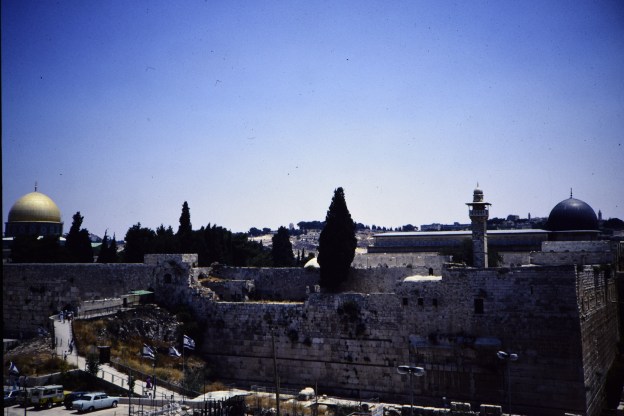
I used to wonder why the psalmist exhorted his hearers to go and count the towers of Jerusalem, it seemed a pretty weird thing to do as a way of worshipping God! But I now realise that this physical act of walking and counting was a very practical way of directing attention to how God had kept his promises to his servant David, that a temple would be built, and a city established where a king would reign. The city itself was a memorial, a testimony to God’s faithfulness. Yes, it was strong, but it was God’s strength which established and maintained it, and it was His presence which made Mount Zion a place of rejoicing

The Old Testament stories are full of memorials, ways that God appointed to help the people to remember the truth about Himself, so that their faith could be strengthened and passed on to future generations. The twelve stones carried from the bed of the Jordan river to create a pillar at Gilgal when Joshua led the people out of forty years wandering into the Promised land; the Ebeneezer stone raised by Samuel marking the defeat of the Philistines; and the great Passover Feast itself, which recalled the dramatic events leading up to the deliverance from Egypt. These each in their own way prompted the people to recognise that it was God who was at work – rescuing, leading, preparing the land for them – and to celebrate the God who was so powerful on their behalf and crucially to trust that God would continue to be with and for them in the future.

As followers of Jesus, we have one particular memorial, established by him, the night before he died. The Lord’s supper, communion, call it what you like, is a memorial, a physical act which he commands us to carry out for just the same reasons. When we take bread and wine, remembering his death for us, we recognise that God was at work, celebrate His power to achieve what was beyond us, and strengthen our faith in His ongoing presence and work in our lives now.

There is another reason for memorials, hinted at in the psalm – that we might tell future generations about the God whose acts are celebrated.

We may not be confident in debating the philosophical grounds for belief in God, but we can legitimately share our personal experiences of His power at work in our lives. We can tell the stories of our own private memorials – celebrating times when we saw Him at work; showing people the God who has saved us and come to live with us. We can do what the early disciple Andrew did, when he went to find his brother Peter, in order to bring him to meet Jesus. We can pray for others for God to bless them in the way that the four friends of the paralysed man fought so hard to bring him into Jesus’ presence. We can do as the Samarian woman did after she encountered Jesus at the well in the noonday heat – bringing her neighbours to meet the man who knew all about her.

We cannot in our own power force anyone to accept Christ as their Saviour, but we can and must make every effort to ensure that our lives reflect Him. We may be the only stories about Jesus that a person ever hears, what are we telling them?

It is always good to care for physical needs, to show practical love and care, but the best thing we can do for anyone, is to bring them to Jesus, because ultimately their eternal salvation matters more than anything else. It is God alone who convicts people of their need, who brings faith to life, and we can have confidence in His power to do this. Our job is to say, “Come, we have found the Messiah, we have found God dwelling with us!”

May we have confidence to obey, and wisdom to know how to do it, so that many souls will yet be gathered into the kingdom!

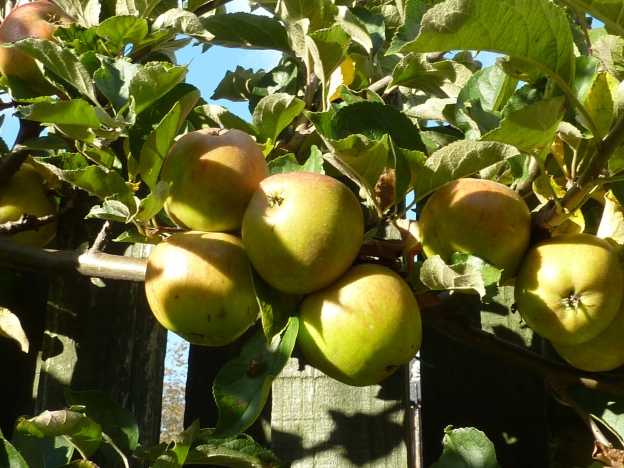
Jesus Christ, the apple tree?

The tree of life my soul hath seen, laden with fruit, and always green,

The trees of nature fruitless be, compar’d with Christ the apple tree.

His beauty doth all things excel, by faith I know, but ne’er can tell,

The glory which I now can see, in Jesus Christ the apple tree.

For happiness I long have sought, and pleasure dearly I have bought; 

I missed of all but now I see ’tis found in Christ the apple tree.

I’m wearied with my former toil, here I will sit and rest a while; 

Under the shadow I will be of Jesus Christ the apple tree.

With great delight I make my stay, there’s none shall fright my soul away,

Among the sons of men I see, there’s none like Christ the apple tree.

I’ll sit and eat this fruit divine, it cheers my heart like spiritual wine.

And now this fruit is sweet to me, that grows on Christ the apple tree.

This fruit doth make my soul to thrive, it keeps my dying faith alive;

Which makes my soul in haste to be with Jesus Christ the apple tree.

(  Anon , first published in the 18th century)

Old songs can be hard to sing, hard to understand, because their language is antique and unwieldy, words have shifted in their meaning, and images and allegories which were once familiar are now strange.

Many of the older songs traditionally sung at Christmas come under this heading, and I appreciate that for this reason, few modern leaders choose to use them in congregational worship. But if – like me – you have enough of a taste for old language, for rich imagery in praise, then there is great sweetness in these pieces.

The picture of a tree full of fruit and goodness is an attractive one, and for the Christian, the image immediately conjures up the tree of the Garden of Eden – of the knowledge of good and evil – where humankind first rebelled against God and rejected his authority in their lives. But the tree of life is described in detail in Revelation 22, with its continual fruit and leaves for the healing of the nations. This tree is not a source of curse and loss, but of healing and life! And we know that it is in Christ, by his work on the cross, that we are healed and restored to newness of life.

The beauty of Christ’s love for us, that heart-piercing loveliness which brings us to our knees in adoration of the one who counted us worth dying for, makes this tree the one above all which we cherish, and prefer. Nowhere else are we so satisfied as here, and here we rest, as in the shade of a tree on a hot day. In Christ we rest, because all the labour of our salvation was his, not ours, and he has extended to us all the privileges of glory to treasure.

And so we live by his fruit, because it is the forgiveness which he won for us which lifts us out of darkness into light and God’s favour; it is the new life which is ours in him that enables us to live in hope in this world and with confidence for the next; it is the constant presence of his spirit within us, like the food which nurtures our bodies, that feeds our souls, our faith, our walk with God. If I do not eat, I die; and if I refuse the fruit of my precious Lord, then surely I will starve and waste away, and the life which Christ died to give me will be a travesty, a ghost and dreadful to see.

So as I anticipate the feast of Christmas, celebrating the coming of Jesus, God with us, I will feast on the great images which deepen my understanding of him – the Shepherd; the Gate; the Water of Life; the Bread of Life; the Alpha and the Omega; the bright morning star; the Messiah; the son of David… and the apple tree!

May we be richly nourished in the days ahead..

It all comes to this..

All praise to God, the Father of our Lord Jesus Christ. It is by his great mercy that we have been born again, because God raised Jesus Christ from the dead. Now we live with great expectation, and we have a priceless inheritance – an inheritance that is kept in heaven for you, pure and undefiled, beyond the reach of change and decay.

(1 Peter 1.3&4)

Therefore, holy brothers, who share in the heavenly calling, fix your thoughts on Jesus, the apostle and high priest whom we confess.

(Hebrews 3.1)

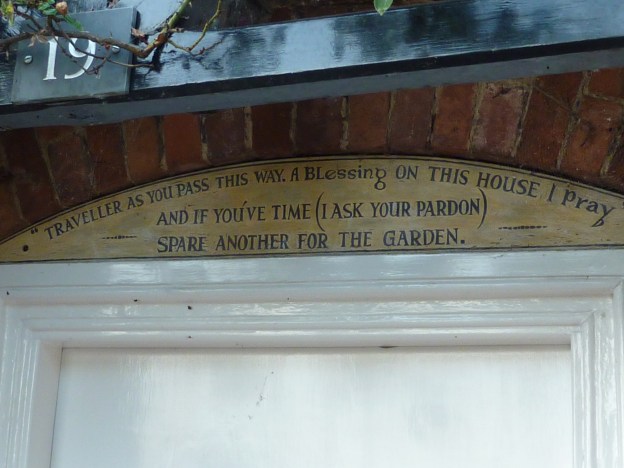
Sometimes we are blessed by the presence in our lives of very wise souls, whose company and conversation are always a refreshing, and sometimes challenging experience. I am privileged to know several such people, and to see them regularly.

Last week as I shared with one lady about how my latest ‘devotional’ reading book had left me rather unimpresssed, she confessed that she had altogether stopped buying such things. They left her dissatisfied, and uninspired – rather like spiritual junk food which swiftly leaves one craving again! At the grand age of 91, she had decided that the only and best way to ensure in her growth in faith was simply to ‘keep close to God’. Her words have been ringing in my mind ever since, and as I came to write, they were before me.

She is right. Not all the most learned theological books, the most persuasive sermons, or ‘inspirational’ writings, can do us as much good as spending time looking at our Lord, considering His power and glory, His character and wisdom, His life, death and resurrection. In Jesus, we see our God revealed, the depths of His love and the lengths to which He was willing to go in order to bring us into His presence. It is true that theology, good preaching and inspiring words can help us to focus on Christ, to grasp more and more of who He is, but ultimately we must depend solely upon Jesus himself.

We rejoice in the presence of a God who is greater than our minds can begin to comprehend – and give thanks that in His mercy, He has revealed Himself to us in ways which we can understand! Is it not wonderful to us that the creator of all things should choose to “confide in those who fear him”(Ps 25.14)? Who are we that this majesty should notice us at all? The libraries of divinity colleges are stuffed with works exploring the nature of God, the person of Jesus, the work of the Holy Spirit, and all that flows from that. Twenty centuries of scholarship since the coming of Christ have not exhausted the subject, and every generation finds fresh food for thought and engages in a new way with the word of God. Truly our God is unfathomable, and our worship should spring from a place of humility as we realise this afresh.

And yet… the truth about our God is also very simple, so that we teach it to our children, in confident hope that as they grow in years, so they will grow into faith. How many of us remember singing these words from our earliest years?

“Jesus loves me, this I know, for the bible tells me so. Little ones to him belong; they are weak but he is strong!”

A lifetime of steadfast study and growth in faith cannot exhaust the riches of our Lord Jesus Christ, and yet the whole truth can be summarised in one verse:

For God so loved the world that he gave his one and only Son, that whoever believes in him shall not perish but have eternal life.

(John 3.16)

Our loving Father made us, and knows us, and has provided all that we need to grow in our faith. We have his word, the true and reliable guide to his character and his work in the world. And we have Christ, who lives in us, whose Spirit directs our thoughts and inspires our worship and service and stirs up the inclination of our hearts towards our saviour.

In Christ, we have all the nourishment our souls need for this life, and indeed for eternity. In him, there is beauty without blemish; power without pride; love without measure. Here we find a subject to engage and fascinate us, one which transforms us as we immerse ourselves in it. This above all, is a matter worthy of our full attention and devotion, at whatever level we can engage with and express our response to it. From the youngest child to the oldest saint in the congregation, we are able to cry out together in genuine worship of our beloved Lord. Let His be the praise and the glory, as ours will surely be the blessing!

O Let the praises of my heart be Thine, for Christ has died, that I may call Him mine,

That I may sing with those who dwell above, adoring, praising Jesus, King of Love.

(W.V. Higham 1926-)