Fasting and Feasting

For in Christ all the fulness of the Deity lives in bodily form, and you have been given fulness in Christ, who is the head over every power and authority.

(Colossians 2 v 9&10)

The first weeks of a new year are often associated with diets, new exercise regimes, and  rigorous attempts to cleanse our systems after a period of too much food and too little physical activity. There is an uncomfortable tightness about our clothes, and sluggishness about our energy levels, and we hope to deal with these by self-denial and the imposition of new disciplines… and that can be a very necessary thing to do!

But there is another, more significant aspect of our lives which need never diet, or deny itself the object it craves in order to flourish – our relationship with our Saviour and Lord, Jesus Christ. The passage quoted above is delightful in its use of the word ‘fulness’, stressing one of the foundational beliefs of Christians, that Jesus was and is fully God, as well as fully man! It is easy to skim read a passage like this, and only vaguely to register the notion of Christ’s deity, without  benefitting from the treasure trove of truth which it represents. Yes, indeed, Christ is as completely God as the Father himself, but that is only one sense of ‘fulness’. There is also the sense of being filled to overflowing, packed with goodness – and Christ is filled with all the attributes of deity.

The bible narrative reveals a God who desires to be all in all to his people, that they might realise that only through intimate relationship with him can they find true satisfaction and fullest life. Our folly has lain in stubbornly refusing to believe that such a relationship can fill our needs, and trusting our own judgement and inclinations instead. The desperate state of our world today reveals only too clearly the results of such folly. But what if God were right? What if we can truly find in him all the things we need? The security, the sense of self-worth, of significance and adequacy which we crave and chase through endless mazes of material goods, human relationships and activities. Listen to the words of the ancient prophet, Isaiah

Come, all you who are thirsty, come to the waters; and you who have no money, come, buy and eat! Come, buy wine and milk without money and without cost. Why spend money on what is not bread, and your labour on what does not satisfy? Listen, listen to me, and eat what is good, and your soul will delight in the richest of fare.

(Isaiah 55 v 1 & 2)

And then to these words from Jesus, as he addressed the sincere, seeking religious people of his own time;

‘For the bread of God is he who comes down from heaven and gives life to the world.’ Sir,’ they said, ‘from now on give us this bread’. Then Jesus declared, ‘ I am the bread of life. He who comes to me will never go hungry, and he who believes in me will never be thirsty.’

(John 6 v 33-35)

The words in Colossians convey a stunning truth, if we will slow down reading long enough to recognise it.. When a believer confesses that Jesus is Lord, that their salvation depends entirely on Jesus, not themselves, they receive Christ himself – and all the glories of his divine character! When do I ever take enough time to really let this sink in and change how I live? Everything in the treasury of God is made over to us as believers, to equip, support, encourage and transform our lives, and enable us to fulfill our roles in God’s new creation. How often do we take that transaction seriously and claim those riches? We are summoned to a feast, and all too often make do with meagre rations!

This blog is part of my personal response to this question, an attempt to focus my thoughts for a sustained period of time and thereby to engrave another small aspect of the truth on my heart so that it might change my thinking and living. A recent gathering of friends saw us take time to meditate on the different titles and names given to Jesus in the bible – we found at least 35, and I am sure there are more – through which we began to catch a glimpse of the overwhelming adequacy of our Lord to satisfy our deepest longings and fill us with good things.

For myself, my experience has been that the more I feast on Christ, the more I hunger to receive and make my own. I close this week with the words of a great writer and preacher of the Scottish church from the 1600’s, Samuel Rutherford, whose language may sometimes seem archaic, but whose sentiments remain an inspiring expression of what it means to live for Christ alone.

Christ is as full as feast as ye can have to hunger.

I think I see more of Christ than I ever saw; and yet I see but little of what may be seen.

May God stir us up to desire ever deeper, fuller fellowship with Christ, as He has already provided all that is needed to satisfy that desire!


 

Ebenezer

Listen to me, O house of Jacob, all you who remain of the house of Israel, you whom I have upheld since you were conceived, and have carried since your birth. Even to your old age and grey hairs I am he, I am he who will sustain you. I have made you and I will carry you; I will sustain you and I will rescue you.

(Isaiah 46 v 3 & 4)

it is likely that for many of us, the name Ebenezer has bad connotations, because we think of the character in Charles Dickens’ novel “A Christmas Carol”, and the miserly Mr Scrooge comes to mind. Yet that story is one of redemption and hope, of change for the better! It is a pity then that this name, which means “stone of help”, should remain an unattractive one.

In the first book of Samuel, this stone is erected as a monument after a significant victory in battle, a physical reminder to the people of Israel that God had been with them, and that he continued to be their help and support. The bible is full of such exhortations to God’s people to remember his faithfulness to them in the past, as a basis for thanksgiving but also for hope in whatever the current trying situation might be. The underlying message is that God is not changed by the years as we are: he is not wearied by age, or decayed by illness, and we can trust him to be as active, vigilant and committed to his people now as he has ever been.

The quote from Isaiah reflects the same truth, as God speaks through the prophet to a dispirited people, all too aware of their own frailty and advancing years. They are still his people, and as such, the recipients of his tender care and faithful love. The prophet goes on to remind the people that there is no one like their God, reliable, powerful and purposeful.

Remember the former things, those of long ago; I am God, and there is no other; I am God, and there is none like me. I make known the end from the beginning, from ancient times, what is still to come. I say: my purpose will stand, and I will do all that I please. (Isaiah 46 v 9 & 10)

We often find ourselves reflecting at New Year, reviewing the recent months and looking ahead to what may be in store for us. I am no fan of making resolutions to do things differently, or of making so called “bucket lists”, which I need to complete in order to feel satisfied with my life. Rather I find this time of year a good opportunity to raise my own Ebenezer, to pause and look back with deep thanksgiving for months and years of God’s faithful upholding and providing. Thus far; to my fiftieth birthday, to two nearly grown children, to an orphan status, but with siblings and many friends and a loving, long- suffering husband, thus far I say, the Lord has helped me, and I praise his holy name. Even this last year, I see many examples of help, of God’s personal touches of love, and of his changing me – I trust for the better!

The words of the prophet also encourage us to take assurance for the future, because the same God who has been faithful, promises to go on being faithful – unto old age, until all that is planned has been carried out. For believers in Jesus Christ, this promise carries us into eternity, to the new and glorious life we shall enjoy at the resurrection. God has told us that Jesus is the firstborn from the dead, the first of all who are to come, who trust in him alone for their salvation, and who will dwell with him hereafter.

What encouragement this is as we face the future, well aware that our lives may change in an instant, with pain and joy often blended, and no guarantees that our health, security and families wil be immune from trouble. We have an utterly faithful God, committed to sustaining and carrying us, desiring that in all things, we seek him first because in him alone our help lies. And in the end, he will carry us home.

All praise to our God, through the Son, by the Spirit, for his mercy to us and his bountiful love. As we raise our Ebenezers, may we be filled with joy and give the glory to God, stepping forward in confidence in him and at peace in our souls.

Rejoice! And again I say rejoice!

Comfort, comfort my people, says your God..

Shout for joy, O heavens; rejoice, O earth; burst into song, O mountains! for the Lord comforts his people and will have compassion on his afflicted ones.

Burst into songs of joy together, you ruins of Jerusalem, for the Lord has comforted his people, he has redeemed Jerusalem.

(Isaiah 40 v 1;49 v 13;52 v 9)

This Christmas season has brought with it many reasons to weep, to despair of peace and hope in this land, let alone the wide world where so many suffer in ways that I cannot bear to imagine. If all I have to celebrate is the birth of a baby, time with family and a respite from the routine of work, then what defence do I have against the dark? If my celebrations depend upon my ability to shut out reality for a few hours or days, and to pretend that life is wonderful; what hope do I have to offer the world, or to give me a foundation for the new year ?

In the last two years, I have become an orphan, and my parent’s church where I was born and raised in faith has split apart, so that although I have not been a regular part of that ‘family’ for a long time, I feel that I am  additionally bereaved. Major foundations of my world are gone, and the popular myth of Christmas gives me no consolation, because it centres on recreating family, on gathering all our significant people around us, and celebrating them.

What of those with no family? or those who for various reasons are widely separated from their loved ones? What about the terminally ill, those facing war and homelessness, those under persecution, the unemployed and the abused? I find it quite heart-breaking to see the effort folk will go to in finding some way to celebrate at Christmas, when they are building on merely human foundations. Yes, of course it is good to appreciate our families and friends, to take time to enjoy the many good things we have and to build loving relationships. But…is there not more?

I was asked recently if I was getting excited about Christmas, and had to answer honestly that I was not. But I am deep down glad about Christmas, more glad with every year that passes, and every new experience of living in an imperfect world. I can be glad because the bible tells me that something real happened at Christmas time, that eternity exploded into this world of ours, and that truly good news was broadcast to the unlikeliest of heralds. That first Christmas was so much more than the birth of a boy to a carpenter and his wife, it was the enfolding of God in embryo and his delivery into the messy, broken, beautiful world where we need him so desperately.

The words at the top of this article come from Isaiah’s prophecies, and I chose them because each one uses the word ‘comfort’, with its sense of strengthening, consoling and supporting all at once. This is what I need when I look around me, to be strengthened for loving and giving, for helping others in their need, and thus in turn showing God’s loving face to his needy world. I need to be consoled for my human losses, and supported in finding new ways to live without these significant people in my life. And this is what God wants to do; all these prophetic words are associated with the coming of the promised one, God’s rescue plan for his broken world! So that in the coming of Jesus, I see the comforter arriving, the one who will completely understand my pain and need because he will feel it too in his humanity.

It is here that I find reason to rejoice at Christmas time, and each year more deeply. The best carols we sing are meditations on the reality which lies behind the story of shepherds and journeys, angels and stars – of light coming into the world, of God taking human form, of a journey of redemption and salvation now fully begun which can transform lives. This is a foundation on which to build into the new year, whatever it may bring. God is with us, and things will never be the same again.

On Christmas night all Christians sing, to hear the news the angels bring (x2) News of great joy, news of great mirth, news of our merciful King’s birth.

Then why should men on earth be so sad, since our Redeemer made us glad ?(x2) When from our sin he set us free, all for to gain our liberty!

When sin departs before his grace, then life and health come in its place (x2), Angels and men with joy may sing, all for to see the newborn King.

All out of darkness we have light, which made the angels sing this night (x2),Glory to God and peace to men, now and for evermore, Amen!

(the Sussex carol, Traditional)

Seriously funny!

There is a time for everything, and a season for every activity under heaven:….A time to weep and a time to laugh, a time to mourn and a time to dance 

(Ecclesiastes 3 v 1 & 4)

Some months ago, I was in a situation which was proving very painful to bear. I could not leave it, but had to remain committed to the job I was doing, caring for and supporting my team, and trusting God for strength and patience to deal with my inner turmoil.

One evening, I had the chance to go for a walk in the countryside and I was baring my soul to my faithful and long-suffering Father God, crying and letting him see the pain, knowing that He understood and accepted me. This kind of prayer-walking is very therapeutic for me – and it helped also being out in a beautiful place. Then I rounded a bend in the road to find about 20 young pheasants coming towards me. They were big enough to be out on their own, but what a ridiculous sight they presented! Their necks were stretched in anxiety as they searched for a way off the road, darting hither and thither, looking for gaps in the fence, and clearly clueless about where to go.

I burst out laughing, with the tears still wet on my face, and admitted to God that he had found the perfect way to help me break the melancholy and self-pitying mood I had fallen into! I sat under a convenient tree and continued to watch the birds, enjoying the absurdity of their behaviour, and giving thanks for God’s perfect timing.

I am so thankful that God has chosen to give us the gift of laughter, the ability to appreciate the absurd, to make jokes and play with words. We know from experience that humour can be used to diffuse tension, to break down barriers and create a sense of community. And it is my experience that I feel the physical benefits of a good laugh – once my sides have stopped aching! My own sense of humour is perhaps a little unusual – hence the photograph of the savoy cabbage leaves which heads up this post… I happen to find the extraordinary shaping and texture of these leaves very funny, and just looking at the picture always makes me smile.

There can be a danger that I take the presence of darkness, pain and suffering in the world to imply that there is no space for feeling light-hearted, or appreciating the funny as well as beautiful things around me. But the writer in Ecclesiastes carefully balances weeping with laughter, and mourning with dancing. As does the apostle Paul when he writes to the church in Rome, reminding them to share in the gladness of those who rejoice, as well as to share in the sadness of those who mourn (Romans 12 v 15). The bible teaches that the victory over all the darkness is won, and that I can and must live in the light of that truth. My laughter over the young pheasants did not change my situation, nor did it diminish the real pain I had experienced, but it helped me to stop focussing on the troubles and to remember the love which is always with me.

I think that we should be deeply grateful for this gift, and celebrate the goodness of our amazing God in creating us to laugh! I am going to finish today with a list, which you can use to start off your own list of things that you smile just to think about.. And I pray that in your laughing, you will be eased, and enriched as you share the joke with the God who thought of it in the first place.

Penguins; lambs springing in the fields at dusk; baby animals; giraffe necks; elephant ears; the duck-billed platypus; babies sneezing; a large gathering of people all trying to do an action song at full speed; giant pandas; the fact that men’s ears continue to get bigger as they grow older; tubas and trombones; being able to pull faces; the idiotic smiles of dogs; the disdainful smirk of cats; whiskers; the way our ears stick out; hamsters; bagpipes; animals that bounce (rabbits, kangaroos); dimples…..   over to you!

Dead or alive?

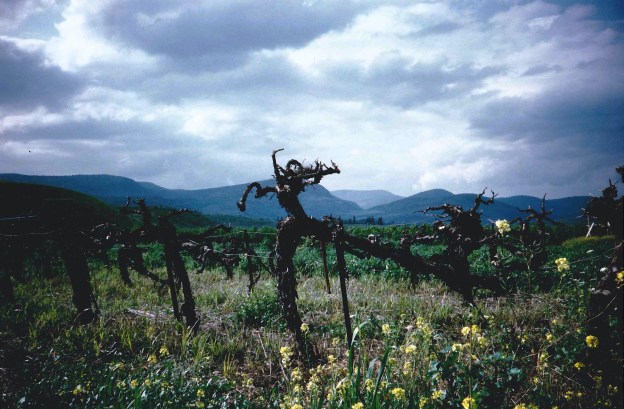
I am the true vine, and my Father is the gardener. He cuts off every branch in me that bears no fruit, while every branch that does bear fruit he prunes so that it will be even  more fruitful….I am the vine; you are the branches. If a man remains in me and I in him, he will bear much fruit; apart from me you can do nothing.

(John 15 v 1,2 & 5)

It may seem an unnecessary point for Jesus to be making here – who ever heard of a branch bearing bunches of grapes unless it was a living, growing part of the parent vine?! The image is one which would have been familiar to his hearers, and they would immediately have got the message – either we are so intimately connected with and dependent on Jesus that his very life flows through us (as the sap of the vine flows to the branches), or else we are as good as dead wood.

But perhaps the disciples shared our human weaknesses in this area too, falling into the trap of thinking that somehow only part of their lives needed to be consciously lived in God’s presence – the ‘sacred’ bits, when they worshipped and prayed and shared the teaching they received. For the remainder – their day jobs of fishing, tax-collecting or whatever, could continue to be a separate activity, where God was not involved.

The picture of the branches remaining in the vine, as their very source of life, simply blows away such disconnected thinking about our own lives. We may not plug in to the vine when it suits us, for a top-up of energy or spirituality; either we are living in it, or we are not. In spite of the remaining faults, sins and weaknesses which we battle, and in spite of the troubles of the world which afflict us, the bible is clear that everyone who believes in Jesus as their saviour now lives with his life.

There is a power available to us, every minute of every day that remains to us, to live in a way that reflects Jesus to the world around us. As we live and grow as believers, the holy spirit works to transform us, so that our lives bear fruit – in godly character, love, perseverance, all the wonderful qualities listed in Galatians 5. It is not that we are to screw ourselves up to a great effort to make it happen, rather that just like the branches, we allow the life of the true vine, Jesus to flow to every area of our lives. I think we spend most of our lives learning this, struggling to believe it, applying the truth of it to each new situation in which we find ourselves. That’s ok, because our heavenly gardener knows that it takes time for the vine to mature, and he is so much better at patience than we are!

But I love this picture for another reason too.. It reminds me that every area of my life can potentially be fruitful. In his letter to the little church in Colossae, Paul wrote these encouraging words:

And whatever you do, whether in word or deed, do it all in the name of the Lord Jesus, giving thanks to God the Father through him…..It is the Lord Christ you are serving.

(Colossians 3 v 17 & 24)

So when I am doing housework, organising meetings, catering for events, interacting with friends and strangers, loving my husband and children… all these things I can do in the name of the Lord, giving thanks to God, and seeking always to glorify him. All my living and labouring is a fitting offering of praise to my God, and he makes no false divisions between sacred and secular activities. As a branch of the true vine, with the life of Christ flowing through me, I am constantly in the presence of God and everything I do is an integrated part of a single whole.

I hope that this will help you as it does me, to rejoice in the work you have, in the people around you; trusting that a humble and quiet life is as valuable and fruitful in God’s eyes as the most high-powered or influential.  In all things, I serve Christ, and rest in his love for me.

Alpha and Omega

Let us fix our eyes on Jesus, the author and perfecter of our faith, who for the joy set before him endured the cross, scorning its shame, and sat down at the right hand of the throne of God.

(Hebrews 12 v 2)

Last year, I did a new thing for Advent, searching the bible for names of Jesus, and using one each day to help me to focus on him, the reason for this season! I pick them out of the bowl at random, and then make an effort to think during the ensuing day about what that title means, and how it enriches my understanding of Jesus and all that he is.

Yesterday, it was this verse from Hebrews, reminding me that Jesus is both the author – the source of the plan of salvation – and also the perfecter of our faith. He not only drew up the blueprint, but came from heaven, from the glory of his father’s throne, and worked it out down to the last detail in his own body. Stuart Townend & Keith Getty put it succinctly in their song  ‘See what a morning’ –     ” See God’s salvation plan, born in love, wrought in pain, paid in sacrifice”.

There is nothing left for me to add…. no ticking of boxes, no achieving of prescribed standards of behaviour, or conforming to a particular mould. I can only receive, agreeing in my heart with a holy God, that I have nothing worthwhile to offer him, and that I stand in desperate need of a Saviour. My human pride rebels over and against this, seeking any way that I might put God in my debt, and somehow deserve this priceless gift which he is offering me. Surely, if I pray with great persistence, give sacrificially, witness at every opportunity, then I will have earned God’s favour?

What did Paul say in 1 Corinthians chapter 13? That one can be the most gifted, dedicated servant but without love – without that response to God in my heart – I am NOTHING. All my labours achieve is to wear me out with well-doing, creating a bitter and resentful heart as I see that God continues to bless others who do not try as much as I do, and that hard and painful things continue to happen to me.

What a relief it is by comparison to accept that it is only in Christ that I have any claim on God, and then to recognise that Christ’s claim is absolute! In him, I am a beloved child of the King of Kings,  acceptable to a holy God, secure in my new family ties and with an eternal life in which to enjoy and work them out. The perfect son of God is the one who planned my salvation from the beginning, and is also the one who carries it through to completion, so that in the end he will present us – all his people – pure and spotless before the throne of God. It is not my labours after perfection which determine my future, but his finished work which guarantees it.

Yes, it is right and proper that in our response to this love we should desire to become like Jesus in his holiness, that we should long to share the good news of his death and resurrection, and to care for all his children. But while we remain in frail human flesh, our efforts will remain flawed and compromised. It’s ok! God knows and understands, welcoming our desire to be changed, to serve and love in his name, and enabling us more and more to live in this way as we trust him for daily strength and perseverance.

I don’t have to be perfect, because Jesus is perfect for me. I just need to remain in his presence, depending on and loving him more than anything else. The apostle Paul wrote to his Philippian church to encourage them in this kind of faithful living, reminding them that “he who began a good work in you will carry it on to completion until the day of Christ Jesus”. (Phil 1 v 6)

The title of this piece, two Greek letters which stand at the beginning and end of that alphabet, is another of the names given to Jesus (Rev 22 v 13). This idea that he is before and after all things, somehow holding it all together, is a richly satisfying picture for me, and ties in very closely with the verse from Hebrews with its sense of the completeness of his work. The words are also quoted in a very old hymn, not often sung nowadays, but full of good theology and worth revisiting! I will close with it this week, and pray that as you take these words and think over them, you will be filled with praise for Jesus, the author and perfecter of our faith.

Of the Father’s love begotten ere the worlds began to be,

He is Alpha and Omega, he the source, the ending he,

Of the things that are, that have been, and that future years shall see,

Evermore and evermore!

(Aurelius Clemens Prudentius 348-413, translated by J M Neale 1818-66)

My own flesh and blood?…

P1020205

But Christ has indeed been raised from the dead,

the first fruits of those who have fallen asleep.

For since death came through a man,

the resurrection of the dead comes also through a man.

For as in Adam all die, so in Christ all will be made alive.

(1 Corinthians 15 v 20-22)

This may seem an odd verse to use at the beginning of the season of Advent, looking towards the birth of Jesus, the coming of God clothed in human flesh. But the incarnation, already stunningly good news in itself as we see God reaching out to us in love, is so much more again!

I have been thinking about what it meant for Jesus to be human – like us, made of flesh and bone, full of emotions and thoughts – and what that means for me. I think that too often I have a degraded view of humankind, forgetting that when God reviewed creation, He declared it all good, and stated that humanity – men and women together – reflect God’s own character. We represent the ecstatic heights of God’s creative act, and I believe that the story revealed in the bible is of how – in spite of our rebellion, our destructive habits and utter inability to redeem ourselves – God is still planning to fulfill his original purposes in creation.

In Genesis, we find God walking with Adam and Eve in the cool of the day, enjoying their company in the world which had been created to sustain and delight them – in their human form. In the book of Revelation, in the vision which the apostle John was given of the future promised to all God’s children, we find a new earth, where God dwells with his people, and all the barriers caused by our sin and rebellion are gone. All that God ever wanted, was us… Do I really let that sink in often enough? Out of his abundant love, he created a universe and galaxies beyond understanding in order that he might share joy and love with us. And this is still his plan.

When Jesus humbled himself and took on human likeness, it was also the likeness of God, and should remind me continually of the value of each and every human being that every lived. There has never been anyone who did not matter, or was not worth caring about. When Jesus lived for over 30 years on this earth, eating and drinking, walking and wearying just as I do, it reminds me that my Lord and God knows and understands intimately what it is to be human, and nothing about me is unimportant to him. But, when I consider that Jesus came back to life with a human body – albeit with some unprecedented qualities – that is simply electrifying!

My eternal destiny is not in some disembodied state, but in a transformed, glorious, but still human body – because I will inhabit a transformed and glorious but still recognisable earth! God plans to live in uninterrupted fellowship with his beloved children, as He has always desired, and to this end, will make all things new when Christ returns. I freely admit that my mind is far too small to begin to deal with all the implications of this truth – and I would also suggest that if we don’t know all the details, it is because we don’t need the details just now!

Is it not enough to know that when we delight in this world, in our humankind, in all we can do and create, share and enjoy, we are following God’s heart? These are good things to give thanks for, and in which to recognise and celebrate the goodness of God. But we can rejoice even more in the certain hope of a life to come, in a new body – just like Jesus – when all the things which make this world painful will be gone. Then, oh then, what joy awaits, as we revel in a perfect world, in uninterrupted communion with our God, exercising our gifts, pursuing our interests, fulfilling our truest destinies – really living at last.

As we enter into this period of preparation for celebrating the first coming of Jesus as our Saviour, let us also look ahead with eager anticipation to his return in power, when we shall truly be ‘made alive’.

Amen. come, Lord Jesus. (Rev 22 v 20)

On the receiving end…

Alison C2 I give you thanks,

O Lord, with all my heart; I will sing your praises before the gods. I bow before your holy temple as I worship. I praise your name for your unfailing love and faithfulness; for your promises are backed by all the honour of your name. As soon as I pray, you answer me; you encourage me by giving me strength.

Psalm 138 v 1-3

Do you find it easy to let people say thank you to you, to express their genuine appreciation for who you are and what you do? I find it hard sometimes, and squirm inwardly, wishing they would just get it over and leave me in peace – especially when I know that my heart has been less than rejoicing in my work, and I feel I don’t deserve any gratitude!

Sometimes, the means that is chosen – the form of the gift, or the actions used – make me uncomfortable. We all have our own preferences and tastes, our own emotional make-up, which affect how we react when presented with gifts which others have chosen. How many primary class teachers actually really love all the gifts and cards they receive from their doting children at the end of the year?! If you are not a demonstrative person, then an enthusiastic hug from someone will have entirely the opposite effect from that which they intend, and you shrink inwardly from their touch.

Over recent weeks, my husband and I have enjoyed celebrations in our church marking the 20th anniversary of his coming to be their minister, and it is truly humbling to have so many people being grateful to us! Would it have been loving of us to dictate in advance the ways in which we were willing to be thanked? Of course not! Our church family love us, and we are privileged to have shared deeply in many of their lives – during great pain and suffering as well as in joy. We are one in Christ Jesus, members of the same body, and ultimately all the glory and praise goes to him for what has been done in our lives. But people need to give voice to their appreciation of one another, indeed this is a ministry of encouragement that we can all practice; it is as though through God’s designing of our natures, we cannot rest until thanks has been given.

So there have been cakes and speeches, cheesy songs, cards, gifts, flowers, a special dinner (for which my poor husband had to get smartly dressed – not a treat as far as he was concerned), and a general feeling of being the focus of attention in a very unusual way. Perhaps we might have preferred not to have had all the fuss, but how loving would that be towards those who have allowed us to serve them and be loved by them?

In the same way that each of us receives love and appreciation in our own particular ways, so also we express them individually. Some will say little, but give privately and generously to a gift. Some will want to make a public statement, others to quietly talk, or give a hug. Does our God reject our thanks because it does not comply to some particular formula? Of course not! (I am beginning to sound a bit like Paul in his letters, my apologies!). Our expressions of love and thanksgiving to God all bring Him delight because they are our true natures, as He designed them to be, glorifying and delighting in Him and all He so generously gives us.

I am trying to learn to love others as God loves me, welcoming me and my thanksgiving – whatever form it takes. In this way, I can learn to model Christ in his acceptance of us – think how shocked everyone was when Jesus allowed the woman to weep over his feet, dry them with her hair, kiss and then anoint them! The teachers of the law would have recoiled in horror, but Jesus accepted her, loved and affirmed her. In my gracious and humble acceptance of the thanks and appreciation of others, may I increasingly demonstrate the staggeringly generous way that God loves and accepts us.

Brace yourself, there’s a hug on the way!!!

Mine to spend?

P1010392

I pray that your love will overflow more and more, and that you will keep on growing in knowledge and understanding. For I want you to understand what really matters, so that you may live pure and blameless lives until the day of Christ’s return.

May you always be filled with the fruit of your salvation – the righteous character produced in your life by Jesus Christ – for this will bring much glory and praise to God.

And I trust that my life will bring honour to Christ, whether I live or die. For to me, living, means living for Christ, and dying is even better. (Philippians 1, 9-12 & 20-21)

There is an insidious habit of thought which can take me down unhelpful paths if I am not careful, a clever synthesis of Christian teaching with cultural assumptions, that will lead me to deep unhappiness. We live in an age, here in the UK in the 21st century, where the cult of self-fulfillment is at unprecedented heights, and the urge to ‘be all you can be’ is constantly sounded in our ears.

Our children are encouraged to dream of doing great things with their lives, and to believe that putting themselves first in terms of their money and activities is right because they are ‘worth it’. And of course, in one sense as a Christian, I understand the priceless worth of every individual under the sun – each unique, and fashioned to reveal God’s glory in a particular way in the world.

But in another sense, I am deeply troubled by this emphasis, failing completely as it does, to recognise the flawed realities of our world, and in particular the sin which skews all our thinking and feeling. The root of human sin is the denial of God as rightful sovereign of our lives, and our determination to put ourselves in God’s place – to trust no one else with our lives, and to believe that we alone know what is best for us.

If I think that God’s plan for my life as a christian is my complete self-fulfillment (in so far as I define it) , then I am going to be deeply frustrated with the world, my fellow-believers, and with God! This was certainly not the apostle Paul’s understanding of his purpose in living. Yes, we can argue that God is glorified when his creatures are most fully being what he made them to be, and we know that in the new earth and heaven, this will be our destiny – and what a glorious one too! But… we are not there yet, we are not in our perfected, resurrected bodies yet, and our world is still broken.

If I demand that all the gifts and talents which I think I possess be given ample opportunity to flourish and be exercised, before I can accept that I am in the place where God wants me to be, then I will never be satisfied, but always seeking to change my circumstances. In effect, I am dictating to God about the ways in which he may work in and through me. When I put it into words like that, I can see clearly why this is wrong!

If, as I believe, I am surrendered to God in loving submission, in response to his overwhelming love for me, then I must also resign any right to dictate how and where I am to be used by God. The bible narratives demonstrate over and over that it is in allowing God to work according to his plans which sees blessing and glory coming to his name, and that when human beings demand their own ways, the results are painful and sometimes disastrous – look at Abraham and Sarah’s misguided efforts to get an heir, and the suffering which came about  as a result.

All that I have – health, wealth, family, intelligence, talents and experience – is a gift of grace from God. I must hold them on open hands, and continually offer them to God to be used – or not to be used at any given time in my life – as He sees fit. So often we are reminded that it is in our weaknesses that God displays his strength – how could that be if we decline ever to act unless we feel strong and gifted in a particular area of service? And will I not trust my heavenly Father to keep safe, for my resurrected future delight, all the things which he doesn’t need me to use just now?

There is an old hymn ( of course, I find some of my strongest theology there!!) which beautifully expresses this complete offering up of myself into God’s hands for his glory:

Take my life and let it be consecrated, Lord, to thee. Take my moments and my days; let them flow in ceaseless praise.

Take my will, and make it thine; it shall be no longer mine. Take my heart – it is thine own; it shall be thy royal throne.

Take my love; my Lord, I pour at thy feet its treasure-store. Take myself, and I will be ever, only, all for thee.

Frances Ridley Havergal, 1836-79

May God grant us humility to serve him, and be spent by him, wherever he has placed us just now, especially if – in the world’s opinion – it makes no sense!!

Hope in time of remembrance

P1020196

Can anything ever separate us from Christ’s love?

Does it mean he no longer loves us if we have trouble or calamity, or are persecuted, or hungry, or destitute, or in danger, or threatened with death?..

No, despite all these things, overwhelming victory is ours through Christ, who loved us. And I am convinced that nothing can ever separate us from God’s love. Neither death nor life, neither angels nor demons, neither our fears for today nor our worries about tomorrow – not even the powers of hell can separate us from God’s love. No power in the sky above or in the earth below – indeed, nothing in all creation will ever be able to separate us from the love of God that is revealed in Christ Jesus our Lord. (Romans chapter 8 v 35,37-39)

The custom of Remembrance, which began nearly 100 years ago at the end of the First World War has become a hugely significant time in our nation over the succeeding decades, as it has become clear that, far from ending all wars, it was the fore-runner to many other conflicts. We live in a world which looks less able to live in peace than ever before.

We remember with gratitude and humility the deliverance which our land and many others obtained, and the willingness of so many to go to war in order to protect our freedom, and to deliver others from oppression.

We remember with grief the price which was, and is being paid in deaths, in broken bodies and minds, and in families fractured by loss.

We remember with shame that war breaks out because of the darkness at the core of all human hearts which causes us to enter into conflict at every level of our lives.

We remember the truth revealed in the bible narrative, that while we inhabit this world, these bodies, we will have trouble. There is no lasting solution ahead for humanity, because the human heart is of itself incorrigibly wicked, and no amount of ‘education’ or ‘progress’ is going to change that.

We do no one any favours if we buy into the myth that peace can ever be a lasting reality for the world if we would only work hard enough for it.

Instead, we remember that because of the radical work of God through Jesus’ death and resurrection, we have real hope for a peaceful future based on the transformation of the human heart. We have seen that God can make us new – Jesus went ahead to show the way – and that in dwelling in our hearts by faith, He is already at work to transform lives all over the world. One day, all things will be made new, in a way we cannot begin to imagine, and all war and sorrow will cease, because sin, that brokenness in us, will be gone forever.

So while we grieve for all the pain of ongoing conflicts, we also pray into the situations and work with all our strength to bring the good news of the gospel of Jesus Christ into the lives of those affected.

We have a sure and certain hope that God is working, that nothing can ultimately separate Him from those who love and trust in His son. The hymn-writer, William Walsham How gives a lovely picture of the way that this hope inspires God’s people, in the hymn “For all the saints who from their labours rest”, and I share it here to encourage us all in the days ahead.

And when the strife is fierce, the warfare long, Steals on the ear the distant triumph song, And hearts are brave again and arms are strong. Hallelujah! Hallelujah!