Not the best china..

And we, who with unveiled faces all reflect the Lord’s glory, are being transformed into his likeness with ever-increasing glory, which comes from the Lord, who is the Spirit…..for God, who said, “Let light shine out of darkness,” made his light shine in our hearts to give us the light of the knowledge of the glory of God in the face of Christ. But we have this treasure in jars of clay to show that this all-surpassing power is from God and not from us.

(2 Corinthians 3.18; 4.6&7)

Glory and light, brilliance and beauty, purity beyond telling and might unimaginable. These verses take my breath away, and move me to cry to God in prayer for more, ever more transforming power to be at work in my life, that I might reveal this glory to the world I live in.

I am indeed like a clay jar, an everyday household pot. Nondescript and mundane, patched and worn with chipped edges, useful but hardly spectacular. And that is the whole point of Paul’s use of the image here, that no one, not even the great apostle himself, is worthy to receive and show forth this light. It is not we but the God who dwells in us, that is the source of glory and power. In the same way that a flower or a leaf can seem to glow from within when the sun catches it a certain way, so also believers in Christ can shine, illuminated by his love.

As we learn to look more and more steadily into the face of Christ our Lord – by whom God reveals himself to the world – so the glory that we see begins to permeate our being. Our eyes become stronger, and hungry for more light, more beauty; our hearts are increasingly unsatisfied by all that the world offers. The glory that shines from Jesus is purifying, cleansing, healing, transforming power, it acts like a spotlight to illuminate the darkness in our lives and like a laser to burn it away. By that glory, we see clearly and truly, deeper into our own sinfulness and need of Christ, deeper into the need of our neighbour for salvation and the redeeming love of God.

Our growing knowledge of the glory revealed in the face of Christ is the channel through which God transforms our lives, as we see more and more clearly that in Christ alone we have hope, but that in him we also have all that we need. As we learn to depend more and more on his faithful love – giving us security and significance – and to trust his power at work within us – enabling and equipping us – so we are set free to love others as He has loved us.

It is this love, this irresistible force of God at work, which is the treasure we hold in our jars of clay, our chipped mugs and bowls. We are not the focus of attention, He is. Our cracks and flaws simply act to draw attention to the beauty and glory of the love which is being poured out through us.

The following verses beautifully express a prayer to be effective channels of love, utterly surrendered to our beloved Saviour and Lord. May they be a blessing to you this week.

May the mind of Christ my Saviour live in me from day to day, By his love and power controlling all I do and say.

May the love of Jesus fill me as the waters fill the sea; Him exalting, self abasing, this is victory.

May His beauty rest upon me as I seek the lost to win, and may they forget the channel, seeing only Him. 

(Katie Barclay Wilkinson, 1859-1928)

Love is…. You are!

This is how God showed his love among us: He sent his one and only Son into the world that we might live through him. This is love: not that we loved God, but that he loved us and sent his Son as an atoning sacrifice for our sins.

(1John 4.9&10)

It would be the easiest thing in the world for me this week to do no more than write out the words of some of the many hymns and songs of praise which have been written over the centuries in an attempt to respond adequately to the love which is revealed to us through Jesus Christ. As I sit, I have line after line running through my head, tunes swelling up in adoration and worship of the God – Father, Son and Holy Spirit – who loves me. And perhaps that the best place to start. If I can discipline my thoughts long enough at the start of this new week to deliberately focus on the wonderful love poured out through Christ, then I will have the best possible attitude to whatever the week will bring.

What does this love look like? It is the relentless pursuit of the eternal good of the beloved – even us, even rebellious, stubborn and proud humanity! It is the willingness to pay the ultimate cost of redemption – of putting right that which was so badly damaged – and to fulfill justice by dealing with the need for sin to be punished. And not only are we put right, but we are adopted into the family of God, given a birthright, and a guarantee of eternal life.This love pours out daily in grace upon our lives; it is continually working to transform us so that sin loses every foothold, and we become truly the image of God, reflecting his character, and finding fulness of life and joy as we live in him.

The Scottish preacher Samuel Rutherford was a man utterly enchanted by his Lord and Saviour. Over and again in his writings, he exhorts his readers to look to Christ, finding there all and more than their heart’s desires. This little extract – although archaic in language – clearly expresses his frustration at his own inability to grasp the fullness of love offered in Jesus, and I am deeply comforted even as I identify with him. “Christ all the seasons of the year, is dropping sweetness; if I had vessels I might fill them but my old riven, holey, and running-out dish, even when I am at the well, can bring little away. Nothing but glory will make tight and fast our leaking and rifty vessels… How little of the sea can a child carry in his hand; as little do I take away of my great sea, my boundless and running-over Christ Jesus.” Praise God, there will be a day – in glory – when I will no longer feel that I catch but a glimpse, and remember but the tiniest fraction, of the wonderful love so freely given! Then I shall receive in full the answer to the wonderful prayer of Paul for the disciples in Ephesus:

And I pray that you, being rooted and established in love, may have power, together with all the saints, to grasp how wide and long and high and deep is the love of Christ, and to know this love that surpasses knowledge – that you may be filled to the measure of all the fulness of God. (Ephesians 3. 17-19)

This love waits patiently by my side as I dither and wander, as I doubt and rebel, drawing me back over and over in repentance and new dependence on God. This love is overflowing with kindness towards me – expressed  through other people, and through the gifts and signs that only I notice and appreciate as coming from my God. This love is never boastful, but always wooing, never forcing itself upon me. This love restrains anger, and has lost any record of my past failures. This love rejoices in every small indication of my true desire to serve and honour my Lord, and every little effort to be faithful and obedient – forgetting the frequent failures and unfulfilled promises. This love is constant in protecting me, faithful in believing that I will be transformed, relentless in seeking the best for me.

And the truth that I need to remember at all times about this love – the truth which sustains the thousands of our brothers and sisters across the world who are suffering for their faith – is that no one, and nothing, can ever take this love away from me! I am going to finish with words from Paul again – Romans 8 – as found in the Scottish Paraphrases, my heart language, where he celebrates and affirms this wonderful truth. May it bring you comfort, strength and joy this week!

The Saviour died, but rose again triumphant from the grave;

And pleads our cause at God’s right hand, omnipotent to save.

Who then can e’er divide us more from Jesus and his love,

Or break the sacred chain that binds the earth to heav’n above?

Let troubles rise and terrors frown, and days of darkness fall; 

Through him all dangers we’ll defy, and  more than conquer all.

Nor death nor life, nor earth nor hell, nor time’s destroying sway,

Can e’er efface us from his heart, or make his love decay.

Each future period that will bless as it has bless’d the past;

He lov’d us from the first of time, He loves us to the last.

Love is… am I?

The words of the apostle Paul to the believers in the church in Corinth – in the first letter at chapter 13 – are very familiar to us, often chosen at to be read at weddings. But when we actually put our own name into the list of qualities which characterise love, how many of us remain comfortable with reading this passage? I quote it here in the Message paraphrase, a fresh and modern expression of the text which helps me to hear it clearly.

Love never gives up. Love cares more for others than for self. Love doesn’t want what it doesn’t have. Love doesn’t strut, doesn’t have a swelled head, doesn’t force itself on others, isn’t always “me first”, doesn’t fly off the handle, doesn’t keep score of the sins of others, doesn’t revel when others grovel, takes pleasure in the flowering of truth, puts up with anything, trusts God always, always looks for the best, never looks back, but keeps going to the end.

When I deliberately consider each quality of love in relation to my own life, I am convicted, bowed before a holy God, because I know very well that I do not love like this. My heart swells with protests about the provocation I receive to act in unloving ways, the unfairness of life, the sins of others, the good excuses I have for failure. And the Judge waits in silence, until my words die away and I confess with grief that I have no goodness in me, I cannot, not by my best efforts, love like this, and never will.

Only one man loved like this, the man Jesus Christ, the Son of God, who came to live the life I should have lived, and then – because of my failures – to die the death I deserved to die because of my lack of love. The wonder and the glory is that by faith in Christ, I am considered right with God, in spite of my desperate failure, and not only this, but in believing, I am given a new heart, the heart of God himself, beating with divine love, so that I may live as He would have me live.

While I remain in this mortal body, I will battle against the fallenness of the world, the devil’s activities in it, and my own remnants of sin, but the truth is that I am new. I have the victory over everything that conspires against this life of loving power. With God’s help, each day and year, that victory will  become clearer in my life, as I become more like Christ on the outside even as I have been made like him in my heart.

Paul goes on in the letter to the Corinthians to encourage them to persevere in this world of shifting shadows and uncertain lights, where the glory of God and the lordship of Christ can seem so uncertain to our mortal eyes. I find it enormously encouraging that the great apostle could struggle with this as I do, and express it so clearly. We are indeed all only flesh and blood, and it is foolish and unhelpful to any believer to deny how hard it can be to persevere in faith in the face of so much opposition and suffering.

Ultimately our perseverance is a work of God, and we know that it is not because of our efforts that we are saved, but rather His faithful love and Christ’s atoning work on the cross. We rest in that complete assurance of salvation even as we seek – in response to His love for us – to work with Him in realising our transformation into Christ’s likeness. Our failures do not condemn us, but rather drive us continually back to God in confession that without Him, we are and can do nothing. And every fresh embrace of Christ as our sole ground of hope and salvation is a step along the road to glory.

I will finish this post with some more words from 1 Corinthians 13 in the Message translation; words we can pray for ourselves and others, as we journey together, depending on God and rejoicing in His sufficiency for us.

We don’t yet see things clearly. We’re squinting in a fog, peering through a mist. But it won’t be long before the weather clears and the sun shines bright! We’ll see it all then, see it all clearly as God sees us, knowing him directly just as he knows us!

But for right now, until that completeness, we have three things to do to lead us toward that consummation: Trust steadily in God, hope unswervingly, love extravagantly. And the best of the three is love.

The joy of the Lord

Praise the Lord.

Praise the Lord, O my soul.

I will praise the Lord all my life; I will sing praise to my God as long as I live. 

(Psalm 146. 1&2)

Do you ever lose sight of glory? Of just how much you are loved by an eternal, almighty, joyous and wonderful God? Of how amazing it is that we should be noticed, let alone delighted in by the Creator of universe upon universe? I do.. and I know it has happened when I begin to take myself terribly seriously, to feel each and every slight like a major offence, and every failure to love like a death wound. I get distracted from the eternal realities, and instead see only the little things that make up daily life – irritations, the failings of others and my own, the bad weather, poor health, the messiness of living in a fallen world. All these are real too, and some are very serious issues which we rightly struggle to live with.

Nonetheless, when I read the following words earlier this week, they rang in my head like a clarion call, a defiant statement of a crucial truth:

Man is more himself, man is more manlike, when joy is the fundamental thing in him, and grief the superficial. Melancholy should be an innocent interlude, a tender and fugitive frame of mind; praise should be the permanent pulsation of the soul.” (GK Chesterton, Orthodoxy)

When I can bring my forgetful soul back from wandering among small troubles, and into the presence of my dear Lord, then I know the deepest satisfaction – in spite of what ails me, what irritates and gives me cause for grief. If I could only carry this awareness with me all the time, keeping this true perspective on life at all times, then perhaps I would be a more faithful, joyful and effective witness to Jesus in his love and saving power!

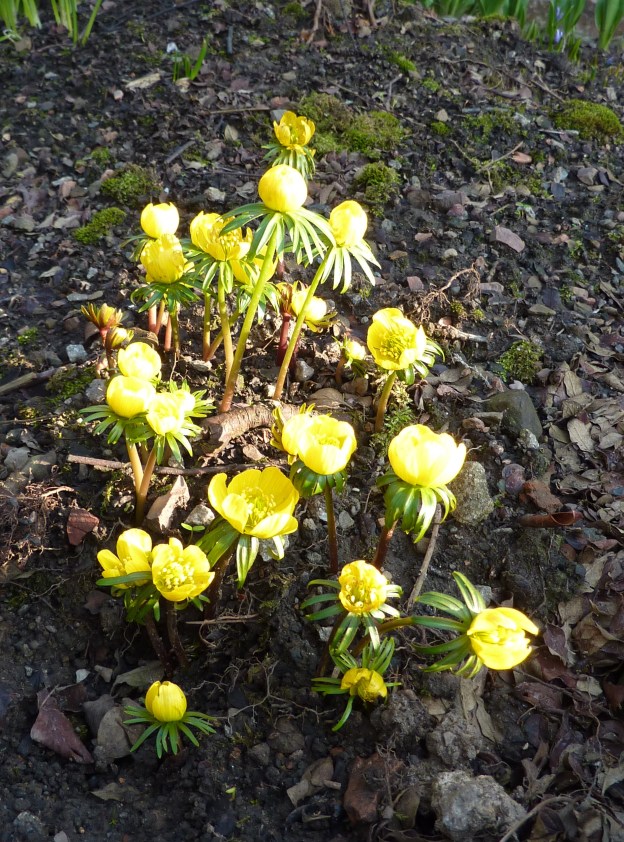
At this time of year I have snowdrops and hellebores in my garden, producing exquisite blooms which hang their heads down, as if hiding their glory from casual gaze. When I bring them into the house, and can get up close, I am astonished by the detail and beauty they reveal. An unobtrusive rendering of glory to their Creator, not held up for all to see but shyly suspended, a private delight. Like the rest of the natural world, their glorifying of the maker is not a willed thing, it is part of how they grow and flourish. Perhaps, if I could cultivate the attitude of continual praise – of being conscious that I am always in my Lord’s presence, adoring him and being loved – then my life too would become a thing of natural beauty, because at the heart would be this steady pulse of joy.

When I take myself too seriously, I miss the joy of knowing that I am forgiven, that every minute of every day of my life is a gift, and that there is a continual outpouring of goodness and grace into my life from God. When I take myself too seriously, I begin to act and feel as though I have to be perfect in order to be loved and accepted. This is a wicked and dangerous lie, it creeps up on me so subtly, and I long to become more alert to it. It robs me of joy in receiving each new day; in each person whom God has brought into my life; in the outrageous beauty all around me; and above all in the transforming truth of forgiveness in Christ, union with him, and the promise of eternal life.

Here for a little while, we walk in shadows, our ears deaf to the great hymn of joy and mirth which rolls continually through creation, as God rejoices in his making, and pours love out upon us. Just occasionally, we seem to catch glimpses of glory, hear snatches of the eternal ‘Alleluias!’, and we catch our breath, caught up into wonder and awe. When I deliberately cultivate a spirit of praise, counting every grace gift as I find it, then these moments come more often, and my life is more joyful, my strength renewed, as I lose myself in the Lord. When I am more caught up with him than myself, I can laugh at myself, accept my failures with the compassion God shows me, and live in the freedom which is my birthright as the daughter of the King.

May God help us in the coming days to remember that we are but dust, that He requires of us praise, not perfection, and in that joyful awareness to grow strong.

Return to Sender….

O Jerusalem, Jerusalem, you who kill the prophets and stone those sent to you, how often I have longed to gather your children together, as a hen gathers her chicks under her wings, but you were not willing.

(Matthew 23. 37)

As human beings, the bible tells us that we are made in the image of God, the Three in One, whose existence is a perpetual delight in relationship and loving. We are made to connect with others – ultimately and most wonderfully with God himself! But while we strive all our lives to make and enjoy these relationships, we know that our flawed humanity conspires against us, undermining our ability to love, to receive love, and to delight in one another without a thought of self.

It is an unhappy position, to be made for something, and yet unable to ever truly find it, no wonder our world is filled with dissatisfied people. As Christians, we have the wonderful knowledge that our relationship with God is restored, and nothing can ever come between us again. But even there, the remnants of pride, selfishness and the baggage of broken lives can rob us of the full measure of peace and delight which are ours as children of God. He is always willing and glad to receive our love, but we often fail to give or to recognise as love what he gives.

In human relations both parties are flawed, and we are further compromised both in our giving and receiving of love. While it is true that we need to receive love, we also need to give it, to express affection and care for others in the ways that come naturally to us. Sometimes when my children were younger I recall being overwhelmed by the desire to express my love for them, and hardly knowing where to begin! In those days, they didn’t really mind if their mother hugged and cried over them, or played silly games and read and talked to them – how times change! The same applies to our parents, spouses and close friends. We want to show our love, and yet the gesture or word is firmly rejected – sent back like an unwanted gift.

How do we cope when those whom we love so dearly reject our loving? When our desire to be good for them can barely be expressed, because they have made it clear that our ways of giving love are unwelcome to them? It is this struggle which led me to Jesus’ yearning over the city of Jerusalem – and symbolically over all the nation of Israel, in its long history of rebellion against and rejection of the faithful love of God.

I know that when I do not express the love I want to give, I become sad, and somehow imprisoned – since I cannot express my loving, I cannot be myself. What is my right and proper response, the Christ-like loving response? How do I love people who do not want my love in the way I long to give it?

It seems that I have a choice, either to focus on my own rights – to express myself and be ‘fulfilled’ – or focus on them, their characters and needs, and to love them as far as they will allow me, in the ways that they can receive. Am I willing to trust God to look after my needs in this situation, to believe that I can experience this frustration and yet still go on living and giving joyfully because I am perfectly loved by Him?

What did Jesus do? He loved the world so much, and we would not receive or honour that love in the way he desired to give it. But he loved us well enough to give himself to save us – from all our broken bitterness – and trusted God to ensure that all would be well, that his utterly sacrificial loving would finally be received by his people. He gave what we desperately needed, and did not insist on his rights as Messiah, the Anointed one, the Judge and Ruler of the world. In his letter to the church in Ephesus, Paul encourages the believers to ‘Submit to one another out of reverence for Christ’ – Ephesians 5.21. The word submit can also be read as ‘do not insist on your rights’…

Is this my answer? To acknowledge before God what I desire to do, to offer what I can do to him in love, and do what I may for those whom I love. In the name of Jesus, and only by the power of his spirit within me, I will tailor my loving, and bring the frustration of unexpressed affection and pain of rejected love to God for relief, healing and comfort. He is faithful, will I not trust him?

I believe..

I believe in God, the Father almighty, Creator of heaven and earth.

I believe in Jesus Christ, his only Son, our Lord, who was conceived by the Holy Spirit, born of the Virgin Mary, suffered under Pontius Pilate, was crucified, died and was buried; he descended to the dead. On the third day he rose again; he ascended into heaven, he is seated at the right hand of the Father, and he will come to judge the living and the dead.

I believe in the Holy Spirit, the holy catholic Church, the communion of saints, the forgiveness of sins, the resurrection of the body, and the life everlasting. AMEN

I belong to a church where we do not have much of a liturgy, so to attend an Anglican service while on holiday last week was a great treat, although it can be a challenge to know whether one is meant to be speaking or singing at times! One of the things I love best about the liturgy of the Anglican church is this recitation of the Creed, our statement of faith. In the earliest days of the church, Christians were known simply as ‘believers’, because their salvation depended solely upon belief in the death and resurrection of Jesus Christ as the atonement for sins, and their future in  eternal life with God. In reciting the Creed, we are reminded of our total dependence on Jesus, and that of ourselves we bring nothing of worth to God.

These brief words contain sufficient material to keep us thinking, praising and adoring our precious Saviour, and the working out of them in practice is the employment of a lifetime. Today I am thinking particularly about that little phrase ‘ the communion of saints’, and what it can mean for us in practice.

In his great prayer the night before his death, Jesus prayed for his disciples, and for all who would come after into the family of believers, asking ‘ that all of them may be one, Father, just as you are in me and I am in you. May they also be in us so that the world may believe that you have sent me. I have given them the glory that you gave me, that they may be one as we are one: I in them and you in me.‘ (John 17 21-23).

This, this astonishing unity and intimate connection, is what we mean when we talk about the communion of saints. It is not mere friendship, but a profound union, arising out of our union with Jesus himself. As we believe in Jesus for salvation, he dwells in us, we live by his life; and because our fellow believers also live by that same life,  we have bonds at the deepest level of our being with them. We have the same Father, and the same great elder brother, and we see in one another evidences of his life working to transform us into his likeness. Our ultimate desires and ambitions are the same – the glory of God, the saving of souls, and the blessing of the church family – and our means of receiving from God are the same – reading the bible, praying, taking communion,  practising baptism.

The apostle Paul explores the implications of this unity many times in his letters to the young churches of Asia, including his assumption that believers will pray earnestly and intelligently for one another, even though they may never have met, share no cultural or language experiences, and have only their faith in common! It makes sense… when we are all part of the one body – with Christ as our head – then the suffering of one part calls for the support of the rest, and any practical help which may be given. Similarly, the joys of one part bring gladness to the whole body, so that everyone may be encouraged in their faith and hope.

I was blessed to have grown to faith in churches where it was a matter of routine to pray for christians all over the world – missionaries, ministers, and those to whom they were sent; persecuted believers in troubled lands, churches which were experiencing great blessing and growth. It never occured to me that it was odd to pray so earnestly for people I had not met, and I was taught to pray for them with as much passion as I might for those nearest and dearest to me. It was a wonderful lesson to learn early, and continues to bring great blessing, because when we come before God in order to pray for our brothers and sisters, we forget our own troubles, and fix our eyes upon him. We are reminded, even as we remind God, of his own promises to bless his children, to glorify his name, to provide resources for his work and to guide his servants – all these things which we also desire for our own situations.

So let us give ourselves to prayer for our fellow-believers, rejoicing that when we pray, we are together in God’s presence, in a fellowship which will be surpassed only in the resurrection when we meet face to face. What a blessing is the communion of the saints!

the blessings of a slow wit!

A gentle answer turns away wrath, but a harsh word stirs up anger…..A man of knowledge uses words with restraint, and a man of understanding is even-tempered. Even a fool is thought wise if he keeps silent, and discerning if he holds his tongue!

(Proverbs 15.1; 17.27,28)

I was reminded forcibly of these words this week when I found myself brimming over with anger and hurt after a particular conversation had upset me. They did not come to mind directly, but only as I took myself off into solitude to lay the matter – and my troubled feelings – before my Lord and Lover, and I realised in the quietness that I was very likely to blame for stirring up the situation. I am not very quick-witted, and can rarely come up with the counter-thrust to a hurtful comment, or the appropriate words to challenge what feels like a bad attitude. All the possible responses crowd into my mind much later, as I replay the situation, and try to understand what was going on – and by then it is usually to late to say anything at all!

It is frustrating when one is stirred up, hurt and angry, not to be able to find words, and the sense of being gagged adds to the pain! But, as I pondered last week, trying to calm down and see things more through God’s eyes than mine, I gave thanks for my slow wits, rejoicing that I had been delivered from making a small trouble into something potentially bigger. I had not perhaps responded as Jesus would have done, but silence was better than a vicious retort!

The book of Proverbs is full of warnings about how we use our speech, and of course in the letter of James in the New Testament we find the apostle taking a whole chapter of his letter to remind his readers of both the power and wildness of the tongue. It is sobering reading, especially for those who profess to believe in Jesus, to have yielded the throne of their lives to him. James challenges us to consider how as believers we can both praise our Lord and commune with him; while also using our words to criticise, gossip, and generally wound our fellow men and women. How often do I speak out of my own selfish agenda, instead of taking time to think whether my words are wholesome, helpful and loving?

So I was glad not to have lashed out with angry words, and thank God for restraining me and providing the space and solitude I needed to calm down and confess my desire to hurt back. It is only as we grow in likeness to Jesus, as love for him is stirred up within us, that our thoughts and habits are transformed and we become more able to respond to others with constant loving grace. Most of us will spend the rest of our lives in that learning process, and even as I need others to be patient with me, so I need to be patient with them!

Is it Christlike to take pride in my own self-restraint, while criticising another Christian for their occasional failures? How am I encouraging others to grow in grace if I will not extend grace to them when they stumble and need to be forgiven? In the same way that I thank God for his faithfulness in bearing with me, deeply ingrained faults and all, so I want to learn to be faithful in bearing with others. I am needy, and so are they! We are privileged to minister to one another by our love – which means always seeking the best for them, just as God our loving father always seeks the best for us.

May God deliver us from any false pride in our own meagreself-control, and help us instead to rejoice in his power at work in us to keep us from rashness and hasty words. May God help us even as we receive fresh forgiveness from him for our daily sins, to extend that forgiveness to others. May we be content to leave the business of their sanctification in God’s hands, and seek to do nothing to hinder it, even as we depend on him to transform us.

It is a long work, a slow work, but we can be sure of this;’that he who began a good work in you will carry it on to completion until the day of Christ Jesus.’ (Philippians 1.6).

Amen, and may all the glory go to him!

The sweetest thing

If the Lord delights in a man’s way, he makes his steps firm; though he stumble, he will not fall, for the Lord upholds him with his hand.

Psalm 37 v 23&24

These words were written by David, the shepherd boy, giant killer, outlaw, singer-songwriter, king, adulterer, schemer and thief: the man whose wonderful songs reflect every aspect of his rich and varied life. He is one of the great characters portrayed in the bible narrative, and although it can be tempting to focus on his good qualities, we are never allowed to forget his faults. The hero of his story is not David himself, but the God whom he worshipped, trusted, disobeyed and before whom he often had to repent and confess his sins.

Why is his story given to us, along with many other records of the rulers of Israel and Judah over the years? What can we learn from their histories for our lives in faith in the 21st century, where kings are largely powerless, and it is money, politics, sport and show-business which provide our major influential figures? I believe that the verses quoted from the psalm give us one insight into the lessons to be learned – that while they may stumble into sin, the man or woman whose heart is right with God will not fall and be lost. The records of the kings of Israel and Judah are full of phrases like this:

‘ Asa’s heart was fully committed to the Lord all his life’ and, ‘ but Omri did evil in the eyes of the Lord and sinned more than all those before him’. (1 Kings 15v14; 16v25)

Their stories are a record of how fallible human beings have always lived – making mistakes, having good intentions yet failing to completely carry them out, but always on the basis of a fundamental attitude of the heart. Either they have rejected God’s authority over them – in the case of many of the kings, they deliberately adopt other gods- or else they are seeking to follow the ways which God had revealed to the nation, putting themselves as well as their people under the rule of God. These stories encourage me to be compassionate towards those in authority, remembering that they are no more able to rule perfectly than David or Solomon could. Even the wisest, most talented politician or business leader will not always get it right; and while I should pray for them to remain close to God, to submit to his authority in their lives and use their power for the good of others, I must allow them to fail, as I do! The ultimate hero of all our stories is God, and no human being can bear the weight of such a responsibility.

We can also take great personal comfort from these records, because the hero, the God who was rejected and disobeyed so often, is also our God. He demonstrated his love over and over to these flawed servants, and it is that faithfulness which is celebrated in our Psalm. David was well aware of his own weakness and knew quite well that in all his sin, it was God who hurt most deeply. But rather than dwelling morosely on his failure, and hiding in despair, he cries out his repentance, affirming his faith in God and delighting in the grace which pours out forgiveness and restoration in abundance. How should we not be filled with praise for this God who looks upon the earnest heart of his child, and quietly puts away the things done amiss!

I find sweet comfort in this truth, that although I will spend the rest of this life in a process of transformation, never entirely free of sin, yet my Father God has provided complete forgiveness through Jesus, and I need not carry the weight of that failure. If I choose to focus on what Christ has done well, instead of what I have done badly, then I am able to rejoice even after failure. His grace is such that every moment of every day is a fresh start, and I am free to live and love and delight in him. The following words by the great Charles Wesley are a prayer of response to this amazing grace, and a fitting conclusion. May they be our prayer this week.

O for a heart to praise my God, a heart from sin set free;

A heart that always feels Thy blood so freely shed for me.

A heart resigned, submissive meek, my great redeemer’s throne,

where only Christ is heard to speak, where Jesus reigns alone.

A humble, lowly, contrite heart, believing, true and clean,

which neither life not death can part from Him that dwells within.

A heart in every thought renewed and full of love divine,

Perfect and right and pure and good: a copy, Lord, of thine.

Thy  nature, gracious Lord, impart, come quickly from above;

Write thy new name upon my heart, thy new best name of love.

The quiet days

Make it your ambition to lead a quiet life, to mind your own business and to work with your hands, just as we told you, so that your daily life may win the respect of outsiders and so that you will not be dependent on anybody.

(1 Thessalonians, 4 v 11 & 12)

 Ambition? Those who have known me long and well will assure you that I never had any, and they will be right. This little verse from Thessalonians might have been written for me, as Paul encourages the believers in that church to be diligent, to be content with what they have and to let their quiet daily faithfulness speak of their faith and the God whom they trust. I love days when there are tasks to be done, but no pressing deadlines, so that I can be fully conscious of what occupies my mind and hands, not thinking ahead all the time to the next job and wishing it was all over! I can take no credit for this desire for quietness, it is natural to me, a gift for which I am deeply grateful to my maker. But Paul is advising the Thessalonians to adopt this attitude even if it does not come naturally to them, why?

I wonder if there is a connection to the teaching of Jesus here, to the many times when the disciples grieved his spirit by their competition for the place of honour, whether on earth or in his coming kingdom. In every account of Jesus life, we find him turning their understanding of status and honour upside down. Time and again, they are told that in God’s eyes, greatness is nothing to do with social standing, wealth, race, gender or age. Jesus welcomed the children, honoured the disregarded women, engaged with the foreigners, commended and comforted the repentant sinners and infuriated the elite of the religious establishment by denying that they had any authority or special status. Towards the end of the gospels, each one in turn makes a clear statement about this issue, these words are from Matthew 23 v 11&12.

The greatest among you will be your servant. For whoever exalts himself will be humbled, and whoever humbles himself will be exalted.

A servant, one who seeks only the pleasure and approval of the master, and is content to do any appointed task for no other reward. That attitude requires the death of pride, of self- regard, of the spirit which claims authority over my own life and rejects God’s claim on me. If I am to be such a servant, to be ambitious to live a quiet life, then I must die to that self which seeks the approval of my peers in order to be satisfied, which looks for material prosperity, or security as a sign of my personal worth.

We have the example of Christ in this, as Paul reminds us in his words to the Philippian church :-

Your attitude should be the same as that of Christ Jesus: Who, being in very nature God, did not consider equality with God something to be grasped, but made himself nothing, taking the very nature of a servant, being made in human likeness. And being found in appearance as a man, he humbled himself and became obedient to death – even death on a cross! (Philippians 2 v 5-7)

Perhaps this is why Paul stresses the ambition for a quiet life, because it indicates that pride has been conquered in a believer’s life, that they are growing more and more like Christ, and His life in them is shining more clearly. This work of being made Christ-like is one which lasts all our lives, and which will not be complete until He returns in glory and raises us to new life. But we can take courage and hope that the work continues, and can rejoice when we are able to see signs that it is progressing. For me, the quiet days are such opportunities, when I find myself content with small and private service of others, prayers and works of love which only God sees, domestic chores which will need done again very soon, noticing of small tokens of grace and goodness and rendering thanks to the giver.

May we learn more and more to be content with the tasks appointed, seeking only our Lord’s approval, and rejoicing in the quiet riches of a life free from fretting ambition and the need to impress others.

Mother love…

So God created man in his own image,

in the image of God he created him;

male and female he created them.

Genesis 1 v27

These words, coming at the outset of God’s revelation of himself to us in the bible, give us an enormous amount of information about ourselves, not least the easily overlooked idea that it takes both masculinity and femininity to fully express the image of God in human form! The human package simply can’t contain all the necessary characteristics in one unit, and so two were created. Their interaction through life, and union in marriage reflect aspects of God’s character too – the delight that God has within the trinity, and the love which is continually expressed there.

In the same way I believe the bible reveals that human love – in all its forms – reflects aspects of divine love for us. No single human love is rich and complex enough to convey the full treasury of love which God has for us, his beloved creation. Through our experiences of relationship and love, we taste a little of the goodness of divine love in all its variety. Although it is sadly true that many people experience a great deal of pain, and are let down badly by those who should love them, yet the principle remains valid. Through our human loves, we learn about God’s love, and in time learn to receive directly from him all that our hearts need, so that no human failure to love can ultimately destroy us.

I was privileged to have a godly and loving father, who was spared to see my children born, and who – through his faithful loving of and genuine delight in me – showed me so much of the heart of my heavenly Father. Even as I mourned him, I knew what kind of fatherly love was being poured out on me from God, full of comfort and steady as a rock.

What of a mother? A mother just wants to be with you, to share in all the ups and downs, to hear all the little details of your life, because it is a delight to her to watch you living. She has yearned over you for years, laboured to care and equip you for life, borne the tantrums and sulks, the laundry and faddy diets, the bizarre fashion and messy rooms – because she loves you, and her love goes so deep that you are part of her. Your joys are hers, your heart is her heart beating, when you weep, she weeps.

Two years ago this weekend, my mother died, and there is no one now to do these things for me. No one to whom I can safely pour out my mother pride in my own children, or share the little frustrations of life. I cannot get a picture of her life into words, cannot find a way to close the chapter yet, but this I know, that her loving of me was faithful, costly, and a great joy and pride of her life – and that I never said thank you enough!

The bible has very few explicit references to mothering as a quality of God, but when we explore what it actually involves, it is clear that when he made mothers, God put an enormous amount of himself into them! My God delights in my company, in sharing my thoughts and all my activities; remember those lovely words in Psalm 139 v 2& 3

You know when I sit and when I rise; you perceive my thoughts from afar. You discern my going out and my lying down; you are familiar with all my ways.

He wipes my tears away, and numbers the very hairs on my head; my name is engraved on his hands and he will never forget me. The gift of Christ his son, to be my saviour and lord, to be my very life, means that my heart is his heart, and all that grieves and wounds me, is felt by him. I am and will always be a daughter, even though my mother is dead, because my God mothers me, and I am comforted, nourished and affirmed by that faithful, costly and joyful love, which always puts my needs first.

How can we rightly praise and thank our God for such love? Nothing will ever suffice, but a delighted awareness of our debt, and continuing thankfulness for all that we receive is surely a fitting way to use the gift of life which we have been given. May God enable us more and more to receive and share this love, to his glory and the blessing of the world.